
Engage Your Customers Better with a Powerful Mobile App

90% of business owners in Australia boosted their sales and conversion ratio by utilising innumerable opportunities of Mobile Apps to better engage with their target audience. Well-Experienced Mobile App Development Company will help you to empower your business with developing custom mobile apps.

With a mobile app solution for your business, you can:

    • 01

      Offer a new branding experience to your users

    • 02

      Send push and in-app notifications to engage with your clients.

    • 03

      Increase conversions through better user experience

    • 04

      Generate brand awareness

2-2-2

Mobile App Development

With an ever-increasing smartphone and mobile internet penetration, no business can remain untouched by the app revolution. However, creating an app for your business is not enough to succeed in the competitive landscape of today. What you really need is a well-designed app that is feature-rich yet easy to use and backed by a solid marketing strategy.

Dot Com Infoway, a leading mobile app development firm based in Sydney creates functional and engaging apps for your business within a few weeks at cost-effective rates by the best app developers. In our Mobile App Development company services, we also work with multiple frameworks such as Flutter, React Native, Kotlin for cross platform app development services to run mobile applications on all different platforms. We employ the latest technology, the right measure of creativity and follow best practices, ensuring 100% client confidentiality and privacy.

CONTACT OUR EXPERT

Mr. Kam Amilthan

Australia

Contact Us!

Why Hire Our Mobile App Developers?

As you know, a user-friendly mobile app is vital to the success of your company and can add significantly to your bottom-line when leveraged properly. Our Android & iOS mobile app developers provide a well-built app that has the following features to deliver an exceptional user experience.

Easy-to-use Interface

A feature-loaded application is no good unless it is easy to use for your users. We follow the best design principles to create a modern-looking app that is easy to use for all age groups.

Security

A secure app is a topmost priority for most businesses and customer. Our apps are 100% secure and designed to keep your client data fully secure.

Android and iOS

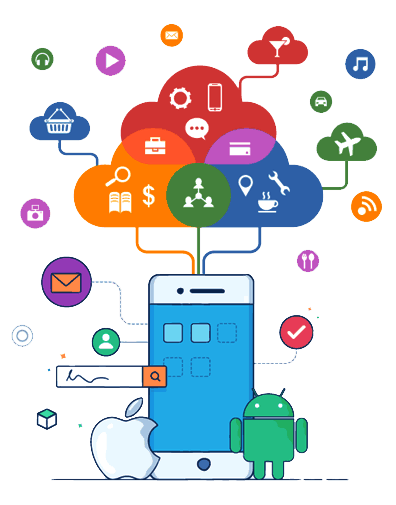
We design fully functional Android and iOS mobile apps to give your business the visibility it deserves.
3-3

Support And Upgrades

As the world of technology changes continuously, we offer ongoing support and regular updates to keep your app running smoothly at all times.

Analytics

We integrate cutting-edge analytics into your app to help you track user behavior and collect vital information to make smart business decisions.

Good Performance

All our apps are tested and retested to ensure the users are not held up due to the speed of loading.

Not Sure How To Turn Your Idea Into a Mobile App?

How We Develop a Mobile Application for Your Business

Benefits of Developing Your Mobile App with Us

  • Brand awareness through a customized app for your business that features on Apple Store and Google Play
  • Better engagement and targeting leads to more sales and profits
  • Collect personalized data such as real-time location updates for targeted advertising
  • No programming knowledge needed to automate key processes at your business
  • Enhanced customer experience and personalized marketing opportunities at just a tap on your mobile
  • 24/7 technical support to keep your app running in top shape.
4-2-1

Why we are the best app development company?

How we work?

Quick Expert Consultation

Non-Disclosure Agreement

Dedicated App Developers

Flexible Hiring Models

On-time Delivery

Maintenance & Support

Why Choose Dot Com Infoway?

With over 20+ years of experience; we’re one of Australia’s leading mobile app development agencies in the industry. Having served 1000+ clients over the years, we have the expertise to understand the nuisances of your business and deliver solutions that are customized to your requirements, so that you get the maximum return on your investment.

We use the right amount of creativity and technical knowledge to create apps that meet your business objectives and offer seamless support throughout the deployment, and later, to ensure a great customer experience.

Get in touch to know how we can transform your business.

whydci-1

Explore Our Other App Solutions

Book a Quick Consultation

Share your details and we will get back to you as soon as possible to schedule a meeting.

Please enable JavaScript in your browser to complete this form.
Request NDA

Contact Dot Com Infoway

Latest Updates

Native vs Hybrid vs Cross-Platform Apps: What's Best for Your Business? Choosing the right mobile app development approach can make or break your business success. With 88% of mobile time spent in apps and global app revenues expected to reach $935 billion by 2023, determining what's best for your business isn't just a technical decision: it's a strategic one that impacts your budget, timeline, and customer experience. The mobile app development landscape offers three primary paths: native, hybrid, and cross-platform applications. Each approach presents distinct advantages and trade-offs that directly influence your bottom line. Unfortunately, many businesses make costly mistakes by selecting the wrong development strategy, leading to poor user experiences, budget overruns, and missed market opportunities. Understanding the Three App Development Approaches Before diving into what's best for your business, let's examine how each approach fundamentally works and why these differences matter for your success. Native apps use platform-specific programming languages: Swift or Objective-C for iOS, and Kotlin or Java for Android. These applications run directly on the device's operating system, providing maximum performance and seamless integration with device features. Hybrid apps combine web technologies (HTML, CSS, JavaScript) wrapped in a native container. They use WebView components to display content, essentially running a website inside an app shell that can be distributed through app stores. Cross-platform apps utilize frameworks like React Native (Meta), Flutter (Google), or Xamarin (Microsoft) to write code once and deploy across multiple platforms while maintaining native-like performance through different rendering approaches. Native App Development: Premium Performance at a Premium Price Native development represents the gold standard for mobile applications, particularly when performance and user experience are non-negotiable aspects of your business strategy. Key Advantages of Native Apps Exceptional Performance: Direct OS integration ensures smooth animations, responsive interactions, and optimal memory management Full Hardware Access: Complete integration with device features like Face ID, advanced camera controls, AR capabilities, and biometric sensors Superior User Experience: Platform-specific design patterns create intuitive interfaces that users expect and love Long-term Stability: Mature development tools and consistent platform support ensure your app remains functional for years Major companies leverage native development for competitive advantage. Instagram's iOS app, built natively, delivers lightning-fast photo processing and seamless story transitions that users have come to expect. Similarly, Uber's native approach enables real-time GPS tracking, payment integration, and location services that work flawlessly across different scenarios. However, native development comes with significant considerations. You'll need separate development teams for iOS and Android, potentially doubling your development costs and timeline. According to Clutch's 2023 survey, native app development costs range from $30,000 to $250,000 per platform, making it the most expensive option initially. Hybrid App Development: Fast and Affordable Market Entry Hybrid development offers the fastest path to market when speed and cost efficiency determine what's best for your business. This approach particularly appeals to startups and businesses testing market viability. Hybrid App Benefits Rapid Deployment: Single codebase deploys to multiple platforms simultaneously Cost-Effective Development: Significantly lower development expenses compared to native approaches Broad Market Reach: Access iOS and Android users with one development cycle Quick Updates: Push updates across all platforms simultaneously Airbnb initially chose hybrid development using React Native for their booking platform, enabling them to reach market quickly with limited resources. However, they eventually migrated to native apps as their complexity and performance requirements grew. The hybrid approach faces performance limitations since applications run through WebView containers. According to Ionic's 2023 Developer Survey, 67% of hybrid app developers reported performance challenges, particularly with complex animations and heavy computational tasks. Cross-Platform Development: The Balanced Solution Cross-platform frameworks have evolved significantly, offering what many consider the optimal balance between cost, performance, and development speed. This approach often represents what's best for your business when you need both quality and efficiency. Cross-Platform Advantages High Code Reusability: Share 70-90% of code across platforms while maintaining native performance Native-like User Experience: Modern frameworks render using native components, delivering authentic platform experiences Faster Development Cycles: Shared business logic and consistent maintenance reduce development time Strong Performance: Near-native speed suitable for most business applications Microsoft Teams successfully uses Xamarin for cross-platform development, reaching over 280 million monthly active users across iOS and Android. Their approach demonstrates how cross-platform solutions can scale to enterprise levels while maintaining performance standards. "Cross-platform development has matured to the point where performance differences with native apps are negligible for most business use cases," notes Softjourn's 2023 Mobile Development Report. React Native powers applications for Facebook Marketplace, Discord, and Shopify, proving its enterprise readiness. Meanwhile, Google Pay leverages Flutter to deliver consistent experiences across platforms while reducing development overhead by 40%. Performance and Cost Analysis: Making Data-Driven Decisions Understanding the financial implications helps determine what's best for your business from a ROI perspective. Development Cost Comparison According to GoodFirms' 2023 App Development Survey: Native apps: $50,000-$300,000 (per platform) Cross-platform apps: $35,000-$200,000 (both platforms) Hybrid apps: $20,000-$150,000 (both platforms) Time-to-Market Analysis Native development: 6-12 months for both platforms Cross-platform development: 4-8 months for both platforms Hybrid development: 3-6 months for both platforms Performance Benchmarks App loading times vary significantly: Native apps: 1.5-2.5 seconds average load time Cross-platform apps: 2-3.5 seconds average load time Hybrid apps: 3-6 seconds average load time Decision Framework: Choosing What's Best for Your Business Your choice should align with specific business objectives and constraints. Consider these scenarios: Choose Native Development When: Performance is critical (gaming, AR/VR, real-time applications) You're targeting platform-specific features extensively Long-term app maintenance and updates are planned Budget allows for premium development investment User experience differentiation drives competitive advantage Choose Cross-Platform Development When: You need broad market reach with controlled costs Performance requirements are moderate to high Development speed matters, but quality can't be compromised Your team has experience with modern cross-platform frameworks You want native-like experiences without native development overhead Choose Hybrid Development When: Budget constraints are primary concern Time-to-market is critical for business validation App functionality is relatively simple You're building internal tools or proof-of-concept applications Offline functionality across platforms is essential Future-Proofing Your Mobile Strategy Technology evolution continues reshaping what's best for your business in mobile development. Flutter's performance improvements and React Native's new architecture suggest cross-platform solutions will continue gaining enterprise adoption. "By 2024, we expect cross-platform frameworks to handle 80% of business mobile app requirements without significant performance trade-offs," according to Gartner's Mobile App Development Predictions. Consider your long-term business goals when making this decision. Will your app need frequent updates? Do you plan to expand internationally? Will you integrate with IoT devices or emerging technologies? These factors influence which approach serves your business best over time. Conclusion Determining what's best for your business requires careful evaluation of your specific requirements, budget, timeline, and performance expectations. Native development offers premium performance at premium costs, hybrid provides rapid market entry with performance limitations, and cross-platform delivers balanced solutions for most business scenarios. The mobile app development landscape continues evolving, with cross-platform frameworks becoming increasingly sophisticated. However, the fundamental trade-offs between cost, performance, and development speed remain consistent decision factors. When evaluating your mobile app strategy, partnering with experienced development teams ensures you make informed decisions aligned with your business objectives. Dot Com Infoway's mobile application development expertise helps businesses navigate these complex decisions, ensuring your chosen approach maximizes both user satisfaction and business ROI. Remember, the best app development approach is the one that delivers your business goals effectively while providing users with experiences that drive engagement and growth.

Native vs Hybrid vs Cross-Platform Apps: What’s Best for Your Business?

Choosing the right mobile app development approach can make... read more

eBook and Guide

5 Reasons Why You Need to Concentrate on eBook For Marketing Purposes

Content marketing is not what it was yesterday. Today's trend demands fatter content in the form of ebooks, infographics,... read more

Google PPC for Small Businesses: A Beginner’s Guide

Small businesses are always looking for a good way to get an advantage when it comes to marketing and... read more

Dot Com Infoway
4.3 out of 5 stars - 71 votes
Open chat
1
Chat with our Experts!
Hello
Can I help you?