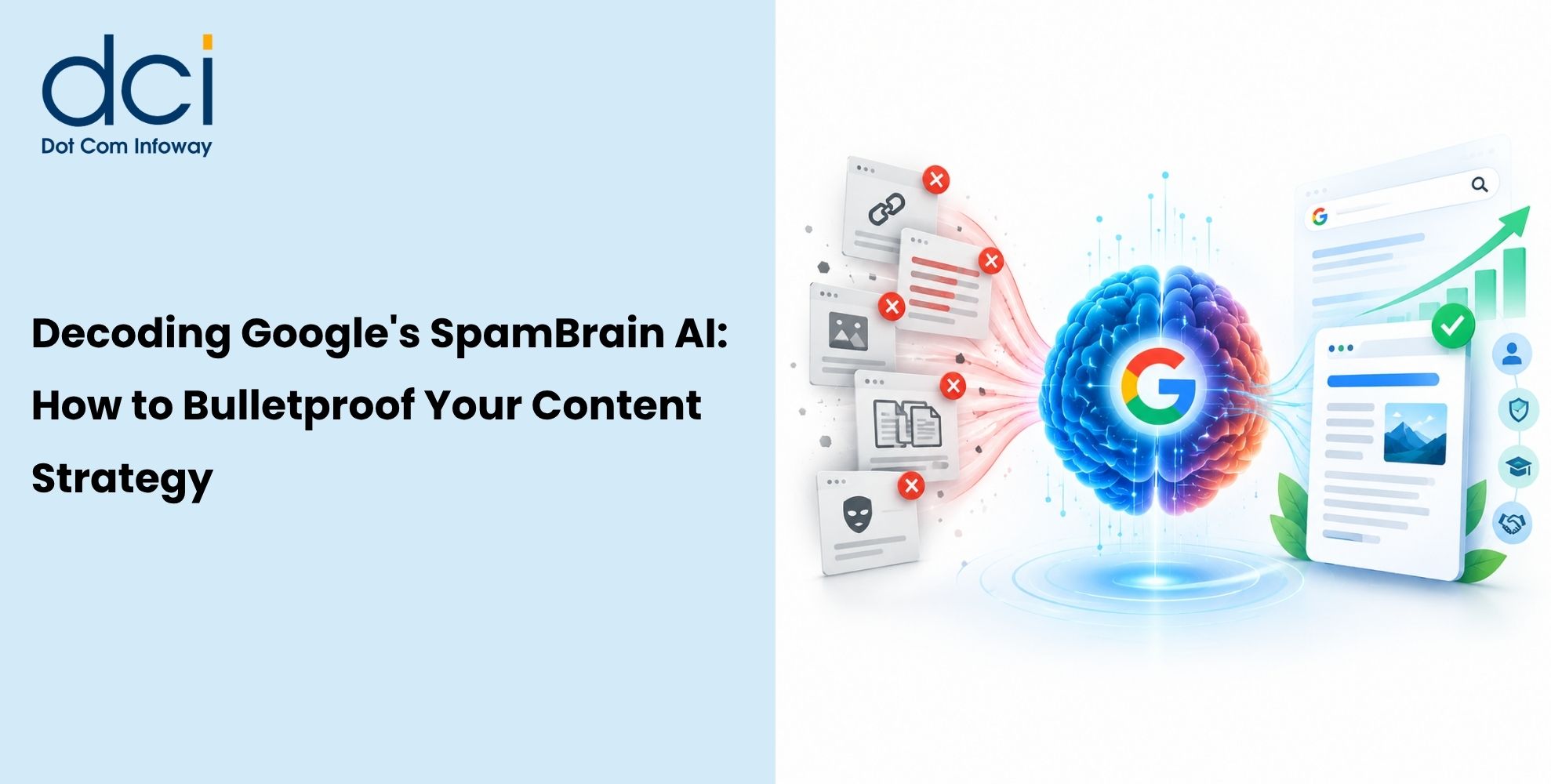
Decoding Google’s SpamBrain AI: How to Bulletproof Your Content Strategy

By

6 mins read

SEO has changed significantly over the years. Search engines no longer evaluate content only based on keywords, backlinks, or publishing frequency. Today, factors such as content quality, expertise, originality, and user satisfaction play a major role in determining search visibility.At the center of this evolution is Google SpamBrain AI, Google’s AI-powered spam detection system designed to identify low-quality content and search manipulation techniques.

For businesses, this means traditional content strategies focused only on ranking keywords are no longer enough. Content must provide genuine value, answer user questions, and demonstrate industry expertise.

With AI-powered platforms like ChatGPT, Gemini, and Perplexity becoming part of the search journey, brands need content that is easy to understand, trustworthy, and structured for both users and machines.

Decoding Google's SpamBrain AI: How to Bulletproof Your Content Strategy

Why Old Content Strategies Are Losing Visibility

Many websites still depend on outdated SEO practices such as producing large volumes of content, repeating keywords, and creating pages with limited differences.

These approaches often fail because modern search algorithms can identify whether content is genuinely useful or created mainly to influence rankings.

Common content challenges include:

  • Generic AI-generated articles without expert input
  • Duplicate or similar pages targeting the same search terms
  • Keyword stuffing instead of answering user intent
  • Content without real examples or practical insights

For example, an article explaining “mobile app marketing strategies” with only general information provides limited value. A stronger article would include campaign examples, industry trends, user behavior insights, and measurable results.

Google’s recent search improvements focus on rewarding helpful content while reducing visibility for content created primarily for search manipulation.

How Google SpamBrain AI Evaluates Content Quality

Google SpamBrain AI is designed to detect different forms of search spam using artificial intelligence. It helps Google identify patterns that indicate websites are attempting to manipulate search rankings.

Some areas where AI-powered spam detection plays a role include:

  • Automatically generated low-value content
  • Manipulative backlink practices
  • Websites created mainly for ranking purposes
  • Hacked or spam-filled pages

However, using AI tools for content creation does not automatically make content spam. The focus is on whether the content provides value.

For example, an AI-assisted article reviewed by industry experts and improved with original examples can be valuable. On the other hand, publishing hundreds of similar AI-generated pages without additional insights may affect content quality.

The key approach is combining AI efficiency with human expertise.

Creating Content That Builds Search Authority

    A successful content strategy should focus on expertise rather than content volume.

    Businesses should create content that includes:

    • Real-world examples and case studies
    • Expert opinions and industry insights
    • Original research or data
    • Practical recommendations

    For example, a cybersecurity company can build stronger authority by publishing security guides, implementation examples, and industry research instead of only explaining basic cybersecurity concepts.

    This approach improves credibility and increases the possibility of being referenced by search engines and AI platforms.


              mobile-design-300x300

              Is your content strategy ready to handle Google’s AI-powered spam detection?
              Strengthen your SEO approach with expert content strategies designed for Google’s evolving algorithms. Explore our SEO services to create high-quality, search-friendly content that builds trust and visibility.


              Optimizing Content for AI Search

                Search behavior is changing. Users are increasingly asking detailed questions through AI assistants instead of searching with short keywords.

                To improve visibility across search engines and AI platforms, content should be:

                • Clearly structured with meaningful headings
                • Written in a natural, conversational format
                • Supported with accurate information
                • Focused on answering specific questions

                Businesses should also optimize content around search intent.

                Instead of targeting only “SEO services,” brands can create content answering questions like “How do SEO services improve organic traffic for businesses?”

                This type of content better matches modern search behavior.

                DCI has also covered this shift through its insights on AI search readiness, explaining how businesses can prepare their websites for AI-powered discovery.

                      Building Topic Authority Through Content Clusters

                      Search engines understand expertise better when websites provide comprehensive information around a topic.

                      Instead of publishing isolated blogs, businesses should create connected content clusters.

                      For example, a technology company focusing on artificial intelligence can create content around:

                      • AI applications
                      • Automation strategies
                      • Industry use cases
                      • AI implementation challenges

                      Internal linking between related articles helps search engines understand topic relationships and improves user navigation.

                      Businesses looking to improve visibility in AI-generated results can also explore LLM SEO strategy to understand how content can be optimized for AI-driven platforms.

                      Strengthening Trust and Long-Term Rankings

                      Content quality works best when supported by strong technical and credibility signals.

                      Important factors include:

                      • Updated information
                      • Clear author expertise
                      • Mobile-friendly website experience
                      • Proper content structure
                      • Relevant internal linking

                      A website with valuable content and strong trust signals has a better opportunity to maintain consistent visibility as search algorithms continue evolving.

                      Future-Proof Your Content Strategy

                      The growth of Google SpamBrain AI highlights an important shift in SEO: search engines are moving away from ranking content created only for algorithms and focusing more on content created for people.

                      Businesses should not avoid AI. Instead, they should use AI responsibly to improve research, efficiency, and content quality while maintaining human expertise.

                      The future of SEO belongs to brands that create reliable, useful, and experience-driven content. By focusing on quality over quantity, businesses can build stronger visibility across Google search and emerging AI-powered platforms.

                                      Latest Posts

                                      Get the latest insights from Dot Com Infoway straight to your inbox.