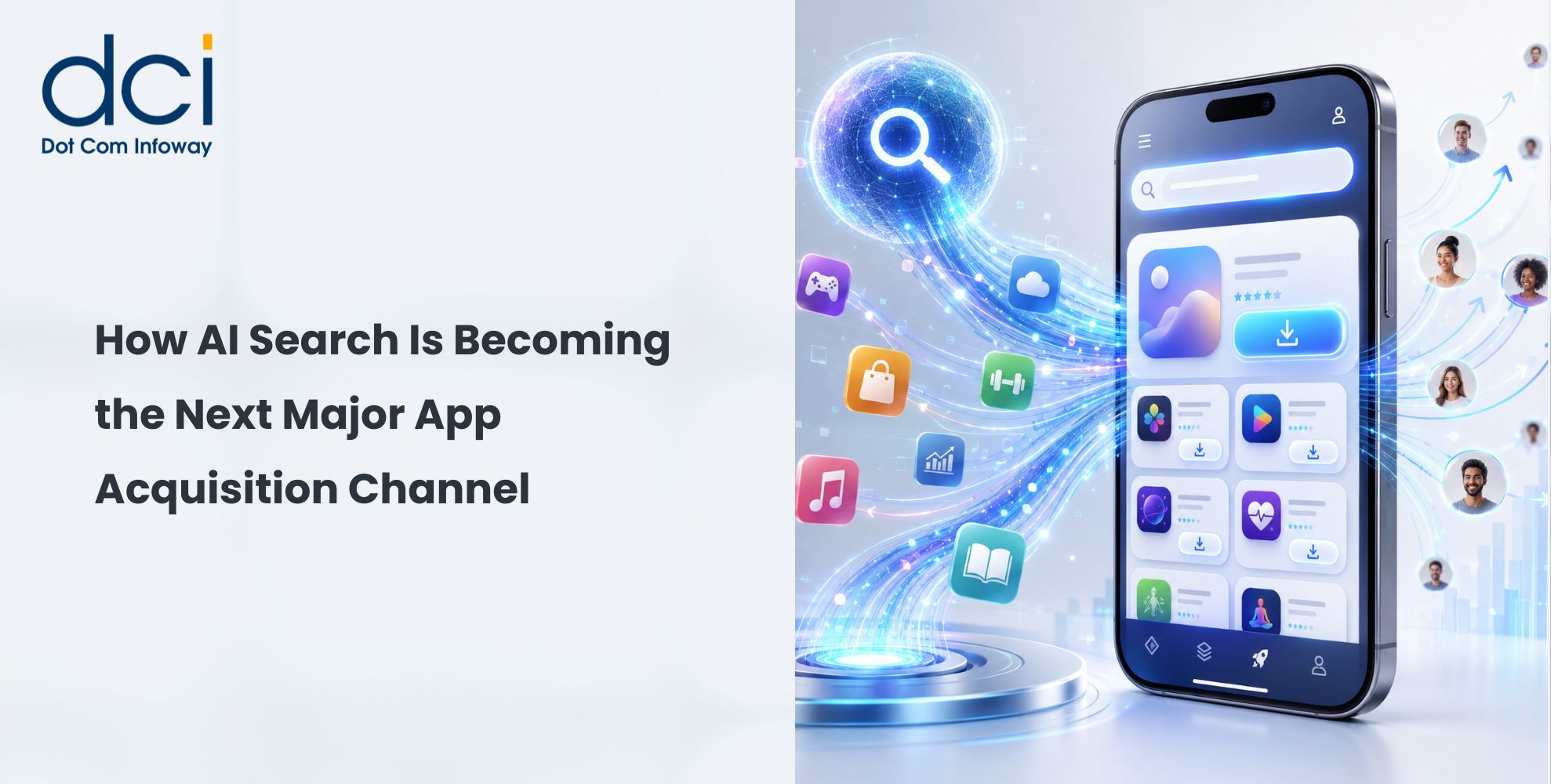
Why App Discovery Is Changing
Traditional acquisition channels are increasingly competitive. App marketers compete for app-store rankings, paid placements, organic search visibility, social reach, and influencer attention.
AI search changes how users frame discovery. Instead of searching for “budget app,” users may ask:
“What is the best budgeting app for couples with shared financial goals?”
Similarly, a runner may ask for a training app with adaptive plans, wearable integration, and progress tracking.
These conversational searches reveal stronger user intent because they include requirements, use cases, features, and preferences.
The scale is significant. Google reported in 2026 that AI Overviews had more than 2.5 billion monthly active users, while AI Mode had crossed 1 billion monthly users. OpenAI also reported more than 900 million weekly ChatGPT users. While these figures do not directly represent app installs, they highlight how AI-driven discovery has become part of mainstream search behavior.
What Helps Apps Appear in AI Recommendations?
AI platforms evaluate information from multiple sources rather than relying on a single app-store keyword. They may interpret websites, product pages, app-store listings, editorial mentions, reviews, comparisons, and other trusted sources.
Important visibility signals include:
- Clear app name, category, audience, features, pricing, and platform information.
- Detailed pages addressing specific user needs and use cases.
- Reviews, expert mentions, comparisons, and authoritative third-party coverage.
- Updated FAQs, feature pages, structured content, and release information.
- Consistent messaging across the website and app-store listings.
DCI’s guide on LLM SEO Apps explains how app visibility increasingly depends on content that both search engines and AI systems can understand.
Research on Generative Engine Optimization has also found that techniques such as adding credible citations, statistics, and authoritative information can improve visibility within AI-generated responses. One study reported improvements of up to 40% in source visibility, depending on the query and optimization method.
Building Visibility Across AI Search
An effective AI search for app acquisition strategy requires more than publishing generic “best apps” articles. Brands need a connected information ecosystem that clearly explains what the app does and why it deserves recommendation.
A practical approach includes:
- Identify conversational queries from app reviews, forums, support queries, search data, and user feedback.
- Build pages around specific audiences, integrations, features, comparisons, and use cases.
- Include verifiable statistics, screenshots, pricing information, examples, and product facts.
- Maintain consistent descriptions across websites, app stores, and external listings.
- Earn credible mentions through digital PR, expert contributions, partnerships, and industry publications.
AI visibility should complement App Store Optimization. DCI’s App Marketing Strategies highlights how ASO and LLM-focused optimization are becoming interconnected parts of modern app marketing.
Why AI Referral Traffic Matters
AI-driven referrals may still represent a smaller traffic share than traditional organic search, but their commercial value can be significant.
An Ahrefs analysis of more than 81,000 websites found that AI-generated traffic had grown approximately 9.7 times year over year by mid-2025. Ahrefs also reported that, on its own website, AI search generated only a small percentage of total traffic but produced a disproportionately high share of registrations.
This does not mean every app will experience the same conversion rate. However, it suggests that AI-referred users may have higher intent because they often arrive after describing their requirements and comparing available options.
For example, a meditation app may gain visibility through highly specific prompts such as:
“Which meditation app offers five-minute sleep exercises and offline sessions?”
That type of query creates a stronger recommendation opportunity than competing only for the broad keyword “meditation app.”






![The Game Marketing Guide: Pre and Post-Launch Strategies [Infographic]](https://www.dotcominfoway.com/wp-content/uploads/2023/09/DCI-Game-Marketing-blog-1.jpg)