



Facebook Lets Users Have Control Over the Tagged Pics
2 mins read
Facebook’s new privacy setting allows users to screen the images they are tagged in before they appear in their profile.
Facebook has unveiled a revolutionary privacy setting that would give users greater control over what pictures they are linked to. Now users can approve or reject any photo or post they are tagged in before it is visible to anyone else on their profile. These recent changes also allow users to vet when they are mentioned by other people in their posts.
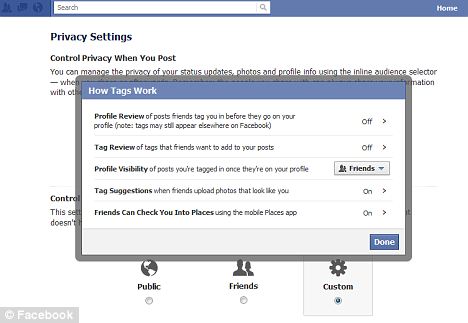 Jason Sattler of F-Secure wrote, “This feature is important because it gives you control over your profile. If a potential employer or an organization considering you for a scholarship is viewing your profile, you don’t want to give others the ability to post questionable images directly on your wall.” On introducing these changes, Facebook said that people had been asking for this feature for some time.
Earlier, the tagged photos would appear instantly on the profile and the only option available for the users was damage control.
Dot Com Infoway helps clients market their products/services through cost-effective Internet Marketing and Social Media Marketing solutions. To get a free quote for these services, contact us.



![The Game Marketing Guide: Pre and Post-Launch Strategies [Infographic]](https://www.dotcominfoway.com/wp-content/uploads/2023/09/DCI-Game-Marketing-blog-1.jpg)
Latest Posts
 October 16, 2026
How to Reactivate Inactive App Users Without Increasing Your Acquisition Budget
Reactivating inactive app users is an effective way to improve engagement without increasing your user acquisition budget. While advertising, influencer marketing, and App Store Optimization can help attract new users, some may stop using your app over time. Reactivating inactive...
 October 14, 2026
Getting App Downloads but No Revenue? 7 App Marketing Problems to Fix
Getting lots of downloads is a great thing, but if you aren’t generating revenue, you could be missing valuable business opportunities. Many businesses invest significant time and money in developing and marketing their apps, yet struggle to turn downloads...
 October 12, 2026
Custom Web Development vs Website Builders: Cost, Scalability, SEO, and Long-Term ROI
Imagine that a business wants to establish its online presence. It can choose a website builder to launch a website quickly using ready-made templates, or invest in custom web development to create a website tailored to its specific needs....
 October 08, 2026
Why eCommerce Customers Abandon Checkout and How to Fix It
Let’s imagine that there is a customer who shops online. He browses the online store’s catalog, finds the item that he wants to purchase, and adds it to his cart. However, he does not complete the order, resulting in...
 October 06, 2026
From App Idea to Profitable Product: A Business Guide to Validation, Development, and Monetization
Every business wants to turn its ideas into successful applications. However, many organizations invest in development and distribution without knowing whether their products will attract customers or generate revenue. As a result, they waste resources creating applications that may...
 October 05, 2026
Is Your Mobile App Outdated? 7 Signs It’s Time for an Upgrade
Your app launched to great reviews, but a few years on, downloads have flattened and complaints are creeping in. If your business needs a mobile app upgrade, it may be time to consider modernizing it. Devices, operating systems, and...
 September 28, 2026
From Apps to AI Agents: How Agentic AI Is Redefining the Mobile Experience in 2027
For years, the mobile experience has followed a familiar pattern: users open an app, navigate through menus, enter information, select an action, and wait for a result. Agentic AI is beginning to change that model. Instead of requiring users to manually...
 September 24, 2026
SEO AEO Grader ToolAre Search Engines Hiding Your Content? Find Out with Our Free SEO & AEO Audit Tool
You publish high-quality content, optimize your website, and follow SEO best practices, but your pages still struggle to appear on search engines. You are not alone. Many businesses face the same challenge where their content exists online but fails...
 September 23, 2026
Your Website Works Today but Cannot Scale Tomorrow: Signs of an Outdated Architecture
A website can appear successful on the surface while quietly developing problems underneath. It may load correctly, handle current visitors, and support existing business operations, but that does not always mean it has a scalable website architecture prepared for...
 September 21, 2026
From Creation to Conversion: The Business Case for Replacing Traditional B2B Video Agencies with Hybrid AI Workflows
Video has become one of the most important communication tools for modern B2B businesses. Companies use videos to explain complex products, showcase solutions, educate customers, support sales teams, and build stronger brand connections. However, as businesses demand more content...
Get the latest insights from Dot Com Infoway straight to your inbox.