Custom Web Development vs Website Builders: Cost, Scalability, SEO, and Long-Term ROI

By

9 mins read

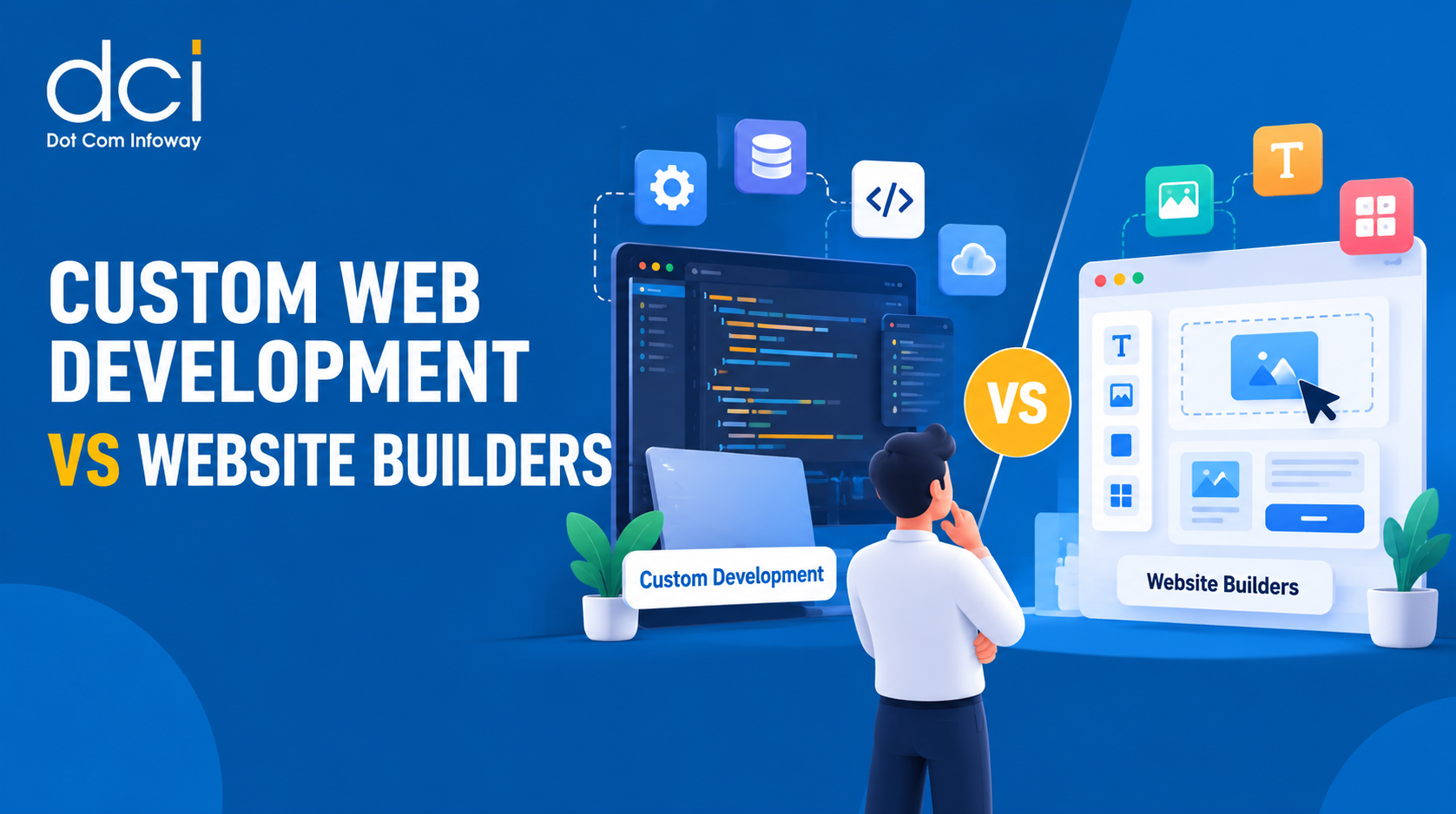
Imagine that a business wants to establish its online presence. It can choose a website builder to launch a website quickly using ready-made templates, or invest in custom web development to create a website tailored to its specific needs. Both options help businesses build an online presence, but they differ in cost, flexibility, scalability, SEO capabilities, and long-term return on investment ROI.

Choosing the right approach depends on the business’s budget, technical requirements, marketing goals, and future growth plans. Understanding these differences can help businesses make an informed decision and avoid unnecessary development costs.

custom web development

What Are the Main Differences Between Custom Web Development and Website Builders?

Custom web development and website builders serve different business needs. While one offers greater control over functionality and design, the other provides a convenient way to launch and manage a website.

1. Initial Development Cost

Cost is one of the first factors businesses consider when choosing a website development approach. Website builders generally offer a lower starting cost because they provide ready-made templates, hosting options, and built-in tools. However, premium subscriptions, additional plugins, and advanced features may increase expenses over time.

Custom web development usually requires a larger initial investment because it involves planning, design, coding, testing, and deployment.

What to consider:

  1. Compare the initial development cost with ongoing expenses.
  2. Include hosting, maintenance, subscriptions, and third-party tools in your budget.
  3. Estimate the cost of adding new features in the future.
  4. Consider the potential expense of migrating to another platform.

Businesses that need tailored functionality can explore custom web development services to understand how a website can be designed around their requirements.

2. Customization and Functionality

Website builders allow businesses to create websites using predefined templates and drag-and-drop editors. They are useful for portfolios, landing pages, and standard business websites. However, some platforms may restrict advanced customization or depend on third-party integrations.

Custom web development allows developers to create specific features, layouts, and workflows according to business requirements.

What to consider:

  1. Identify the essential features your website needs.
  2. Determine whether ready-made templates can support those requirements.
  3. Evaluate the need for custom integrations, booking systems, or customer portals.
  4. Choose an approach that provides sufficient flexibility without unnecessary complexity.

For businesses with specialized workflows or advanced integrations, custom web application development may be worth considering.

3. Website Scalability and Future Growth

A website that meets a business’s current needs may not always support its future plans. As traffic increases, products expand, and customer expectations change, the website may require additional functionality and technical improvements.

Custom web development allows the architecture to be planned around expected growth. Website builders can also support expansion, but their capabilities depend on the selected platform and subscription plan.

What to consider:

  1. Estimate future traffic and website functionality requirements.
  2. Check whether the platform supports additional pages, products, and integrations.
  3. Evaluate how easily new features can be implemented.
  4. Consider whether future expansion might require a platform migration.

The right choice should support business growth without introducing unnecessary technical or financial limitations.

4. Search Engine Optimization (SEO)

Search engine optimization helps businesses improve their visibility in search results and attract relevant organic traffic. Both custom websites and website builders can support SEO, provided they are implemented and optimized correctly.

Custom development can offer greater control over technical SEO elements, including URL structures, page templates, structured data, and website performance. Website builders commonly provide essential SEO features such as editable title tags, meta descriptions, and sitemap generation.

What to consider:

  1. Use relevant keywords based on user search intent.
  2. Create helpful, original content for your target audience.
  3. Optimize page titles, meta descriptions, headings, and URLs.
  4. Improve mobile usability and page-loading performance.
  5. Monitor indexing and organic traffic using tools such as Google Search Console.

Following web design and development best practices can also help businesses make informed decisions about website usability, performance, and development priorities.

A custom website does not automatically rank higher than a website builder site. SEO results depend on content quality, technical implementation, competition, and ongoing optimization.

5. Website Maintenance and Security

Every website requires regular maintenance to remain functional, secure, and reliable. The level of responsibility depends on the development approach and the services included.

Website builders often simplify hosting, platform updates, and routine management. Custom websites may require developer assistance for software updates, security patches, performance improvements, and troubleshooting.

What to consider:

  1. Understand who is responsible for website updates.
  2. Review available backup and recovery options.
  3. Keep software, plugins, and integrations updated.
  4. Monitor website performance and security regularly.
  5. Plan a maintenance budget that matches the website’s complexity.

A clear maintenance plan helps businesses reduce downtime and maintain a reliable online experience.


            mobile-design-300x300

             Ready to Build a Website That Grows With Your Business?

            Get the right balance of performance, scalability, and SEO with professional web development solutions tailored to your business needs.


            How Can Businesses Choose the Right Website Development Approach?

              Choosing between custom development and a website builder requires an understanding of business goals, available resources, and technical requirements.

              • Choose custom web development when you need specialized features, complex integrations, greater design flexibility, or control over the technical architecture.
              • Choose a website builder when you need a simple website, faster launch, lower initial costs, and straightforward content management.
              • Evaluate long-term expenses by considering maintenance, subscriptions, future upgrades, and potential migration costs.
              • Review your growth plans to determine whether the website can accommodate future products, services, and traffic.
              • Set measurable goals to evaluate how effectively the website supports leads, sales, and customer engagement.

              Neither option is ideal for every business. The best solution is the one that meets current requirements while providing an appropriate path for future development.

                    How to Evaluate the Long-Term ROI of a Website

                    A website should be evaluated according to the value it delivers to the business, not just the cost of building it. Return on investment depends on how effectively the website supports revenue generation, customer acquisition, and operational efficiency.

                    Businesses should monitor the following indicators:

                    • Conversion rate: The percentage of website visitors who complete a desired action.
                    • Lead generation: The number of qualified inquiries generated through the website.
                    • Customer acquisition cost: The amount spent to acquire each customer.
                    • Maintenance expenses: The ongoing cost of keeping the website operational.
                    • Website engagement: How visitors interact with pages, content, and calls to action.
                    • Revenue contribution: The sales or business value generated through the website.

                      Which is better for long-term business growth: custom web development or a website builder?

                      Custom web development may be more suitable for businesses requiring specialized features, advanced integrations, and greater technical flexibility. Website builders are often a practical choice for businesses that prioritize affordability, faster setup, and simple website management. The right option depends on business goals, budget, and future requirements.

                      Frequently Asked Questions

                      1. Is custom web development better than website builders?

                      Custom web development is often suitable for businesses that require unique features, advanced integrations, and greater control over their websites. Website builders are generally suitable for simpler projects that prioritize affordability and ease of use.

                      2. What is the difference between custom website development and website builders?

                      Custom website development involves building a website around specific business requirements, while website builders use ready-made templates and visual editing tools. The main differences include customization, cost, scalability, and technical control.

                      3. Which is better for SEO: custom websites or website builders?

                      Both can perform well in search results. Custom websites offer greater technical flexibility, while website builders provide essential SEO tools. Rankings depend on content quality, technical optimization, user experience, and competition.

                      4. How much does custom website development cost compared to website builders?

                      Custom website development generally has a higher initial cost because it involves tailored design, development, and testing. Website builders usually have lower starting costs, although subscriptions, premium features, and integrations can increase ongoing expenses.

                      Final Thoughts

                      Choosing between custom web development and website builders depends on your business goals, budget, and long-term growth plans. While website builders suit basic needs, custom web development offers greater flexibility, scalability, and control over functionality and SEO.

                      At Dot Com Infoway, we help businesses build digital solutions aligned with their unique requirements and future goals. Explore our services to discover how the right web development approach can support your business growth.

                                      Latest Posts

                                      Get the latest insights from Dot Com Infoway straight to your inbox.