7. Customer Match Lists from CRM Data
Upload your email lists directly to Google Ads through Customer Match. This lets you target people who’ve already interacted with your business: newsletter subscribers, webinar attendees, or trial users who never converted.
The beauty here is bypassing the pixel entirely. You’re reaching known contacts across YouTube, Display, Gmail, and Search without waiting for them to revisit your site first.
8. Lookalike Audiences Built from Top Customers
Take your highest-value customers and let Google’s algorithms find similar users. Lookalike audiences work across multiple channels, helping you scale beyond your existing remarketing pools while maintaining quality.
Meta’s Advantage+ campaigns operate on similar principles: using machine learning to identify patterns in your best converters and finding new users who match those patterns.
9. Time-Decay Bid Adjustments
Not technically a “list,” but a strategy worth mentioning. Layer your remarketing lists with bid adjustments based on recency. Users who visited yesterday deserve higher bids than users who visited three weeks ago.
This approach ensures your budget flows toward the warmest audiences while still maintaining some presence with older visitors who might resurface.
10. Engaged Non-Converters by Traffic Source
Segment users who came from specific channels: organic search, social media, email campaigns: but didn’t convert. Each traffic source attracts users with different mindsets and expectations.
Someone who found you through an informational blog post needs different messaging than someone who clicked a promotional email. Tailor your remarketing creative accordingly, and watch your click-through rates climb.
Implementation Tips That Actually Matter
Start by auditing your current remarketing setup. Are you using Google Analytics for list creation, or relying solely on the basic AdWords pixel? Analytics offers far more flexibility: you can filter by geography, session duration, events, and dozens of other dimensions.
Structure each strategy with dedicated ad groups or campaigns when possible. Generic creative across all lists defeats the purpose of segmentation. Bespoke messaging for each audience is where the magic happens.
Finally, treat remarketing as an ongoing experiment, not a set-and-forget tactic. Test different list combinations, review placement reports regularly, and continuously refine based on performance data.
Ready to Recover Your Lost Revenue?
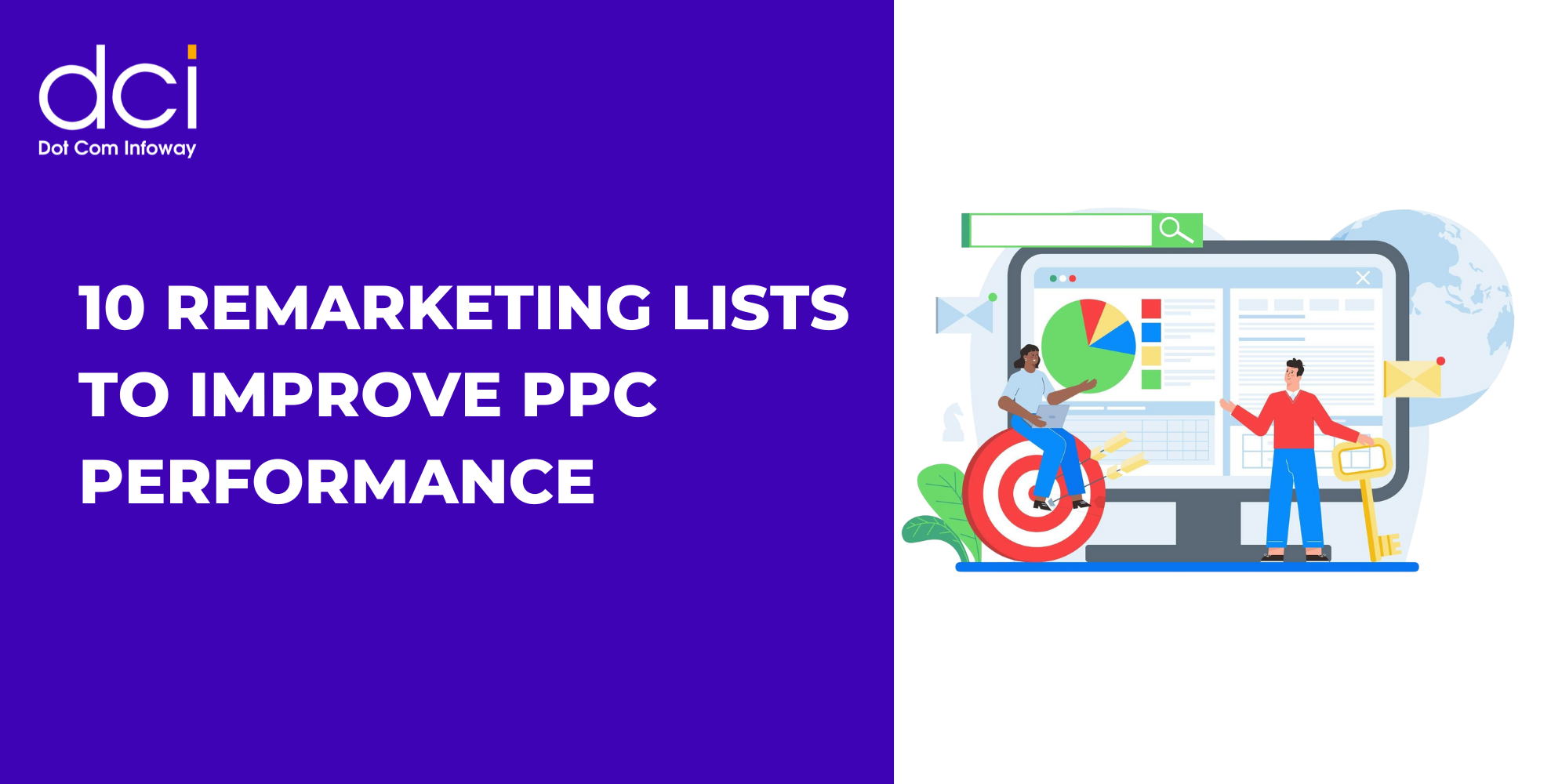
The gap between average PPC performance and exceptional results often comes down to how strategically you approach audience segmentation. These ten remarketing lists aren’t theoretical concepts: they’re battle-tested tactics used by performance marketers generating real ROI.
If building and optimizing these lists feels overwhelming, you don’t have to figure it out alone. The team at Dot Com Infoway’s Performance Marketing Services specializes in exactly this: crafting data-driven remarketing strategies that turn abandoned visitors into paying customers.
Your traffic is already there. It’s time to bring them back.









![The Game Marketing Guide: Pre and Post-Launch Strategies [Infographic]](https://www.dotcominfoway.com/wp-content/uploads/2023/09/DCI-Game-Marketing-blog-1.jpg)