What Is AI Mode SEO?
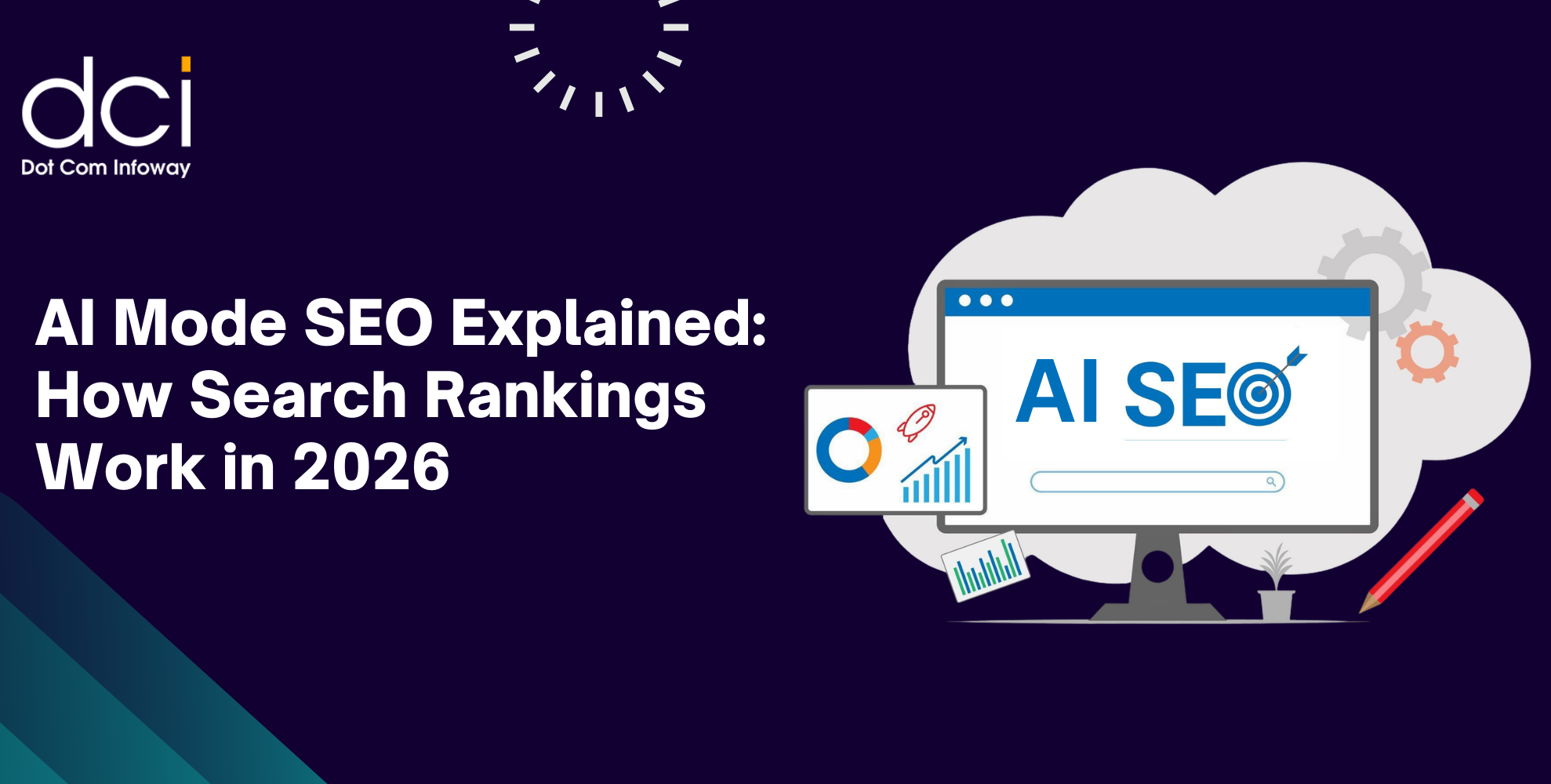
AI Mode SEO is the strategic process of optimizing content so it gets cited, referenced, and included within AI-generated search responses not just ranked in traditional listings.
In the past, SEO was straightforward: optimize for keywords, build backlinks, improve technical health, and climb the rankings. Today, that’s only part of the equation. Search engines now operate in an AI-driven mode where they synthesize answers from multiple sources.
If your content is structured clearly, demonstrates expertise, and thoroughly addresses user intent, it may be pulled into those AI summaries. That visibility often carries more authority than simply appearing as a blue link.
In simple terms, AI Mode SEO shifts the goal from “ranking higher” to “becoming the trusted source AI chooses.”
How Search Rankings Actually Work in 2026
Search Is Built Around Intent, Not Just Keywords
In 2026, search engines no longer rely heavily on exact keyword matching. AI systems understand context, relationships between topics, and variations in phrasing. When someone searches for “best SEO services for AI-driven search engines,” the system evaluates content discussing AI search optimization, structured data, authority signals, and conversion strategies even if the wording differs slightly.
This means surface-level content rarely performs well. Pages must answer the deeper intent behind the query. If the search is informational, the content must educate clearly. If it is transactional, it must build trust and demonstrate value.
AI Mode SEO thrives on contextual relevance rather than repetition.
AI Breaks Complex Queries Into Multiple Layers
When users ask layered or detailed questions, AI expands the query behind the scenes. For example, a search about how to optimize for Google AI Mode may trigger analysis of technical SEO, structured schema, topical authority, and content architecture simultaneously.
The AI then gathers insights from various credible sources to construct a unified response.
If your content only addresses one narrow aspect, it may be overlooked. But if it explores the topic holistically, demonstrating depth and clarity, the likelihood of inclusion increases significantly.
This layered evaluation process is one of the defining characteristics of AI Mode SEO.
Authority Now Outweighs Position
One of the biggest misconceptions in 2026 is assuming that ranking number one guarantees visibility. In AI-driven search, position is only one factor. What truly matters is whether your content is considered authoritative and trustworthy enough to be cited.
Search engines assess experience, expertise, authoritativeness, and trust often referred to as E-E-A-T. Brands that consistently publish well-structured, insightful, and updated content are more likely to be referenced in AI summaries, even if they are not dominating traditional rankings.
For businesses offering SEO services, this shift is especially important. Clients are increasingly interested in AI visibility, not just ranking reports.
Core Elements That Influence AI-Driven Rankings
Depth and Topical Authority
In 2026, publishing dozens of shallow blog posts is no longer an effective strategy. AI systems prefer comprehensive resources that demonstrate subject mastery.
If your website discusses AI search optimization, it should also explore related themes such as content structure for AI engines, schema implementation, authority building, and evolving ranking factors. The broader and more cohesive your content ecosystem, the stronger your authority signals become. AI Mode SEO rewards completeness.
Structured and Extractable Content
Search engines must be able to understand and extract information efficiently. Clear heading hierarchy, logical progression of ideas, concise explanations, and semantic clarity all contribute to this.
When AI pulls a paragraph from your page, it should stand independently and provide immediate value. Overly long, vague, or disorganized content reduces the chances of being selected. Formatting in 2026 is no longer cosmetic it is strategic.
Long-Tail Keyword Strategy in an AI Era
Short, competitive keywords are crowded and increasingly volatile. Long-tail search phrases, however, align closely with intent and often convert better.
Terms such as “AI Mode SEO services for startups,” “how AI search rankings work in 2026,” or “optimize website for AI-powered search engines” attract users who are actively seeking solutions. These lower-difficulty, high-intent queries allow businesses to gain visibility more strategically.
When integrated naturally into high-quality content, long-tail keywords strengthen semantic relevance and support AI Mode SEO performance.








![The Game Marketing Guide: Pre and Post-Launch Strategies [Infographic]](https://www.dotcominfoway.com/wp-content/uploads/2023/09/DCI-Game-Marketing-blog-1.jpg)