What Are Self-Learning Apps and Why Do They Matter?
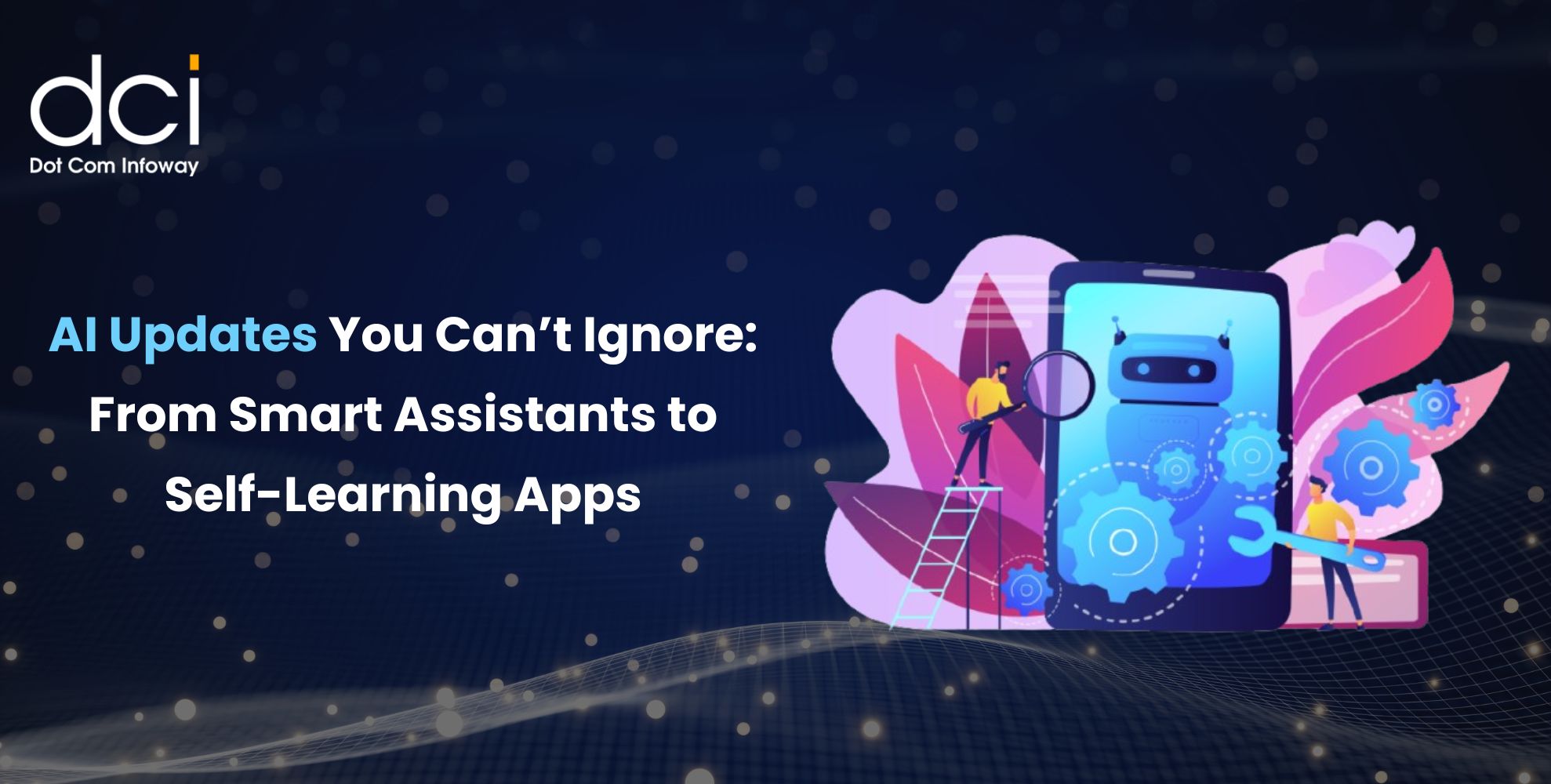
Self-Learning Apps are AI-powered applications that evolve based on user interactions and data patterns. Instead of being manually updated, these apps continuously learn and improve their performance over time.
Unlike traditional applications, which rely on predefined logic, these intelligent systems use machine learning algorithms to adapt dynamically. This allows businesses to deliver highly personalized experiences without constant manual intervention.
For example, Netflix refines its content recommendations in real time, while Amazon adjusts product suggestions based on browsing and purchase behavior. These are not static systems-they are constantly learning.
Research from McKinsey shows that companies implementing AI-driven personalization can achieve up to 40% higher revenue growth. This highlights why adopting Self-Learning Apps is no longer a luxury but a necessity.
The Evolution of Smart Assistants in Modern Applications
Smart assistants have rapidly evolved from simple voice tools into powerful AI-driven systems capable of handling complex workflows. Earlier, assistants like Siri or Google Assistant were limited to basic commands. Today, they are integrated into enterprise systems and customer-facing platforms.
Recent AI updates have significantly enhanced their capabilities. They now understand context, process multiple requests, and even perform multi-step actions such as booking services or resolving customer queries without human intervention.
For businesses, this evolution brings major advantages. AI assistants can reduce operational costs, improve response times, and deliver a more human-like customer experience. Studies show that AI-powered support systems can lower customer service costs by up to 30% while improving satisfaction rates.
This transformation is laying the foundation for more advanced Self-Learning Apps, where assistants are not just reactive but proactive.
From Smart Assistants to Fully Adaptive Applications
The transition from assistants to intelligent applications marks a significant leap in digital innovation. While smart assistants respond to user inputs, Self-Learning Apps go a step further by predicting user behavior and making decisions independently.
These applications analyze vast amounts of data to identify patterns and trends. Based on these insights, they continuously refine their functionality. For example, Spotify automatically updates playlists based on listening habits, and Google Maps predicts traffic conditions before users even begin their journey.
This shift is powered by continuous AI updates in machine learning, natural language processing, and data analytics. As a result, applications are becoming more intuitive, responsive, and efficient.
Real-World Use Cases Driving Business Growth
AI is not just a concept-it’s actively transforming industries through practical applications.
In e-commerce, Amazon’s recommendation engine is responsible for approximately 35% of its total revenue. This demonstrates how Self-Learning Apps can directly impact business performance.
In healthcare, AI-powered applications assist doctors by analyzing medical data and identifying patterns that may not be immediately visible. Google Health has developed models that match or exceed human accuracy in certain diagnostic tasks.
In finance, AI systems are used to detect fraudulent transactions in real time. According to PwC, AI can reduce fraud detection time by up to 50%, making financial systems more secure and efficient.
Marketing is another area where AI is creating massive impact. Businesses now use AI to analyze customer behavior, predict intent, and automate campaigns. With the right AI services, companies can optimize their marketing strategies and improve conversion rates significantly.
Key AI Updates Transforming App Development
Several important AI updates are shaping the future of digital applications.
Generative AI is one of the most significant advancements. It enables applications to create content, generate code, and provide personalized responses. This is redefining how app development services are delivered, making them faster and more efficient.
Another major development is edge AI, which allows data processing to happen closer to the user. This reduces latency and improves performance, especially in real-time applications.
AI agents are also gaining traction. These systems can perform tasks independently, manage workflows, and interact with users without constant supervision. This is a critical step toward fully autonomous Self-Learning Apps.
Additionally, multimodal AI is enabling applications to process text, voice, images, and video simultaneously, creating richer and more engaging user experiences.
Why Businesses Are Investing in Self-Learning Apps
Businesses are rapidly adopting Self-Learning Apps because they deliver tangible benefits across multiple areas.
One of the biggest advantages is improved decision-making. AI-driven insights allow companies to analyze data faster and make more informed choices. Accenture reports that businesses using AI achieve 5 to 6 percent higher productivity.
Personalization is another key factor. Customers expect tailored experiences, and AI makes it possible to deliver dynamic content, targeted recommendations, and customized interactions.
Cost efficiency also plays a major role. Automation reduces the need for manual processes, lowering operational costs while improving efficiency.
Most importantly, adopting AI provides a strong competitive advantage. Companies that invest early in intelligent systems are better positioned to attract and retain customers.





![The Game Marketing Guide: Pre and Post-Launch Strategies [Infographic]](https://www.dotcominfoway.com/wp-content/uploads/2023/09/DCI-Game-Marketing-blog-1.jpg)