The Market Reality: Why Fleet Apps Are Non-Negotiable
Let’s talk numbers, because they tell a compelling story. According to Future Market Insights, the global fleet management market is projected to reach $153.7 billion by 2035. That’s not gradual growth: that’s an explosion driven by e-commerce demands, last-mile delivery complexity, and regulatory pressures around emissions.
“Fleets are shifting from expansion-focused strategies toward efficiency optimization, making sophisticated app capabilities essential for competitive advantage.” – SP Global Mobility
Here’s what’s fueling this shift: companies implementing modern fleet management solutions are seeing 10-20% fuel savings, according to Global Market Insights. When fuel accounts for 30-40% of operating costs, that’s not a marginal improvement: that’s the difference between profit and loss.
The reality? Manual coordination and disconnected tools become unsustainable as fleet size increases. Spreadsheets and radio calls worked for a 20-truck operation in 2015. They’re a liability for a 200-truck operation in 2026.
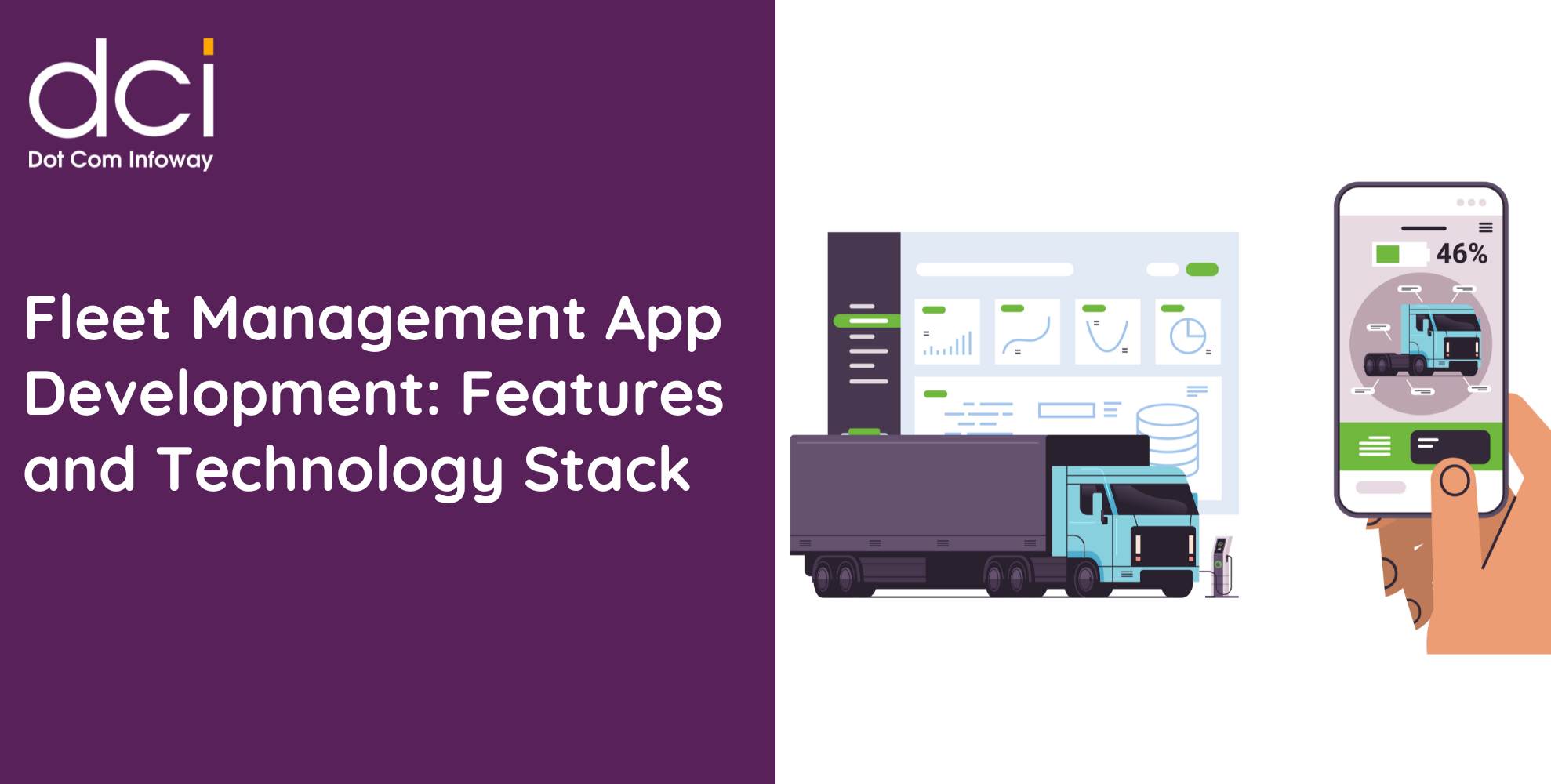
The Features That Actually Matter in Fleet Management App Development
Not all fleet apps are created equal. The difference between a basic GPS tracker and a comprehensive fleet management platform is like comparing a bicycle to a Tesla. Both get you from A to B, but one does it while optimizing every variable along the way.
AI-Powered Predictive Maintenance
This is where modern fleet management app development earns its ROI. Instead of waiting for a vehicle to break down (reactive maintenance) or replacing parts on arbitrary schedules (preventive maintenance), AI analyzes engine data, sensor readings, and historical patterns to predict failures before they occur.
The results speak for themselves. According to Clue Insights, companies implementing predictive maintenance see up to 50% reduction in vehicle downtime. Geotab’s research shows fleets experiencing nearly 30% reduction in safety-related vehicle failures through AI-driven monitoring.
Think about what that means operationally. Fewer emergency repairs. Fewer missed deliveries. Fewer angry customers. More vehicles on the road, generating revenue.
Real-Time Telematics and Location Intelligence
Telematics forms the nervous system of any serious fleet app. We’re talking continuous connectivity across vehicles, drivers, and deliveries through a combination of manufacturer-fitted systems and aftermarket data-recording devices.
Modern telematics goes far beyond simple “where is my truck?” tracking. It feeds into planning workflows, supports mid-shift adjustments, and triggers exception alerts for faster response to delays, breakdowns, or compliance issues. Verizon Connect and Samsara have built entire ecosystems around this principle: turning raw location data into actionable operational intelligence.
Driver Behavior Analytics and Safety Scoring
Here’s an uncomfortable truth: your drivers are either your greatest asset or your biggest liability. Harsh braking, rapid acceleration, distracted driving, and speeding don’t just burn fuel: they dramatically increase accident risk and insurance premiums.
AI-powered camera systems have evolved from passive incident recorders to active co-pilots. Edge computing enables real-time hazard detection and immediate driver coaching. The shift from “reviewing footage after an accident” to “preventing the accident entirely” represents a fundamental change in fleet safety philosophy.
Route Optimization That Actually Adapts
Static route planning is dead. AI-based models now adapt route plans to demand patterns, capacity constraints, traffic conditions, and service commitments without constant manual input. The best fleet management app development projects build route optimization that learns from every delivery, continuously improving efficiency.
EV Fleet Monitoring
With electric vehicles entering commercial fleets at scale, monitoring battery health, charging schedules, and range optimization has become essential. This isn’t a future consideration: it’s a 2026 requirement, especially as regulatory requirements like Europe’s Corporate Sustainability Reporting Directive intensify.









![The Game Marketing Guide: Pre and Post-Launch Strategies [Infographic]](https://www.dotcominfoway.com/wp-content/uploads/2023/09/DCI-Game-Marketing-blog-1.jpg)