What is Programmatic SEO?
Programmatic SEO is the process of using automation, data, and templates to create large volumes of SEO-optimized pages targeting long-tail keywords.
Instead of writing 100 separate blog posts manually, you create a structured template and populate it dynamically with data. This allows you to scale content production without sacrificing quality or relevance.
It enables rapid content scaling, helps target thousands of long-tail keywords, increases organic traffic potential, and improves indexing speed across search engines and AI platforms.
Companies like Zapier, Wise, and TripAdvisor have successfully used Programmatic SEO to generate millions of organic visits by targeting highly specific search queries.
Why Programmatic SEO Works in 2026
Search behavior has evolved. Users now search with highly specific queries, and AI search engines prioritize structured, direct answers.
According to industry studies, around 70% of search queries are long-tail keywords, and pages targeting these queries often see significantly higher conversion rates. In many cases, they can drive up to three times more conversions compared to generic keywords. AI search engines also prefer structured, data-rich content that can be easily extracted and presented.
Programmatic SEO aligns perfectly with these trends by creating highly relevant pages at scale.
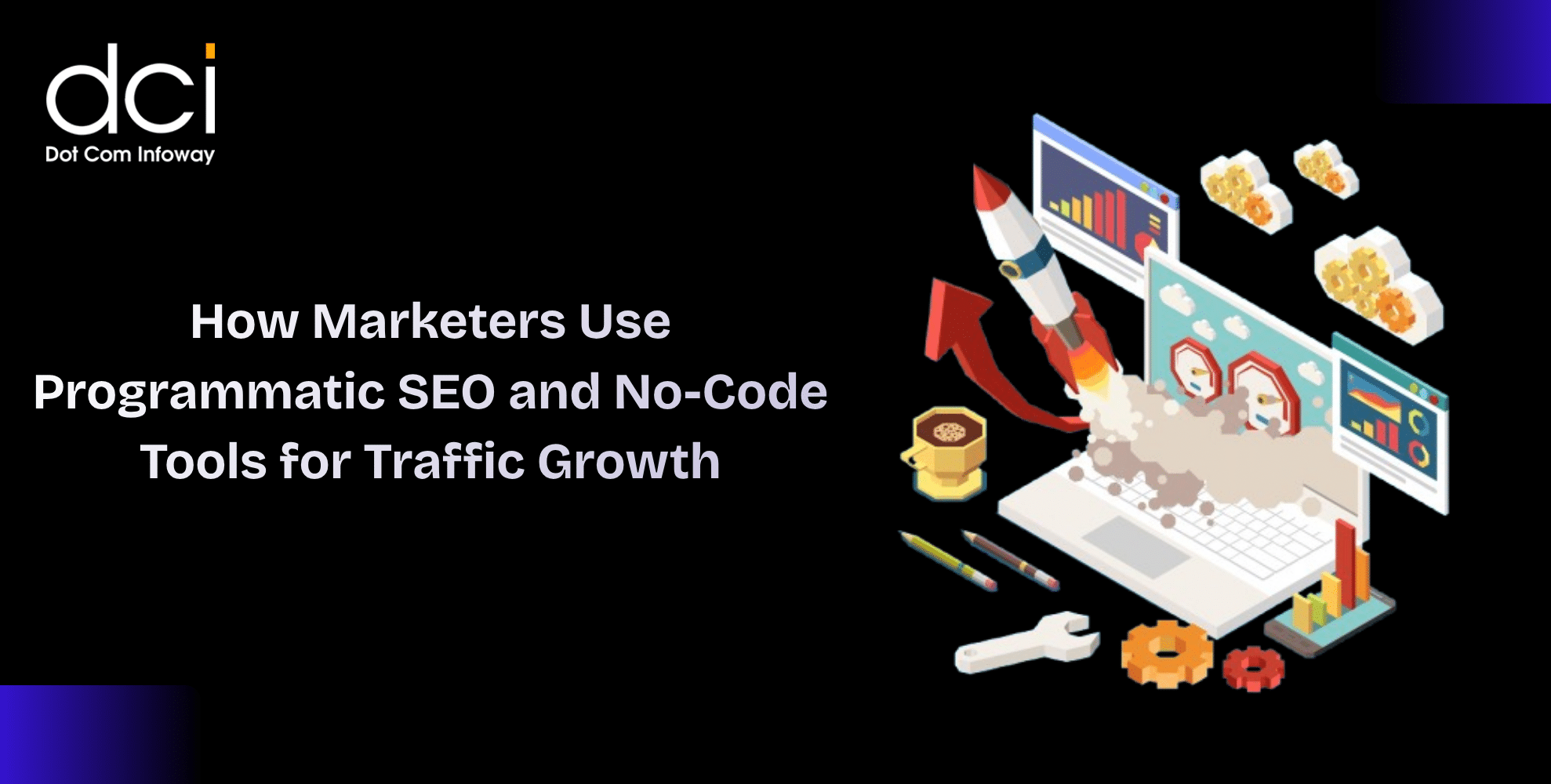
Role of No-Code Tools in Scaling SEO
One of the biggest barriers to implementing Programmatic SEO used to be technical complexity. Today, no-code tools have removed that barrier entirely.
Marketers can now build scalable SEO systems without writing a single line of code.
Popular No-Code Tools Used:
- Airtable (database management)
- Webflow (website creation)
- Zapier (automation workflows)
- Notion (content organization)
These tools allow teams to manage large datasets, automate page creation, publish content dynamically, and update thousands of pages instantly. This combination makes Programmatic SEO accessible to startups, agencies, and enterprises alike.
How Marketers Execute Programmatic SEO
1. Keyword Research at Scale
The foundation of Programmatic SEO is identifying scalable keyword patterns.
Instead of targeting single keywords, marketers focus on templates like:
- “Best for [use case]”
- “[Service] in [location]”
- “[Tool] alternatives for [industry]”
For example:
By identifying patterns, you can generate thousands of keyword variations.
2. Building Data-Driven Content Templates
Templates are the backbone of Programmatic SEO.
A typical template includes:
- Title with keyword variation
- Intro paragraph
- Data-driven sections
- FAQs
- Internal links
The goal is to maintain consistency while ensuring each page provides unique value.
3. Integrating Structured Data
AI search engines prioritize structured content. That’s why schema markup and clean formatting are critical.
Best practices include:
- Using clear headings (H1, H2, H3)
- Adding bullet points for readability
- Including FAQs for AEO (Answer Engine Optimization)
- Structuring data logically
This improves visibility not just on Google, but also in AI-generated responses.
4. Automating Page Creation
With no-code tools, marketers automate publishing workflows.
Example workflow:
- Store keyword data in Airtable
- Connect it to Webflow CMS
- Use Zapier to automate updates
- Publish hundreds of pages instantly
This process enables continuous growth without manual effort.
5. Continuous Optimization
Even with automation, performance tracking is crucial.
Marketers monitor organic traffic growth, click-through rates, keyword rankings, and conversion performance. By refining templates and updating content regularly, they ensure long-term success and sustained visibility.








![The Game Marketing Guide: Pre and Post-Launch Strategies [Infographic]](https://www.dotcominfoway.com/wp-content/uploads/2023/09/DCI-Game-Marketing-blog-1.jpg)