



Integrating Large Language Models into existing business applications allows businesses to introduce AI-powered capabilities without rebuilding their entire software systems. By integrating Large Language Models (LLMs), organizations can automate customer support, generate reports, analyze business data, and improve existing workflows. From enhancing customer interactions to streamlining internal operations, LLM integration helps businesses make their applications smarter and more efficient.
How to Integrate Large Language Models Into Existing Business Applications
11 mins read
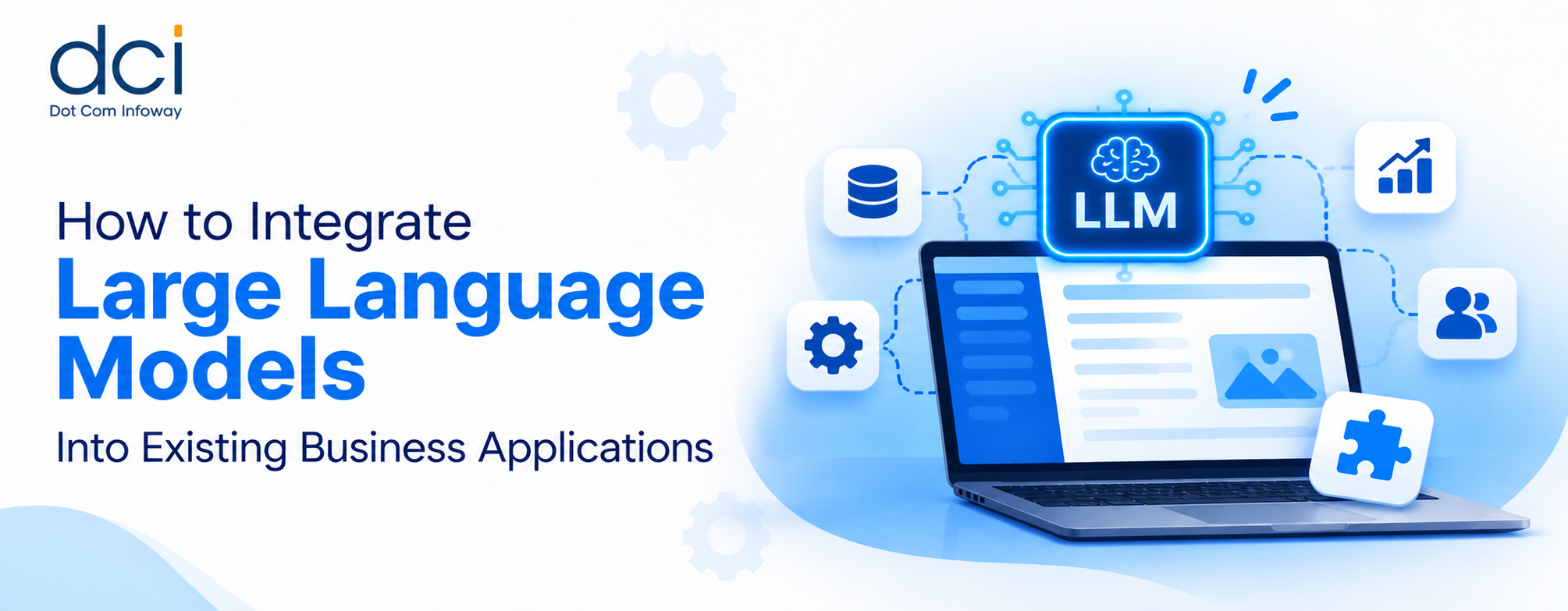
How to Integrate Large Language Models Into Your Existing Software
Integrating Large Language Models into existing business applications involves more than connecting an AI API. Businesses need to understand their requirements, select suitable models, evaluate their existing infrastructure, and plan how AI capabilities will work with current software.
Before integrating an LLM, businesses should identify the problems they want to solve. Different applications require different AI capabilities, so defining clear objectives helps determine the right integration approach.For example, an e-commerce platform may use an LLM to provide personalized product recommendations, while a customer relationship management (CRM) system may use it to summarize customer conversations and generate responses.
What to consider:
- Identify repetitive tasks that can benefit from AI automation.
- Understand where natural language processing can improve existing workflows.
- Determine whether the application needs text generation, summarization, or conversational capabilities.
- Define measurable objectives, such as reduced response time or improved operational efficiency.
- Prioritize use cases based on business value and implementation complexity.
Starting with clearly defined use cases helps businesses avoid unnecessary AI implementation costs and focus on practical improvements.
Selecting the right model is an important part of LLM integration. Different models offer varying capabilities, performance levels, pricing structures, and customization options.
Businesses can evaluate models such as GPT, Claude, Gemini, and open-source alternatives based on their application requirements.
The choice should depend on the complexity of tasks, data sensitivity, expected response quality, and available infrastructure.
What to consider:
- Compare model performance for the intended business tasks.
- Evaluate API availability and integration support.
- Review pricing based on expected usage and token consumption.
- Consider data privacy, security, and deployment requirements.
- Check whether the model supports customization or fine-tuning.
Choosing an appropriate model helps businesses balance performance, operational costs, and application requirements.
3. Evaluate Existing Application Architecture
Before introducing an LLM, businesses need to understand how their existing applications work. This includes reviewing the software architecture, databases, APIs, backend systems, and third-party integrations.
An architecture assessment helps identify whether the current application can support AI functionality or requires additional development.
What to consider:
- Review the existing application’s programming languages and frameworks.
- Identify available APIs and integration points.
- Evaluate database structures and data accessibility.
- Check whether the current infrastructure can handle additional AI processing.
- Identify compatibility issues that may affect integration.
A clear understanding of existing infrastructure helps developers plan a suitable integration strategy without disrupting essential business operations.

Want to integrate AI into your existing business applications?
Dot Com Infoway helps businesses build and integrate custom AI solutions that improve workflows and business efficiency.
4. Select the Right LLM Integration Approach
Businesses can integrate Large Language Models into existing applications through different approaches. The right method depends on the application’s architecture, data requirements, and desired level of customization.
Common integration approaches include:
API-Based Integration
API-based integration allows applications to communicate with external LLM providers. Developers can send user inputs to the model and receive generated responses through API requests.
This approach is useful for applications that need AI capabilities without hosting or managing their own language models.
Retrieval-Augmented Generation
RAG connects an LLM with external knowledge sources, such as company documents, databases, and internal information systems. It retrieves relevant information before generating responses.
This approach is useful for businesses that need AI-generated answers based on their own organizational data.
Fine-TuningFine-tuning involves adapting a pre-trained model using specialized datasets to improve its performance for specific tasks.It can be useful when businesses require consistent outputs or domain-specific language capabilities.
What to consider:
- Choose API integration for faster implementation.
- Consider RAG when applications need access to internal business information.
- Evaluate fine-tuning for specialized requirements.
- Compare implementation costs and maintenance responsibilities.
- Select an approach that supports future application growth.
The right integration approach helps businesses introduce AI capabilities while maintaining compatibility with existing systems.
5. Connect LLM APIs With Existing Applications
After selecting the model and integration approach, developers can connect the LLM with existing applications through APIs.
This involves creating communication between the application backend and the selected LLM provider. Developers must also configure authentication, request handling, response processing, and error management.
For example, a customer support application can send customer queries to an LLM API, receive generated responses, and display them within the existing support interface.
What to consider:
- Configure API authentication and access permissions.
- Establish secure communication between the application and LLM provider.
- Develop backend services to process requests and responses.
- Implement error handling and response validation.
- Optimize API calls to manage latency and operational costs.
A properly configured integration allows AI functionality to work alongside existing application features without affecting the overall user experience.
6. Implement Data Security and Privacy Measures
Data security is an important consideration when integrating LLMs into business applications. Applications may process customer information, financial records, internal documents, and other sensitive business data.
Businesses must ensure that information shared with AI models is handled securely and according to applicable privacy requirements.
What to consider:
- Apply authentication and role-based access controls.
- Encrypt sensitive information during transmission and storage.
- Avoid sending unnecessary personal or confidential information to external models.
- Review the LLM provider’s data retention and privacy policies.
- Monitor API usage and access activities.
- Establish safeguards against prompt injection and unauthorized data access.
7. Test, Monitor, and Optimize LLM Performance
LLM integration does not end with implementation. Businesses need to continuously test and monitor model performance to ensure that AI-generated outputs meet application requirements.
Testing helps identify inaccurate responses, unexpected behavior, integration issues, and performance limitations before they affect users.
What to consider:
- Test different user inputs and real-world application scenarios.
- Evaluate response accuracy and relevance.
- Monitor API response times and token consumption.
- Identify hallucinations and incorrect AI-generated information.
- Collect user feedback to improve application performance.
- Regularly review model updates and integration requirements.
Continuous monitoring helps businesses maintain reliable AI-powered applications and improve their performance over time.
Make Your Business Applications Smarter With AI
Integrate intelligent AI capabilities into your existing software with solutions designed around your business requirements.
What Are the Common Challenges of Large Language Model Integration?
Integrating Large Language Models into existing applications can introduce technical and operational challenges. Understanding these issues early helps businesses plan effective solutions.
Common challenges include:
- Data compatibility: Existing applications may use different data formats and structures. Businesses should establish suitable data processing and transformation methods.
- Integration complexity: Older applications may not support modern API connections. Developers can use middleware and integration layers to connect different systems.
- High operational costs: Frequent model requests can increase API expenses. Businesses can optimize prompts, use caching, and select models based on task complexity.
- Response accuracy: LLMs may generate incorrect or incomplete information. RAG, output validation, and human review can help improve reliability.
- Security risks: Sensitive business information may be exposed through poorly managed integrations. Access controls, data encryption, and security testing are essential.
- Performance limitations: Large requests and complex prompts can increase response times. Optimizing token usage and managing API requests can improve application performance.
How to Measure the Performance of Integrated Large Language Models
Measuring the performance of an LLM integration helps businesses understand whether their AI implementation delivers the expected value.
Businesses can monitor the following indicators:
- Task completion rate: The percentage of AI-assisted tasks completed successfully.
- Response accuracy: How relevant and reliable the generated responses are.
- Processing time: The time required to complete AI-powered tasks.
- API and operational costs: The expenses associated with model usage and infrastructure.
- Customer satisfaction: User feedback about AI-powered application experiences.
- Employee productivity: Improvements in task completion and workflow efficiency.
- Error rate: The frequency of incorrect responses or failed AI operations.
Tracking these metrics helps businesses identify areas for improvement and evaluate the long-term value of LLM integration.
Frequently Asked Questions
1. Can Large Language Models be integrated into existing business applications?
Yes. Large Language Models can be integrated into existing business applications using APIs, middleware, RAG architectures, and other integration methods. The right approach depends on the application’s architecture and business requirements.
2. What are the common methods of LLM integration?
Common methods include API-based integration, Retrieval-Augmented Generation (RAG), and fine-tuning. Each approach supports different requirements, from connecting applications to external models to providing domain-specific AI capabilities.
3. How much does it cost to integrate an LLM into an existing application?
The cost depends on the selected model, application complexity, API usage, infrastructure, customization, and ongoing maintenance. Businesses should evaluate both initial development expenses and long-term operational costs.
4. Is LLM integration secure for business applications?
LLM integration can be implemented securely with appropriate safeguards, including data encryption, access controls, authentication, input validation, and secure API management. Businesses should also review their AI provider’s data handling policies.
Final Thoughts
Integrating Large Language Models into existing business applications helps organizations introduce AI-powered capabilities without replacing their entire software infrastructure. From automating workflows and improving customer interactions to processing business information, LLMs can support various operational requirements.
At Dot Com Infoway, we help businesses explore and implement AI-powered digital solutions that align with their operational needs. With the right AI development approach, organizations can enhance existing applications, improve workflows, and prepare their software systems for future business demands.
Must Read


Trending Blogs

Latest Posts
November 28, 2026
How to Integrate Large Language Models Into Existing Business Applications
Integrating Large Language Models into existing business applications allows businesses to introduce AI-powered capabilities without rebuilding their entire software systems. By integrating Large Language Models (LLMs), organizations can automate customer support, generate reports, analyze business data, and improve existing...
 November 27, 2026
ASO Guide: How to Get Your App Discovered in App Stores and AI Search, and Turn That Attention into Installs
Millions of apps compete for the same few seconds of attention, and most of them never get found. Teams often redesign the product when the real problem is a weak listing, or spend heavily on ads while the app...
 November 26, 2026
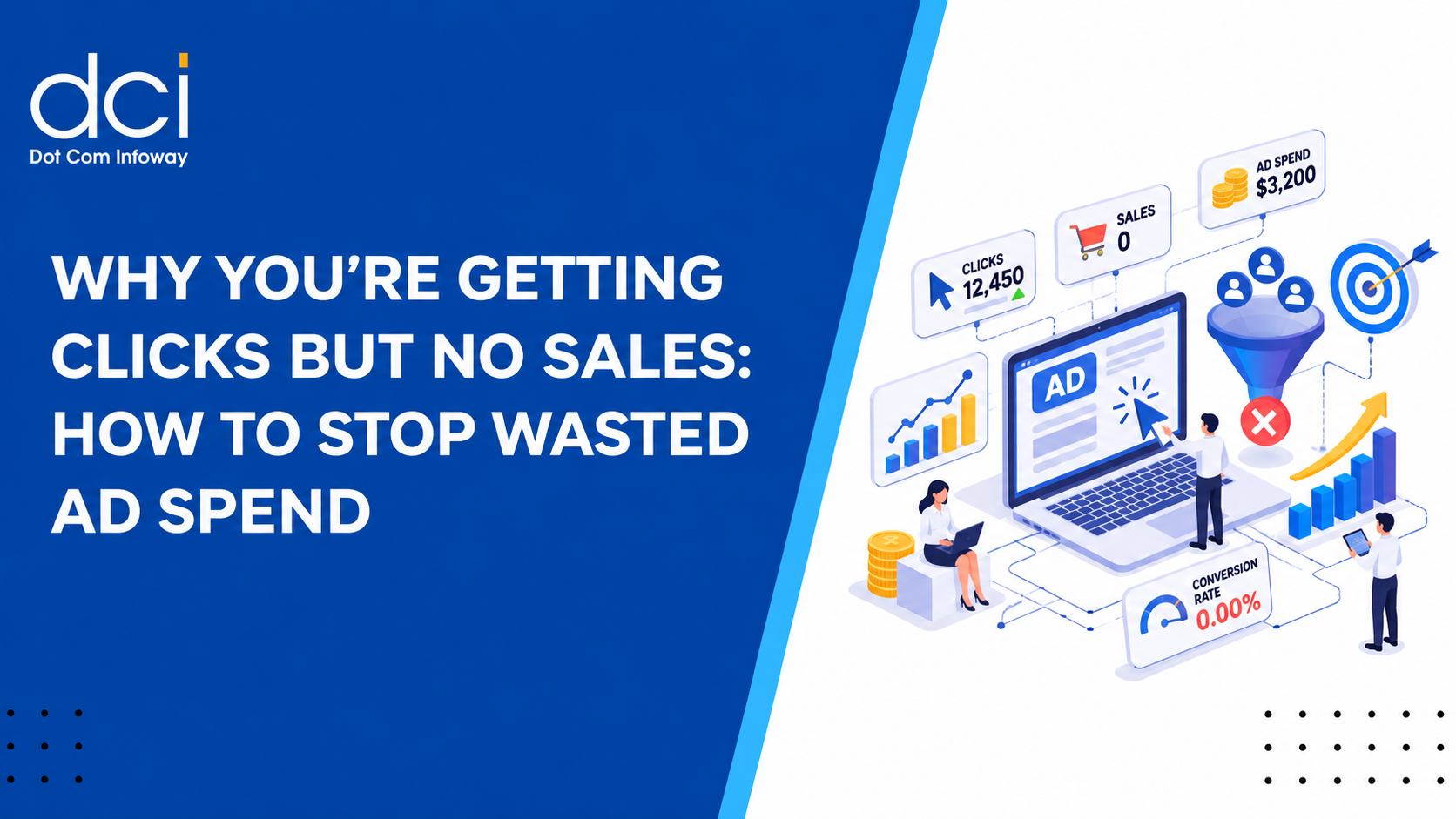
Why You’re Getting Clicks But No Sales: How to Stop Wasted Ad Spend
Getting clicks but no sales is one of the most common challenges businesses face when running paid advertising campaigns. While a high number of clicks may indicate that your ads are attracting attention, it does not necessarily mean that...
 November 25, 2026
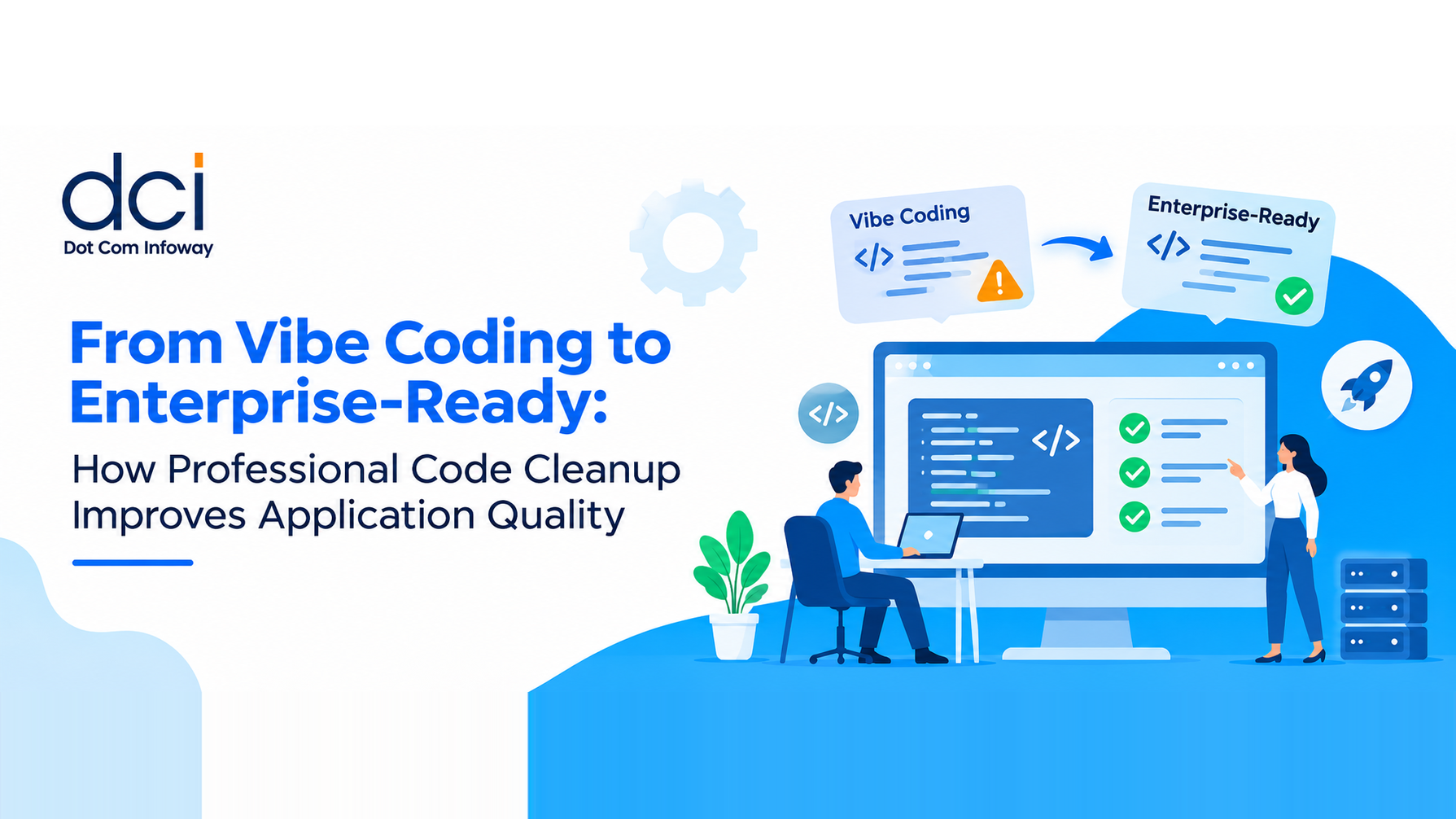
From Vibe Coding to Enterprise-Ready: How Professional Code Cleanup Improves Application Quality
Vibe coding code cleanup helps businesses turn AI-built prototypes into applications that can reliably serve real users. AI-powered development tools can turn an idea into a working prototype in days, sometimes in hours. Before launch, the code needs to...
 November 24, 2026
How Firebase Analytics Agent Skills Help Automate App Tracking Setup
Your app may be getting plenty of installs. But can you see how many users reach the end of onboarding, visit the pricing screen, or make it to checkout? Answering those questions starts with reliable app tracking. Setting it up...
 November 20, 2026
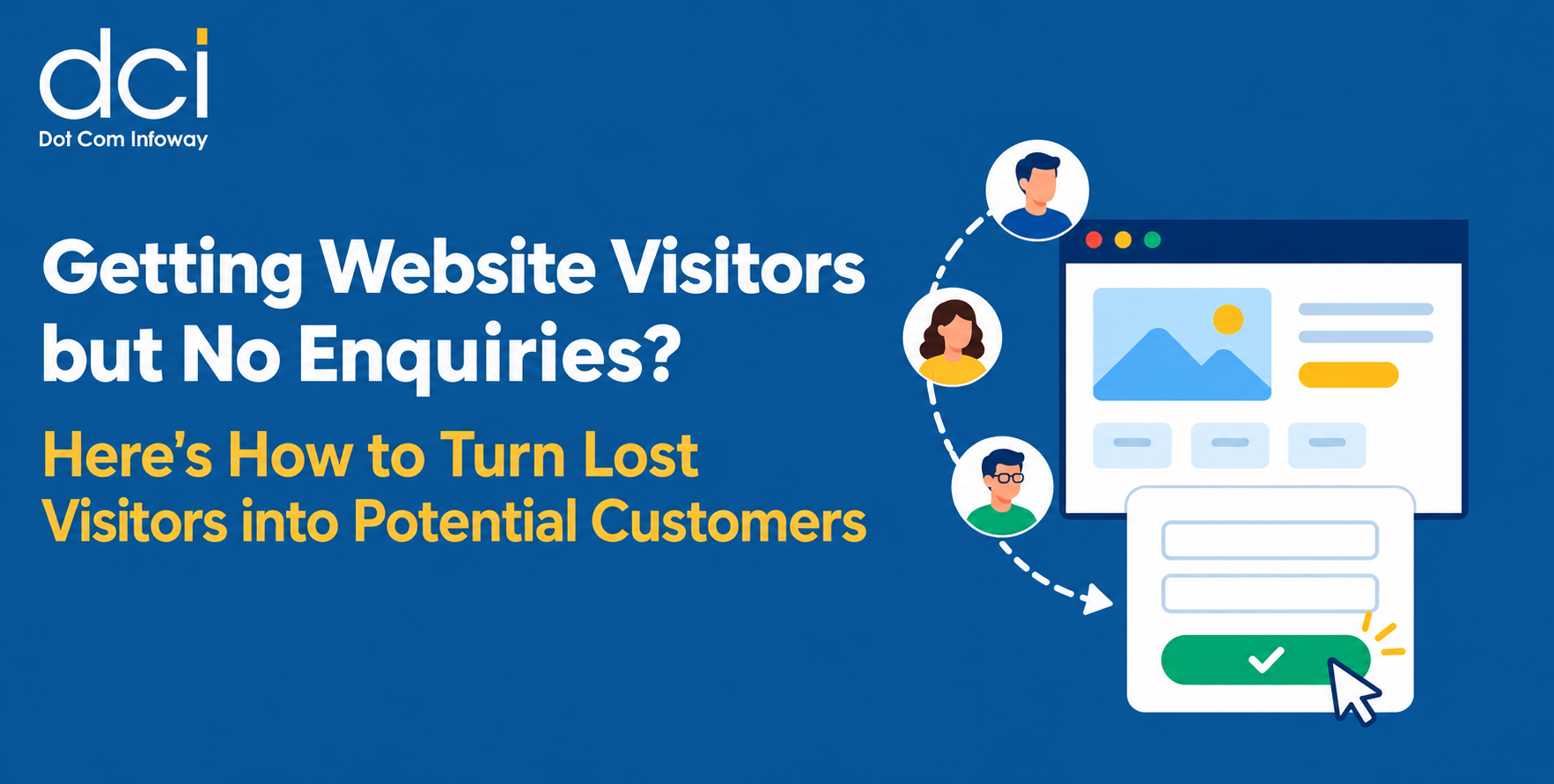
Getting Website Visitors but No Enquiries? Here’s How to Turn Lost Visitors into Potential Customers
To convert website visitors into leads, start by finding out why people leave without contacting you. Your website may attract visitors from Google, paid ads, and social media, yet few request a quote or book a call. Before spending...
 November 13, 2026
Not Getting Enough App Downloads Despite Spending on Ads? Learn How to Attract More Users at a Lower Cost
Your ads are bringing in clicks, but downloads are falling behind. Some users click because a feature catches their attention, only to leave when they cannot find it on the app store listing. Others install the app but abandon...
 November 09, 2026
Finding It Difficult to Get New Customers? Learn How AI Lead Generation Can Help You Generate More Quality Leads
Finding new customers is essential for business growth. However, reaching the right audience and converting prospects into customers can be challenging. Traditional marketing often involves manual research, audience targeting, and repeated follow-ups. These activities take time and may not always...
 November 02, 2026
SEO Strategy for 2027 Why Businesses Need a More Comprehensive Approach
Building an internal SEO team may seem like the smartest way to control your online growth. You understand your business, know your customers, and have direct access to your marketing resources. But does managing everything internally guarantee better search...
 October 28, 2026
How to Improve Your Brand’s Visibility in ChatGPT, Perplexity, and Gemini: A Practical Guide to LLM SEO in 2027
Search is evolving beyond traditional search engine results, with people increasingly using AI platforms like ChatGPT, Perplexity, and Gemini to find answers. LLM SEO helps businesses improve their visibility in AI-powered search by creating useful content, maintaining an accessible...
Get the latest insights from Dot Com Infoway straight to your inbox.