4. Predicting Customer Behaviour
Understanding customer behaviour helps businesses make better marketing decisions. AI analyses historical data and identifies patterns that indicate potential buying interest.
Predictive analytics can help businesses understand which prospects may be more likely to convert.
What to consider:
- Analyse previous customer interactions.
- Identify common buying patterns.
- Monitor changes in customer interests.
- Use insights to improve marketing decisions.
This approach supports better customer targeting and sales pipeline optimization.
5. Improving Marketing Campaign Performance
AI helps businesses evaluate campaign performance and identify areas for improvement. It can analyse engagement, conversions, and audience responses.
Businesses can use these insights to adjust their marketing activities and improve campaign efficiency.
What to consider:
- Track campaign performance regularly.
- Identify high-performing audience segments.
- Test different marketing messages.
- Monitor lead conversion rates.
For businesses investing in paid campaigns, PPC management and strategy can help improve campaign targeting and budget allocation.
How Can Businesses Choose the Right AI Tools for Lead Generation?
Selecting the right technology depends on business requirements, marketing goals, and available resources.
Before investing in AI Lead Generation Tools, businesses should evaluate the following factors:
- Business requirements: Identify whether you need prospect research, lead qualification, or marketing automation.
- Integration: Check compatibility with existing CRM and marketing platforms.
- Data accuracy: Ensure customer information is reliable and relevant.
- Automation features: Evaluate email automation, chatbots, and follow-up capabilities.
- Scalability: Choose solutions that support future business growth.The right tools should simplify marketing activities without creating unnecessary complexity.
How to Measure the Success of AI-Powered Lead Generation?
Generating more enquiries does not always mean better business results. Businesses should measure lead quality, conversions, and customer acquisition costs.
Track these important metrics:
- Number of qualified leads: Measures relevant prospects generated through marketing campaigns.
- Lead conversion rate: Shows how many prospects become customers.
- Customer acquisition cost: Measures the cost of acquiring each customer.
- Lead response time: Tracks how quickly businesses respond to enquiries.
- Customer engagement: Measures interactions with marketing messages and campaigns.
- Return on investment: Evaluates the business value generated from marketing expenses.
Regular performance analysis helps businesses improve their marketing decisions.
A practical example is DCI’s Peppy Gold marketing project, which highlights targeted campaigns, WhatsApp enquiries, and lead nurturing. The campaign generated 600+ quality leads and converted 200+ regular customers.
How Can Businesses Build an Effective AI Lead Generation Strategy?
Businesses should combine technology with a clear marketing plan.
- Define business goals: Identify your target audience and expected outcomes.
- Select suitable AI solutions: Choose tools that address your marketing challenges.
- Improve customer data: Maintain accurate and updated prospect information.
- Combine automation with human support: Use AI for repetitive tasks while maintaining personal communication.
- Monitor performance: Review campaign results and improve your approach regularly.
The most effective approach depends on business objectives, customer expectations, and available resources.
How can AI help businesses acquire more customers?
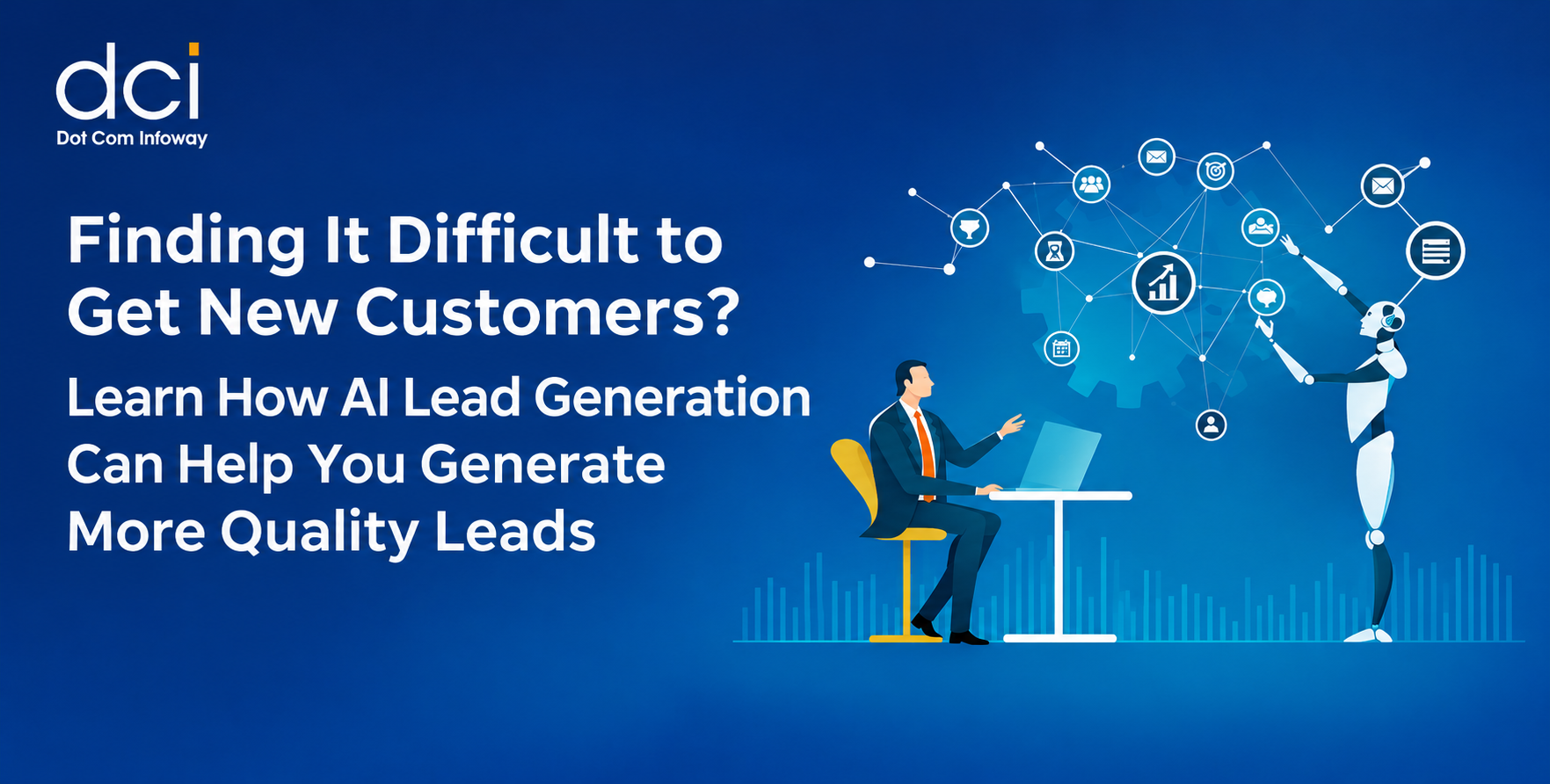
AI helps businesses identify relevant prospects, improve lead qualification, automate follow-ups, and analyse customer behaviour. These capabilities support better marketing decisions and more effective customer acquisition.
Frequently Asked Questions
1. What is AI-powered lead generation?
AI-Powered Lead Generation uses artificial intelligence to identify potential customers, analyse their behaviour, and improve the process of attracting and qualifying prospects.
2. How does AI help businesses find new customers?
AI analyses customer data, identifies relevant audiences, predicts buying behaviour, and supports personalized marketing campaigns.
3. Can AI improve lead conversion rates?
Yes. AI can help businesses prioritize promising prospects, personalize communication, and improve follow-up activities. These improvements can support better conversion rates.
4. Is AI lead generation suitable for small businesses?
Yes. Small businesses can use AI chatbots, email automation, and customer analysis tools to simplify marketing activities and manage enquiries more efficiently.
5. What are the benefits of AI in B2B lead generation?
AI helps B2B businesses identify potential decision-makers, qualify prospects, personalize communication, and manage longer sales cycles.
6. Does AI replace traditional marketing strategies?
No. AI supports traditional marketing by improving data analysis, automation, and customer targeting. Human expertise remains important for building relationships and making strategic decisions.
Final Thoughts
Finding new customers requires the right audience, effective communication, and consistent follow-ups. AI helps businesses improve these activities through automation, customer insights, and better lead qualification.
At Dot Com Infoway, we help businesses strengthen their digital presence through innovative marketing solutions and data-driven strategies. Combining the right technology with effective marketing can create better opportunities for customer acquisition and long-term business growth.