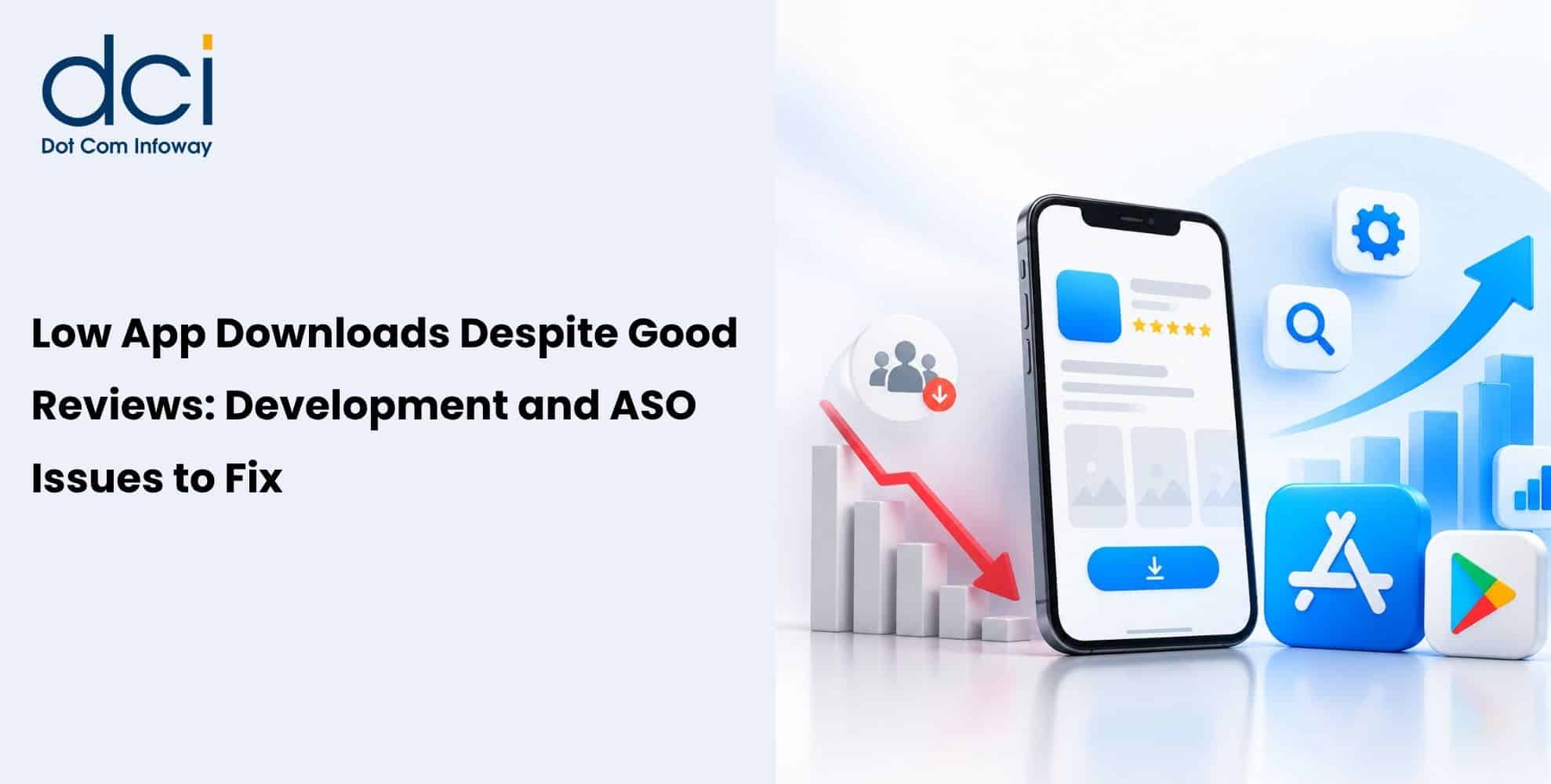
Why Good App Reviews Are Not Generating More Downloads
Positive reviews create trust, but they do not guarantee higher rankings or more installations. App stores evaluate multiple ranking factors before showing applications in search results.
An app may have hundreds or thousands of positive reviews but still experience limited growth because potential users cannot find it or are not convinced to download it.
Some common reasons include:
- Poor app store visibility:
The application may not rank for relevant keywords, making it difficult for users to discover.
- Weak app listing conversion:
Users may visit the app page but leave without downloading because screenshots, descriptions, and messaging do not communicate the app’s benefits clearly.
- Technical performance issues:
Slow loading speed, crashes, poor navigation, and outdated features can affect user experience.
- Incorrect audience targeting:
Marketing campaigns may reach users who are not actively searching for the solution.
- Limited post-launch promotion:
Many businesses stop marketing after launch, reducing opportunities for continuous user acquisition.
For example, a healthcare application may have thousands of positive patient reviews but receive fewer new downloads because it does not rank for important search terms such as “online doctor consultation” or “health tracking app”.
Development Issues That Impact App Downloads
A strong development foundation plays an important role in app growth. Even when an app receives positive feedback, hidden technical issues can prevent new users from adopting it.
1. Poor Performance and Slow Loading Speed
Users expect mobile applications to provide fast and seamless experiences. Applications with slow loading times or frequent crashes can result in uninstallations and lower engagement.
Businesses should regularly monitor:
- App crash reports
- Loading performance
- Server response time
- Device compatibility
- Battery consumption
Continuous testing and optimization ensure that users have a reliable experience after installation.
2. Complicated User Experience
A confusing interface can reduce conversions. Users should understand the app’s purpose within the first few interactions.
Improving onboarding screens, simplifying navigation, and reducing unnecessary steps can help users complete important actions faster.
For example, an eCommerce app should allow users to search products, add items to carts, and complete purchases with minimal effort.
3. Lack of Regular Updates
Mobile platforms continuously change, and users expect applications to improve over time. Apps that remain unchanged for long periods may appear outdated.
Regular updates based on user feedback help maintain ratings, improve functionality, and support better retention.
ASO Problems That Limit App Discoverability
One of the biggest reasons businesses experience low app downloads despite good reviews is poor app store optimization. Having a high-quality application is not enough if users cannot discover it.
Effective optimization requires understanding user search behaviour, competitor strategies, and ranking factors.
Businesses should focus on improving their App Store Optimization strategy to increase visibility, improve rankings, and convert more app store visitors into users.
Keyword Targeting Challenges
Many apps fail because they target highly competitive keywords without understanding user intent.
For example, instead of targeting only “fitness app”, a fitness platform may focus on specific search terms such as:
- Home workout planner
- Beginner fitness tracker
- Weight loss exercise app
Long-tail keywords often attract users with stronger download intent.
Ineffective App Store Content
The app title, description, screenshots, and preview videos influence user decisions.
A successful app listing should:
- Explain the main benefit clearly
- Highlight important features
- Showcase real user outcomes
- Include relevant keywords naturally
Poor screenshots or unclear messaging can reduce conversion rates even when the app itself provides excellent value.
Ignoring Ratings and Reviews Strategy
Reviews influence user trust and app store rankings. However, businesses should focus on collecting genuine feedback rather than only increasing review numbers.
Responding to users, fixing reported issues, and encouraging satisfied customers to share feedback can improve overall app reputation.






![The Game Marketing Guide: Pre and Post-Launch Strategies [Infographic]](https://www.dotcominfoway.com/wp-content/uploads/2023/09/DCI-Game-Marketing-blog-1.jpg)