Intelligent Ecosystems Are Replacing Traditional Apps
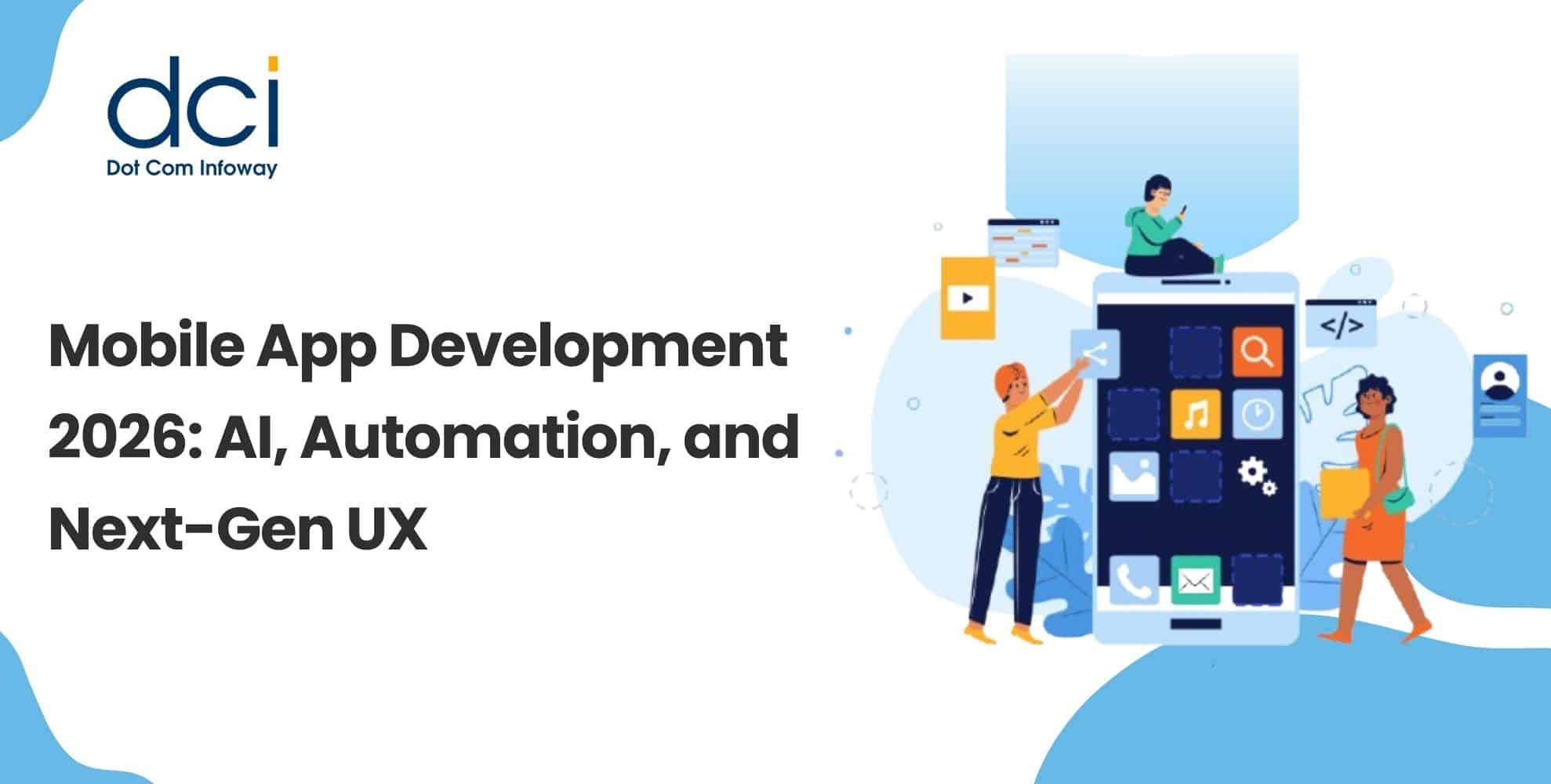
Mobile applications are no longer built as isolated tools. They are becoming connected ecosystems powered by behavioral data, automation layers, and cloud intelligence. In app development in 2026, applications are designed to continuously learn from user actions and dynamically adapt interfaces, workflows, and recommendations.
Technology leaders like Apple and Google are already embedding on-device machine learning capabilities to improve speed, privacy, and offline functionality. This shift reduces dependency on external servers while enabling faster personalization.
At the same time, AI models developed by OpenAI are transforming conversational interfaces. Instead of navigating complex menus, users increasingly interact with apps through natural language, which is redefining user experience frameworks in App Development 2026.
AI Automation Is Transforming Development Lifecycles
AI automation is now one of the most influential drivers behind modern app development services. Development teams are increasingly using AI-assisted tools to automate repetitive tasks such as code generation, bug detection, and testing workflows. This not only accelerates release cycles but also improves overall software quality.
Research from Gartner highlights how rapidly AI is entering software development pipelines:
“By 2026, over 80% of software development projects will involve AI-assisted coding tools.”
Automation is particularly impactful in three major areas. First, AI-powered coding assistants are reducing development effort by generating optimized code structures. Second, automated testing frameworks are identifying performance issues earlier in the lifecycle. Third, predictive analytics integration allows apps to automate engagement flows based on real-time user behavior.
These insights reinforce why AI automation is becoming the operational backbone of App Development 2026 strategies.
Next-Generation UX Is Moving Toward Predictive Experiences
User experience is shifting from static design to adaptive interaction. Modern applications are expected to anticipate user intent instead of waiting for manual input. In app development in 2026, predictive UX is becoming a key differentiator for engagement and retention.
Predictive interfaces analyze historical behavior patterns and dynamically adjust layouts, recommendations, and content visibility. This reduces friction and helps users complete tasks faster. Conversational UX is also gaining momentum as voice search and chat-driven interfaces become more common across digital platforms.
Micro-interactions are evolving as well. AI-driven animation responses and real-time contextual feedback are improving how users emotionally connect with applications. These subtle experience layers are becoming essential components of advanced app development services because they directly influence retention metrics.
Cloud-Native Architecture and Edge Performance
Performance expectations are rising as mobile usage continues to grow globally. Users expect instant loading speeds regardless of location or device type. To meet these expectations, App Development 2026 increasingly relies on cloud-native architectures combined with edge computing frameworks.
Cloud-native environments allow applications to scale dynamically while enabling faster deployment cycles. Continuous integration and continuous delivery pipelines are becoming standard because they support frequent feature updates without downtime.
Edge computing complements this architecture by processing data closer to users. This reduces latency and improves responsiveness for AI-driven applications such as real-time recommendation engines and live analytics dashboards. As AI workloads expand, edge processing will become an essential layer in app development in 2026.
Security and Privacy Are Becoming Core UX Components
As applications collect more behavioral data, security is becoming directly tied to user experience. Users expect secure authentication processes without friction, and regulatory frameworks are pushing organizations to adopt stronger privacy standards.
Modern app development services are integrating biometric authentication, encryption layers, and AI-driven threat detection systems directly into application architectures. Security is no longer treated as a backend feature; it is embedded into the entire product design lifecycle.
On-device processing is also gaining adoption because it minimizes data transfer risks. Applications that prioritize privacy-first frameworks are seeing stronger brand trust and improved long-term engagement.







![The Game Marketing Guide: Pre and Post-Launch Strategies [Infographic]](https://www.dotcominfoway.com/wp-content/uploads/2023/09/DCI-Game-Marketing-blog-1.jpg)