AI-First Is No Longer Optional
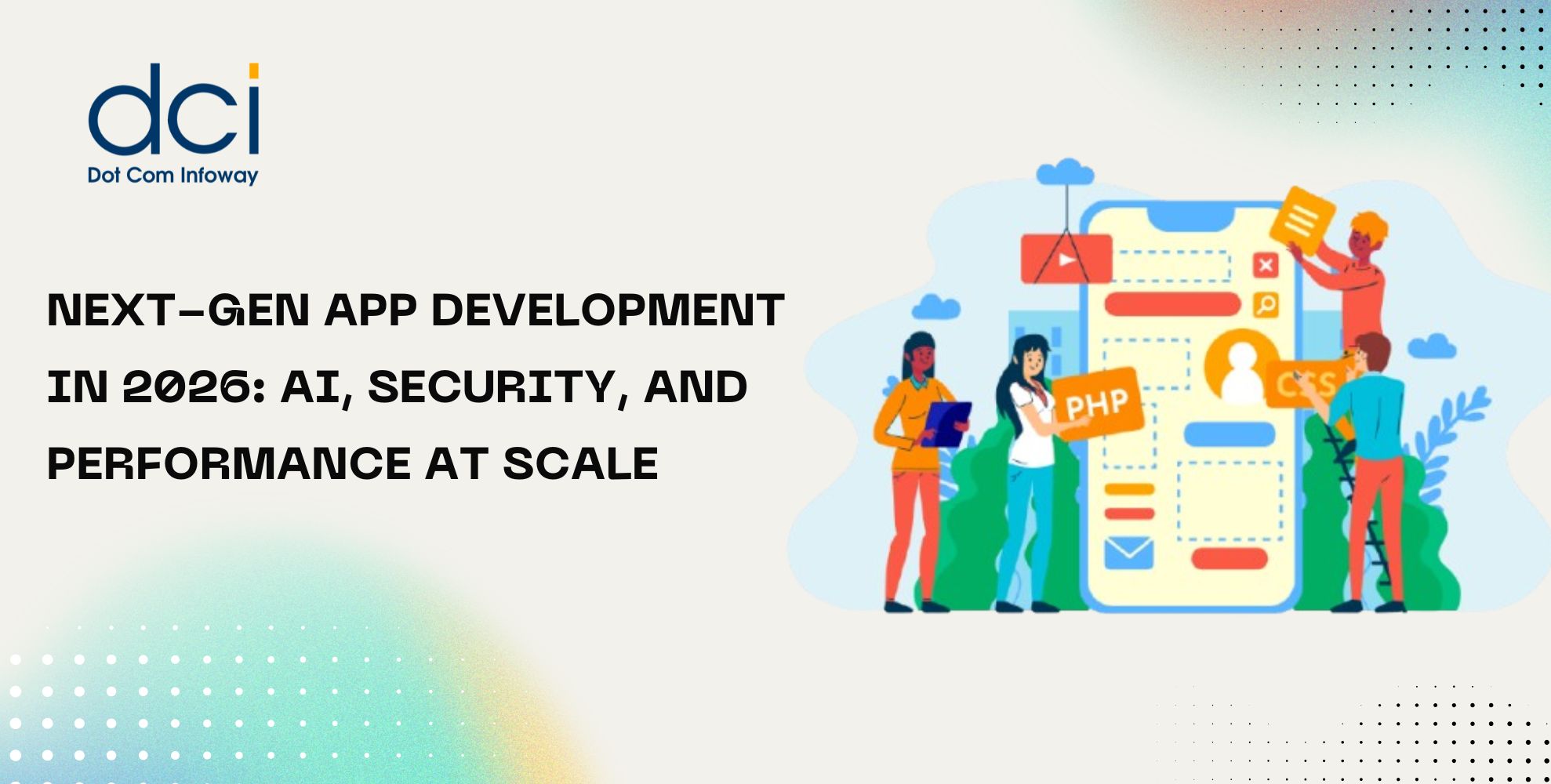
In previous years, artificial intelligence was treated as a feature – a chatbot here, a recommendation engine there. In App Development in 2026, AI defines the architecture itself.
Industry research suggests that over 70% of enterprise applications now embed AI at their core layer, powering predictive workflows, adaptive UI behavior, and automated decision engines. The shift is visible across industries, from fintech fraud detection systems to retail personalization platforms.
According to a report covered by ITPro:
“AI-generated code is fast becoming the biggest enterprise security risk as teams struggle with the illusion of correctness.”
This highlights a paradox: AI accelerates development, but it also introduces new complexity. The winners in App Development in 2026 are not simply using AI tools – they are governing them, auditing them, and embedding AI observability into DevOps pipelines.
AI agents are now capable of writing entire modules, running automated tests, and optimizing performance in real time. However, leading organizations ensure human-in-the-loop validation to maintain quality and compliance.
Security by Design: Zero-Trust as Standard
Security has moved from the perimeter to the core. In App Development in 2026, zero-trust architecture is standard practice. Every request, device, and API interaction must be verified before access is granted.
The rapid rise of generative AI tools has significantly increased data leakage risks. ITPro reported that generative AI-related data violations more than doubled year over year, signaling how urgently enterprises must redesign their security frameworks.
Modern secure application architecture includes:
- Continuous authentication models
- Encrypted data flows by default
- AI-powered anomaly detection
- Software Bill of Materials (SBOM) tracking
Instead of responding to breaches, organizations now design applications assuming potential compromise points. That proactive stance defines next-generation engineering.
Security has also become a competitive differentiator. Enterprises choosing vendors increasingly evaluate compliance readiness, encryption standards, and secure development lifecycle (SDLC) maturity before committing to partnerships.
Performance at Scale: Edge Computing Changes Everything
Users abandon apps within seconds if load times lag. Performance is no longer a technical metric; it’s revenue-critical.
In App Development in 2026, edge computing and on-device AI dramatically reduce latency. Rather than routing every process to centralized cloud servers, modern applications shift critical processing closer to the user.
This architectural decision improves:
- Response time
- Offline capability
- Data privacy
The expansion of 5G infrastructure further amplifies this shift. High-bandwidth, low-latency networks enable immersive experiences such as AR commerce, real-time collaboration tools, and cloud gaming all without performance bottlenecks.
The result is a redefinition of “scalable performance.” It’s not just about handling more users; it’s about maintaining sub-second responsiveness across global regions.
Cross-Platform Development as a Strategic Advantage
Speed to market remains essential. Cross-platform frameworks such as React Native and Flutter have matured significantly, allowing businesses to deploy unified codebases across Android, iOS, and web environments.
Gartner projects that by 2026, nearly 70% of enterprise applications will involve low-code or cross-platform development models in some capacity. This does not replace engineering expertise; it augments it. Teams can now prototype faster, iterate quicker, and allocate resources toward differentiation rather than repetitive infrastructure work.
In the broader conversation around App Development in 2026, cross-platform architecture supports scalability without exponentially increasing cost. Engineering leaders are prioritizing modular backend systems, API-first design, and microservices to ensure long-term adaptability.








![The Game Marketing Guide: Pre and Post-Launch Strategies [Infographic]](https://www.dotcominfoway.com/wp-content/uploads/2023/09/DCI-Game-Marketing-blog-1.jpg)