



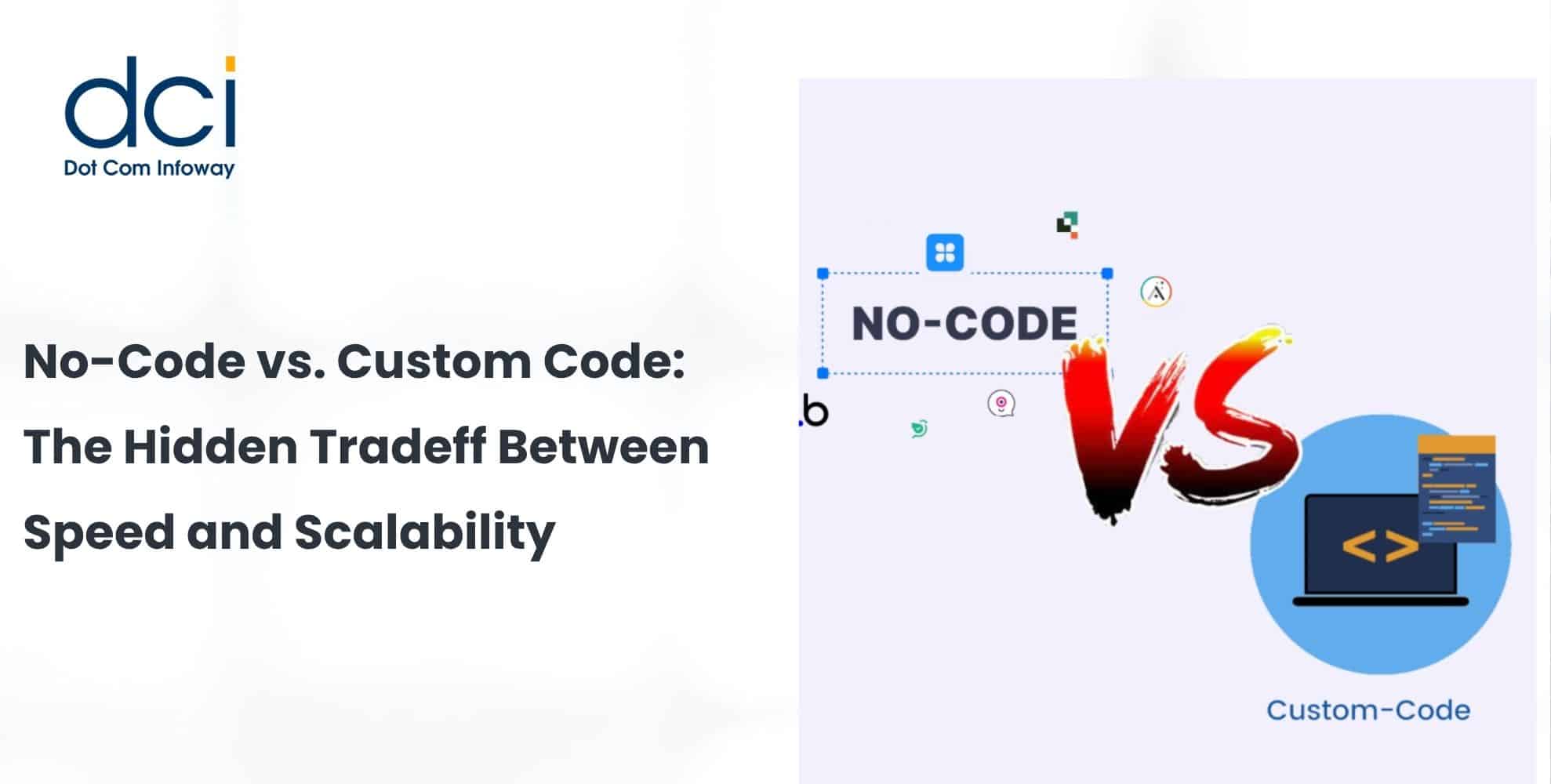
For companies under pressure to launch faster and control development costs, no-code vs custom code has become a critical product decision. No-code platforms can accelerate validation and reduce initial investment. Custom development offers greater control over architecture, integrations, performance and long-term scalability. The right choice depends on how important the application will become to the business.
No-Code vs. Custom Code: The Hidden Tradeoff Between Speed and Scalability
7 mins read
The Real Risk Is Building the Wrong Foundation
No-code platforms simplify application development through visual interfaces, prebuilt components and automated workflows. They are useful for validating ideas, testing demand and gathering early feedback.
The risk appears when a temporary prototype becomes a permanent operating system.
A logistics company, for example, may initially use no-code tools to manage drivers, deliveries and customer notifications. As the business grows, it may require live tracking, route optimisation, warehouse integrations and dynamic pricing.
At that stage, the system may depend on multiple plugins, external tools and manual processes. What once improved speed can create technical debt and operational limitations. Businesses planning an on-demand delivery app should therefore evaluate future requirements before selecting the platform.
Where No-Code Creates Value
No-code works best for clearly defined and lower-risk applications, including:
- Internal approval systems
- Lead management workflows
- Campaign landing pages
- Basic customer portals
- Early-stage prototypes
For example, a sales team can use a no-code platform to capture leads, assign them by region and automate follow-up reminders without involving a full development team.
The advantage is not only lower cost. It allows businesses to confirm whether a process or idea creates value before committing to a larger engineering investment.
Why Scalability Becomes a Challenge
Scalability is not limited to handling more users. Applications must also manage increasing data volumes, complex permissions, integrations and changing business rules.
No-code platforms usually hide the underlying infrastructure. This makes development easier but limits control over database design, caching, background processing and architecture.
Common limitations include:
- Slower performance as workflows expand
- Dependence on plugins and workarounds
- Limited integration flexibility
- Higher platform fees as usage grows
- Expensive migration or rebuilding
A marketplace may begin with product listings, payments and customer accounts. Growth may later require fraud prevention, real-time inventory, seller analytics and personalised recommendations.
These capabilities demand an architecture built for performance and scale. The principles of scalable web development become increasingly important as traffic, data and transaction volumes increase.
When Custom Development Is the Better Choice
Custom development is more suitable when an application directly supports revenue, customer experience or competitive advantage.
It provides control over:
- Architecture and infrastructure
- Data ownership
- Security and compliance
- Integrations
- Performance optimisation
- Feature development
An insurance application, for example, may require encrypted customer data, eligibility calculations, audit records and integration with external verification systems. These requirements are difficult to manage through platform-level workarounds.
For mobile-first products, working with a mobile app development agency can help businesses define the right technology stack, backend architecture and integration strategy. A structured approach to building a scalable mobile app reduces the risk of costly rebuilding later.

Should You Choose No-Code or Custom Code for Your Next Project?
It depends on your business goals. If you need a quick launch, no-code platforms can get you to market faster. But if you’re planning for long-term growth, advanced features, and seamless scalability, custom development is the better investment.
The Cost Comparison Businesses Often Miss
No-code usually has a lower initial cost, but long-term expenses can increase through:
- Platform subscriptions
- Usage-based pricing
- Premium plugins
- External databases
- Automation tools
- Integration services
Custom development requires more investment at the beginning, along with maintenance and infrastructure costs. However, it gives the business greater control over scaling and reduces dependency on a single vendor.
A realistic comparison should examine total cost over three to five years, including mobile app development costs, migration risks and the cost of platform limitations.
If a tool prevents a revenue-generating feature or requires ongoing manual work, that limitation becomes a measurable business expense.
Why a Hybrid Model Often Works Best
Businesses do not always need to choose one model exclusively.
No-code can be used to validate onboarding flows, test pricing and build internal dashboards. Once demand is confirmed, customer-facing and transaction-heavy functions can move to custom architecture.
This approach protects core systems while preserving speed in lower-risk areas.
Migration should be considered from the beginning. Data structures, integrations and business logic should remain documented and should not depend entirely on one vendor.
AI-assisted engineering can also improve development speed without sacrificing control. AI-powered app development can accelerate coding, testing and documentation while maintaining a scalable custom architecture.
A Practical Decision Framework
Before choosing between no-code vs custom code, businesses should assess:
- Whether the application is an internal tool or a revenue platform
- Whether it requires standard workflows or proprietary logic
- How quickly users and data volumes may grow
- Whether specialised integrations are required
- How difficult it would be to migrate later
No-code is suitable when speed, experimentation and controlled cost are the main priorities.
Custom development is stronger when the application must support security, differentiation, complex integrations and long-term growth.
Build for the Next Stage
The no-code vs custom code decision should reflect the future role of the application, not only the first release. No-code is valuable for validation, automation and limited workflows. Custom development is better suited for products that must scale, integrate deeply and support unique business requirements.
The best technology strategy is not the one that launches fastest. It is the one that prevents expensive limitations as the product and business continue to grow.
Must Read


Trending Blogs

![The Game Marketing Guide: Pre and Post-Launch Strategies [Infographic]](https://www.dotcominfoway.com/wp-content/uploads/2023/09/DCI-Game-Marketing-blog-1.jpg)
Latest Posts
 September 28, 2026
From Apps to AI Agents: How Agentic AI Is Redefining the Mobile Experience in 2027
For years, the mobile experience has followed a familiar pattern: users open an app, navigate through menus, enter information, select an action, and wait for a result. Agentic AI is beginning to change that model. Instead of requiring users to manually...
 September 24, 2026
SEO AEO Grader ToolAre Search Engines Hiding Your Content? Find Out with Our Free SEO & AEO Audit Tool
You publish high-quality content, optimize your website, and follow SEO best practices, but your pages still struggle to appear on search engines. You are not alone. Many businesses face the same challenge where their content exists online but fails...
 September 23, 2026
Your Website Works Today but Cannot Scale Tomorrow: Signs of an Outdated Architecture
A website can appear successful on the surface while quietly developing problems underneath. It may load correctly, handle current visitors, and support existing business operations, but that does not always mean it has a scalable website architecture prepared for...
 September 21, 2026
From Creation to Conversion: The Business Case for Replacing Traditional B2B Video Agencies with Hybrid AI Workflows
Video has become one of the most important communication tools for modern B2B businesses. Companies use videos to explain complex products, showcase solutions, educate customers, support sales teams, and build stronger brand connections. However, as businesses demand more content...
 September 18, 2026
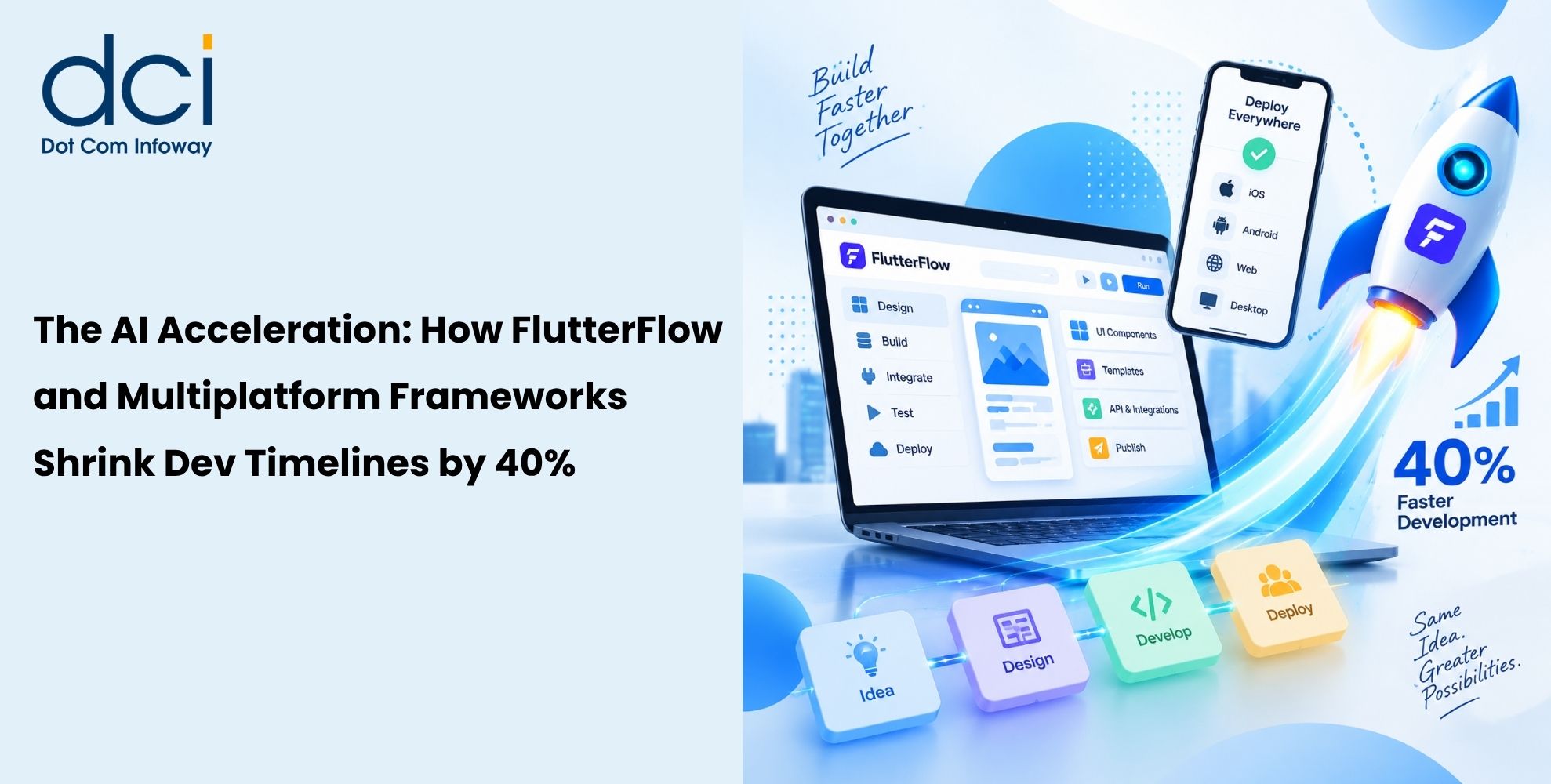
The AI Acceleration: How FlutterFlow and Multiplatform Frameworks Shrink Dev Timelines by 40%
The mobile app development landscape is changing faster than ever. Businesses today need powerful digital products delivered quickly, but traditional development processes often involve long coding cycles, separate teams for different platforms, and higher development costs. The rise of AI-powered...
 September 16, 2026
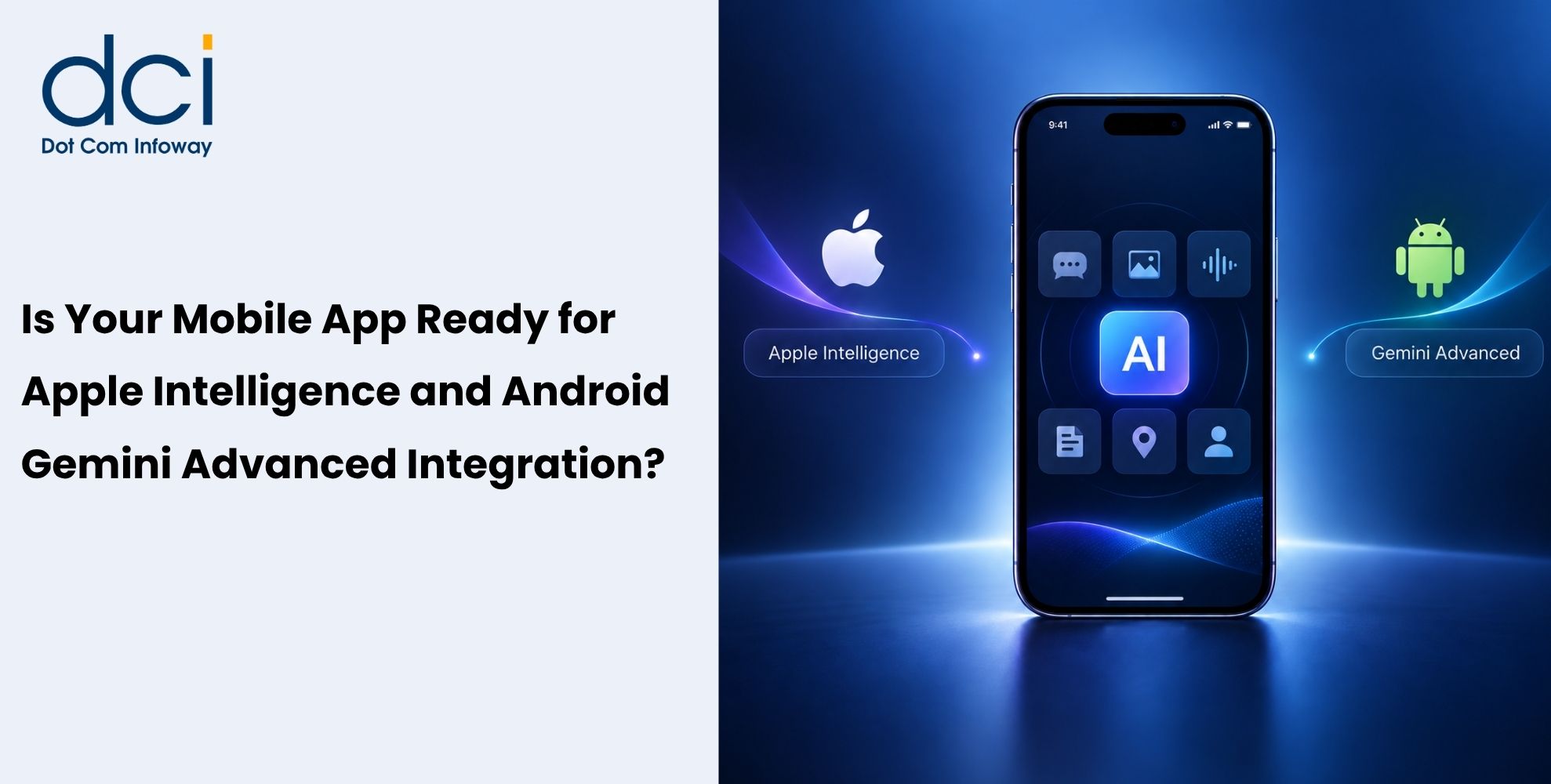
Is Your Mobile App Ready for Apple Intelligence and Android Gemini Advanced Integration?
The mobile industry is moving from traditional application experiences toward intelligent, adaptive platforms. Businesses today need AI-ready mobile apps that can support emerging technologies like Apple Intelligence and Android Gemini Advanced to deliver faster, smarter, and more personalized user...
 September 14, 2026
Low App Downloads Despite Good Reviews: Development and ASO Issues to Fix
An application can receive excellent ratings, positive customer feedback, and strong user satisfaction but still struggle to attract new users. Low app downloads despite good reviews is a challenge many businesses face after launching their mobile applications. While reviews...
 September 10, 2026
How Apple’s New A20 Pro Chip Reshapes Mobile App Performance Capabilities
The Apple A20 Pro chip changes what product teams can reasonably ask an iPhone app to do in real time. Built on a 2-nanometer process, the processor combines a six-core CPU, seven-core GPU, integrated Neural Accelerators, a dual 16-core...
 September 09, 2026
Decoding Google’s SpamBrain AI: How to Bulletproof Your Content Strategy
SEO has changed significantly over the years. Search engines no longer evaluate content only based on keywords, backlinks, or publishing frequency. Today, factors such as content quality, expertise, originality, and user satisfaction play a major role in determining search...
 September 07, 2026
The E-E-A-T Audit Checklist: Reviving Traffic After a Core Algorithmic Hit
When organic sessions decline after a broad Google update, an E-E-A-T audit checklist gives businesses a structured way to separate correlation from cause. Traffic is rarely restored by inserting more keywords, increasing word count, or changing publication dates. Sustainable...
Get the latest insights from Dot Com Infoway straight to your inbox.