The 47% Problem: Your Tracking Is Lying to You
Let’s start with the elephant in the room. Nearly half of everything you spend might be going straight into a black hole.
“47% of marketing spend fails to generate leads or conversions due to flawed tracking and data.” LayerFive Research
That’s not a typo. Almost half. Think about that the next time you approve a monthly ad budget. If you’re spending money on ads without rock-solid attribution in place, you’re essentially gambling with a blindfold on.
The culprit? A messy cocktail of iOS privacy updates, cookie deprecation, cross-device fragmentation, and tracking scripts that break more often than they work. Google Analytics 4 promised to fix things but introduced its own learning curve. Meta’s Conversions API helps, but only if it’s properly configured. Most businesses? They’re running on hope and assumptions.
The Marketing Data Mirage
Here’s where it gets worse. Even when your tracking technically works, the data itself might be deceiving you.
DemandScience calls this the “Marketing Data Mirage,”: and it’s costing businesses dearly.
“25% of marketing budget is wasted due to disconnected tools and phantom signals that create the illusion of performance.”- DemandScience Report
What does this look like in practice? Your CRM says one thing. Your ad platform says another. Your analytics dashboard tells a third story entirely. Leads appear attributed to campaigns they never touched. Revenue gets credited to the wrong channels. You end up doubling down on what’s not working and cutting what actually is.
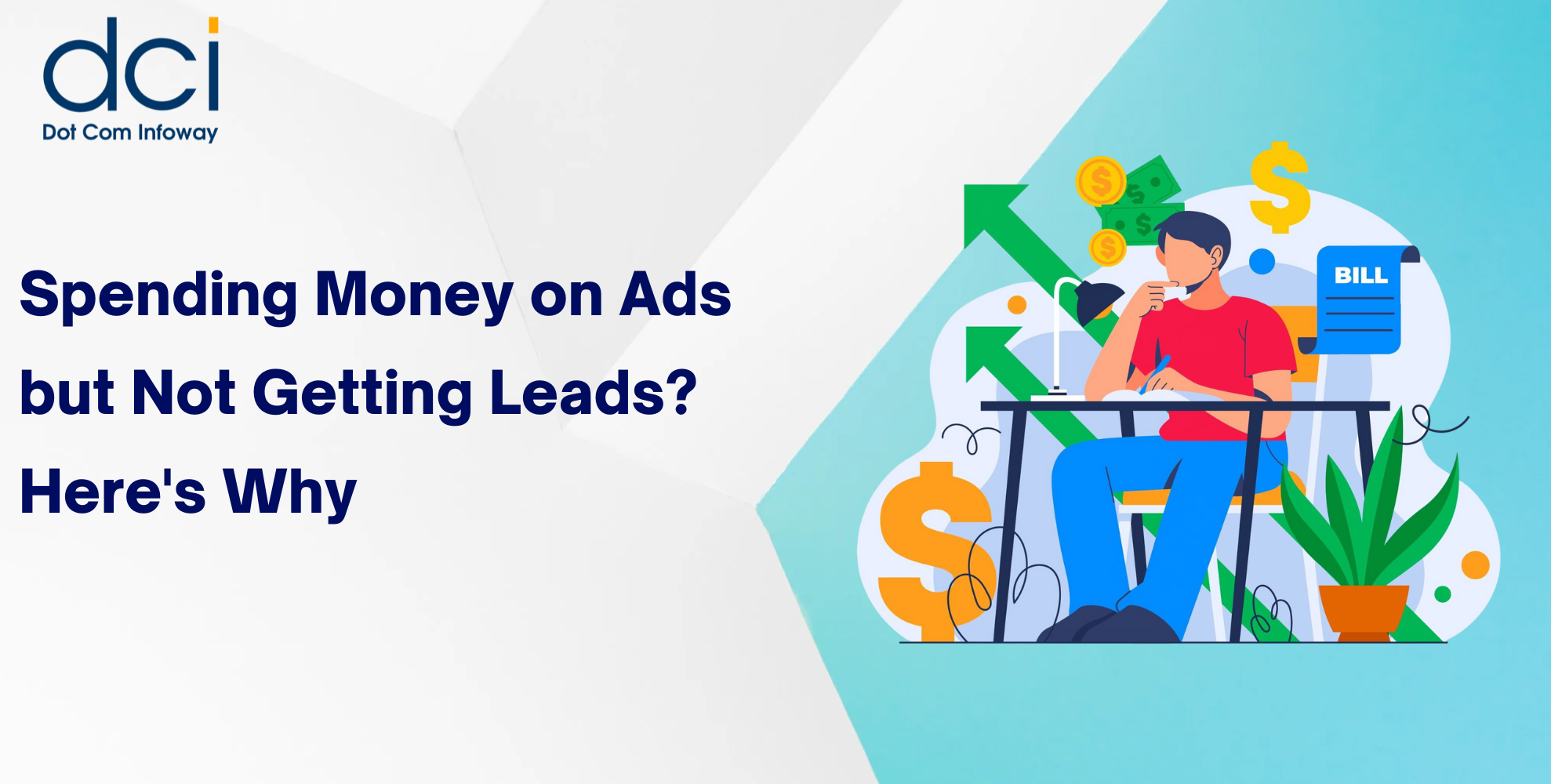
This isn’t a minor calibration issue. When you’re spending money on ads based on faulty intelligence, every optimization decision compounds the error. You’re not just wasting budget: you’re actively steering your strategy in the wrong direction.
Your Landing Page Is Bleeding Leads
Let’s say your tracking is perfect. Your data is clean. Your targeting is sharp. You’re still losing leads: and the culprit is probably staring you in the face.
According to WordStream’s 2025 benchmarks, two-thirds of marketers report average landing page conversion rates below 10%. Most hover somewhere between 2% and 5%. That means for every 100 people who click your ad, 95 or more leave without taking action.
The variance across industries is staggering. SmartSites data shows physicians converting at 16.1%, while B2B technology companies struggle at just 1.7%. Same traffic acquisition cost, wildly different outcomes.
“The average landing page conversion rate across industries is 2.35%, but the top 25% are converting at 5.31% or higher.” -WordStream Industry Benchmarks
So what separates the winners from the money-burners? It comes down to message match, load speed, mobile optimization, and clarity of offer. If your landing page doesn’t instantly answer “What’s in it for me?” and “What do I do next?”: You’re spending money on ads just to fund your bounce rate.
The Channel Mismatch Problem
Not all advertising channels are created equal. And the ROI gap between them is wider than most marketers realize.
Consider the numbers. Email marketing delivers $36-42 for every $1 spent: the highest ROI of any digital channel. Content and SEO generate 5:1 to 10:1 returns over time. PPC search ads average 2:1 to 4:1 ROI with conversion rates around 3.75%. Paid social? Typically 1.5:1 to 3:1.
Yet countless businesses pour their entire budget into paid social because it feels modern, or because their competitor is doing it. They’re fishing in a pond with fewer fish and wondering why dinner’s light.
Neil Patel has been hammering this point for years: paid acquisition without owned media support is a treadmill. You’re constantly spending money on ads to stay in place, with no compounding equity. The moment you stop paying, visibility evaporates.
The 2026 playbook? Blend paid channels for immediate reach with owned channels (email, SEO, content) for sustainable, long-term value. Use advertising to amplify what’s already working organically, not as a crutch for what isn’t.
The Zero-Click Reality
There’s another factor reshaping lead generation that most businesses haven’t fully grasped yet.
Over half of Google searches now result in zero clicks. Users get their answers directly from AI summaries, featured snippets, and instant answers without ever visiting a website. This “zero-click” phenomenon means traditional click-through rates are becoming unreliable indicators of actual visibility or value.
If your strategy is purely spending money on ads to drive search clicks, you’re competing against platforms that increasingly keep users within their own ecosystems. The businesses winning in 2026 are those optimizing for AI answer engines: Perplexity, ChatGPT, Gemini: not just traditional search results.




![The Game Marketing Guide: Pre and Post-Launch Strategies [Infographic]](https://www.dotcominfoway.com/wp-content/uploads/2023/09/DCI-Game-Marketing-blog-1.jpg)