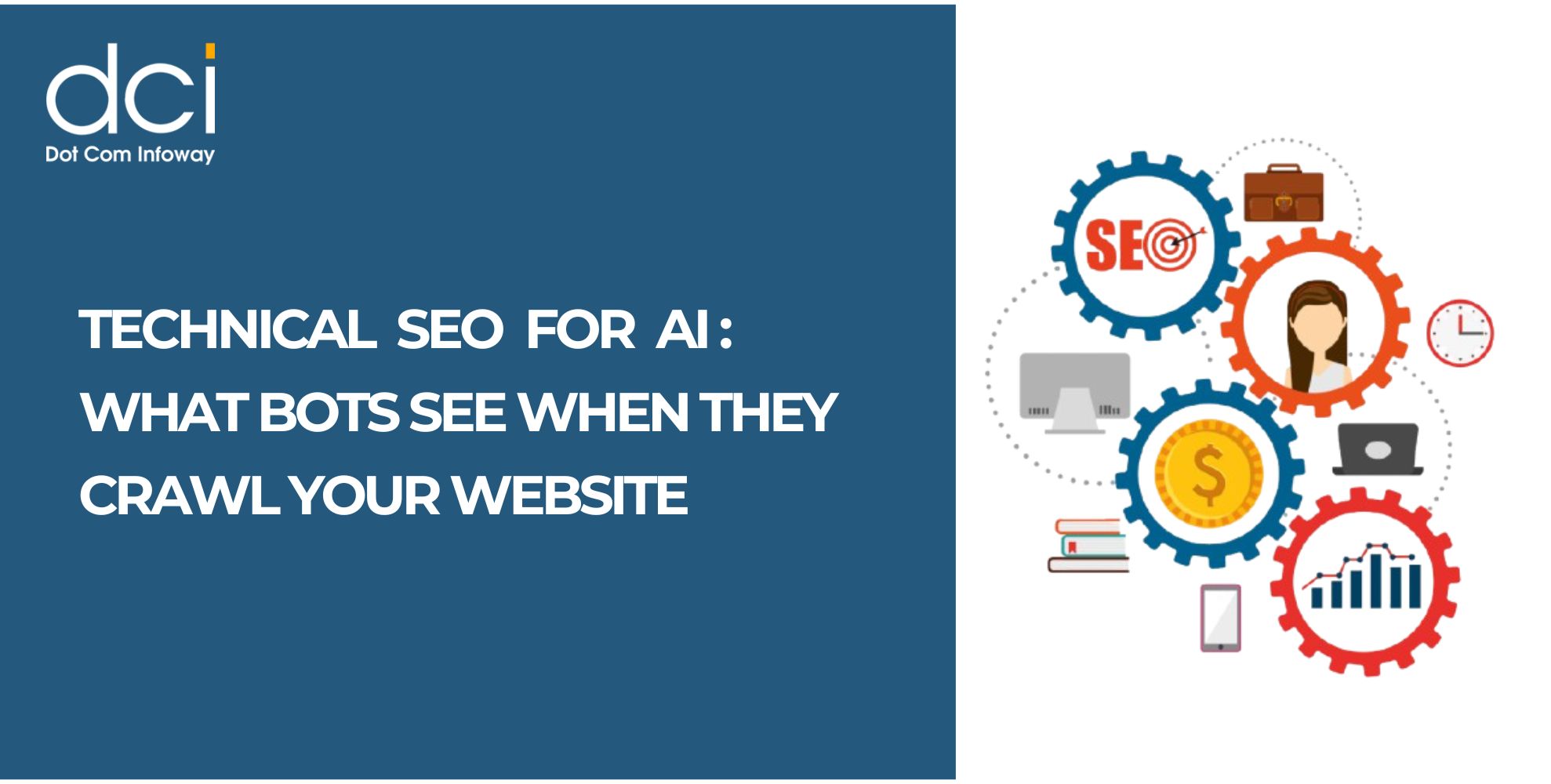
How Search and AI Bots Crawl Websites
When a crawler visits a webpage, it processes the content differently from a human user. Bots focus on the technical signals that help them interpret the purpose and relevance of a page.
Crawlers mainly analyze:
- HTML structure and headings
- Internal linking architecture
- Metadata and canonical tags
- XML sitemaps and crawl directives
- Structured data markup
These elements help bots determine the topic and authority of a webpage. Although search engines can render JavaScript, HTML remains the most reliable format for indexing content.
For this reason, Technical SEO for AI focuses on ensuring that essential information is accessible directly within the page’s code. Businesses that invest in professional SEO services often begin with a technical audit to identify crawl issues that may prevent bots from discovering key pages.
Why Technical SEO Matters for AI Search
AI tools are transforming how people access information online. Platforms such as Google AI Overviews, ChatGPT browsing results, Perplexity AI, and Microsoft Copilot analyze web content and generate direct answers for users.
These systems depend heavily on structured and well-indexed web pages. Google has reported that Googlebot crawls hundreds of billions of pages every day, maintaining the search index that many AI tools rely on.
Without strong technical signals, AI systems may struggle to interpret the context and relevance of your content. Implementing Technical SEO for AI ensures that your website can be properly understood by both search engines and AI-driven platforms.
Common Technical SEO Issues That Affect AI Visibility
Many websites contain hidden technical barriers that reduce their visibility. These technical SEO issues often occur during site redesigns, CMS migrations, or when complex frameworks are used without SEO planning.
Incorrect robots.txt configuration can block important pages from being crawled. Duplicate URLs and incorrect canonical tags may also confuse search engines about which version of a page should be indexed.
Heavy JavaScript usage can create additional challenges because some crawlers may not fully interpret dynamically loaded content. Slow page speed, broken links, and outdated XML sitemaps can further reduce crawl efficiency.
Research from Ahrefs indicates that over 90% of web pages receive no organic traffic from Google, often due to weak technical optimization. Fixing these issues is essential for improving Technical SEO for AI.
The Role of Structured Data in AI Understanding
Structured data helps search engines and AI systems understand web content more clearly. By implementing schema markup, website owners provide explicit information about elements within a page.
Using structured data for SEO allows crawlers to identify details such as article topics, authors, products, reviews, and business information. This additional context improves how search engines categorize content and increases the chances of appearing in rich search results.
Major platforms like Google and Microsoft rely heavily on structured data to organize information across their ecosystems. Websites that implement schema markup effectively strengthen their Technical SEO for AI and improve their chances of being cited in AI-generated responses.








![The Game Marketing Guide: Pre and Post-Launch Strategies [Infographic]](https://www.dotcominfoway.com/wp-content/uploads/2023/09/DCI-Game-Marketing-blog-1.jpg)