



AI visibility is no longer defined only by search rankings. A website may perform well on Google and still remain absent when ChatGPT, Perplexity, Gemini, Copilot, or AI Overviews answer a customer’s question. DCI’s SEO-AEO grader tool evaluates whether a website has the technical, content, authority, and answer-level signals required to be discovered, understood, cited, and trusted.
DCI SEO-AEO grader vs other AI visibility tools: what makes ours grade what actually matters
7 mins read
Why AI Visibility Scores Are Often Incomplete
Many AI visibility tools mainly monitor prompts. They check whether a brand appears in AI-generated answers, compare mentions with competitors, and calculate share of voice.
This is useful for tracking, but it does not explain why a brand appears or disappears.
AI responses can change based on prompt wording, model, location, retrieval source, and timing. A company may appear for a broad question but remain invisible for a high-intent query such as “best enterprise AI development company for healthcare.”
A visibility score may show the result, but it may not reveal:
- Which technical issues are limiting discoverability
- Whether the content is easy for AI systems to extract
- Why competitors are cited more frequently
- Which improvements should be prioritized first
Google reported that AI Overviews were reaching more than 1.5 billion users per month in 2025. This shift makes it essential for businesses to optimize not only for rankings but also for answer-engine inclusion.
What DCI Evaluates Differently
DCI combines traditional SEO signals with Answer Engine Optimization. The grader examines the website conditions that influence both search performance and AI citations.
1. Technical Discoverability
A page cannot become a reliable AI source if search engines or retrieval systems cannot access, render, or understand it.
DCI checks key technical signals such as:
- Crawlability and indexability
- Metadata and heading structure
- Canonical tags and XML sitemaps
- Mobile usability and page performance
- Internal linking and structured data
For example, a company may publish a highly valuable industry report. However, if the page is poorly linked, blocked from indexing, or dependent on scripts that fail to render correctly, its citation potential remains limited.
Technical SEO is therefore treated as the foundation for AI retrieval.
2. Answer Readiness
Keyword usage alone does not make content suitable for AI-generated answers.
DCI assesses whether pages provide clear definitions, direct answers, comparisons, examples, processes, FAQs, and well-structured explanations. It also checks whether relationships between the brand, service, industry, audience, and use case are clearly communicated.
A long page about AI automation may mention the keyword several times but still fail to explain what processes are automated, which systems are supported, or what measurable benefits customers receive.
Such content may rank, but it may not be useful enough to earn an AI citation.
How DCI Measures AI Citation Potential
Beyond technical optimization and content structure, DCI evaluates the trust and evidence that increase the likelihood of AI-generated citations.
3. Citation Value
Answer engines are more likely to reference content that offers specific and trustworthy information.
DCI evaluates whether pages contain:
Original data and research
Measurable case-study results
Expert authorship
Credible references
Transparent comparisons
Evidence supporting key claims
A statement such as “AI improves productivity” is too broad to provide strong citation value. A documented example showing that an AI workflow reduced processing time by 32% is more specific, verifiable, and useful.
DCI’s SEO vs AEO vs GEO guide explains how search rankings, direct answers, and generative citations work together. Businesses can also refer to the AEO guide to boost AI citations for practical optimization methods.

How do you know if your website is actually visible to AI platforms-not just search engines?
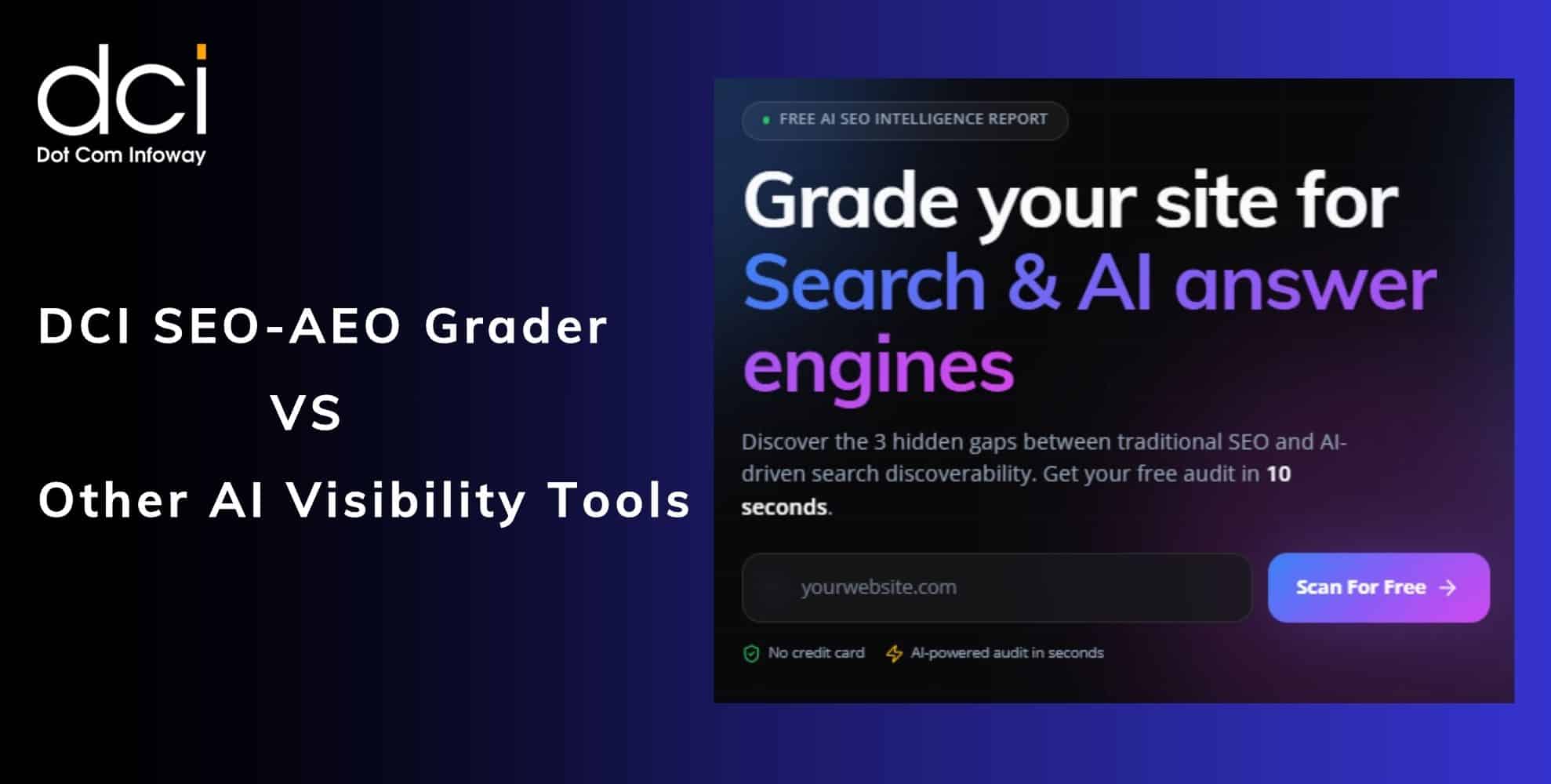
Try the DCI SEO-AEO Grader and get a detailed report on your AI visibility, content quality, technical SEO, and answer engine readiness-all in one place.
Why Mention Tracking Alone Is Not Enough
A conventional tool may report that a brand appears in four out of 25 prompts. DCI examines the website factors behind that score.
For instance, two cybersecurity companies may receive the same AI visibility score.
The first company may have strong technical SEO, expert authors, case studies, structured data, and clear service pages but lack third-party authority.
The second may have duplicated content, weak internal linking, unclear services, indexing issues, and no original evidence.
Although their visibility scores are similar, they require completely different actions.
The first company may benefit from digital PR and authoritative mentions. The second must strengthen its website structure and content before investing heavily in promotion.
This distinction allows businesses to address the actual reason behind low AI visibility rather than simply running more prompt tests.
Connecting AI Visibility with Business Performance
AI citations are valuable only when they support meaningful business growth.
DCI’s grading approach connects visibility with three areas:
- Search performance: crawlability, rankings, topical relevance, and organic traffic
- Answer visibility: extraction, mentions, citations, and AI recommendations
- Conversion readiness: clear messaging, trust signals, calls to action, and user journeys
This gives marketing, SEO, content, and development teams a practical roadmap instead of a standalone score.
Businesses can begin with DCI’s free SEO and AEO grader to identify immediate weaknesses. The LLM SEO best practices guide can then support broader improvements for AI-driven discovery.
Grade the Factors That Create Sustainable Visibility
AI visibility tools are useful when they show where a brand appears. They become far more valuable when they explain why the brand appears, why it is missing, and what should be improved.
That is what makes DCI’s SEO-AEO grader tool different. It evaluates accessibility, structure, authority, answer quality, evidence, citation readiness, and conversion potential rather than relying only on brand mentions.
In an AI-first search environment, prompt tracking alone is not enough. Businesses need websites that search engines can discover, AI platforms can understand, and customers can trust.
DCI grades the factors that make that visibility stronger, more consistent, and more valuable.
Must Read

Trending Blogs

![The Game Marketing Guide: Pre and Post-Launch Strategies [Infographic]](https://www.dotcominfoway.com/wp-content/uploads/2023/09/DCI-Game-Marketing-blog-1.jpg)
Latest Posts
July 10, 2026
DCI SEO-AEO grader vs other AI visibility tools: what makes ours grade what actually matters
AI visibility is no longer defined only by search rankings. A website may perform well on Google and still remain absent when ChatGPT, Perplexity, Gemini, Copilot, or AI Overviews answer a customer’s question. DCI’s SEO-AEO grader tool evaluates whether...
 July 08, 2026
E-commerce in the zero-click era: how to make sure AI recommends YOUR product when shoppers skip the search results
The e-commerce buying journey is moving beyond traditional search, making AI product recommendations for e-commerce increasingly important. Shoppers now use ChatGPT, Gemini, Perplexity, and Google AI Mode to compare products and make purchase decisions. This creates a new visibility challenge....
 July 06, 2026
Email Marketing Is Not Dead: 7 AI-Driven Tactics That Are Driving Open Rates Beyond 35%
Email marketing is not dead. Generic email campaigns are. Customers now expect relevant messages based on their interests, behaviour, and buying stage. AI-driven email marketing tactics help businesses replace mass campaigns with predictive segmentation, personalised content, and smarter automation. Achieving...
 June 25, 2026
Why Businesses Are Choosing PWAs Over Native Apps: How One Brand Reached 3X More Mobile Users
Mobile users expect fast, reliable, and seamless experiences across devices. As businesses evaluate the best app development service strategies to improve customer engagement and maximize ROI, many are increasingly choosing PWAs Over Native Apps. Progressive Web Apps (PWAs) combine...
 June 22, 2026
50K App Downloads but Poor Retention: Which Metrics Matter More Than Installs?
Getting 50,000 app downloads is a milestone that many businesses celebrate. It often indicates that user acquisition campaigns, app store visibility, and marketing efforts are generating results. However, downloads alone do not determine whether an app is truly successful....
 June 18, 2026
How to Measure Your Website’s AI Visibility Before Your Competitors Do
The way people search online is changing rapidly. Instead of browsing through multiple search results, users increasingly rely on AI-powered platforms such as ChatGPT, Gemini, Perplexity, Claude, and Google AI Overviews for instant answers. As a result, AI Visibility...
 June 15, 2026
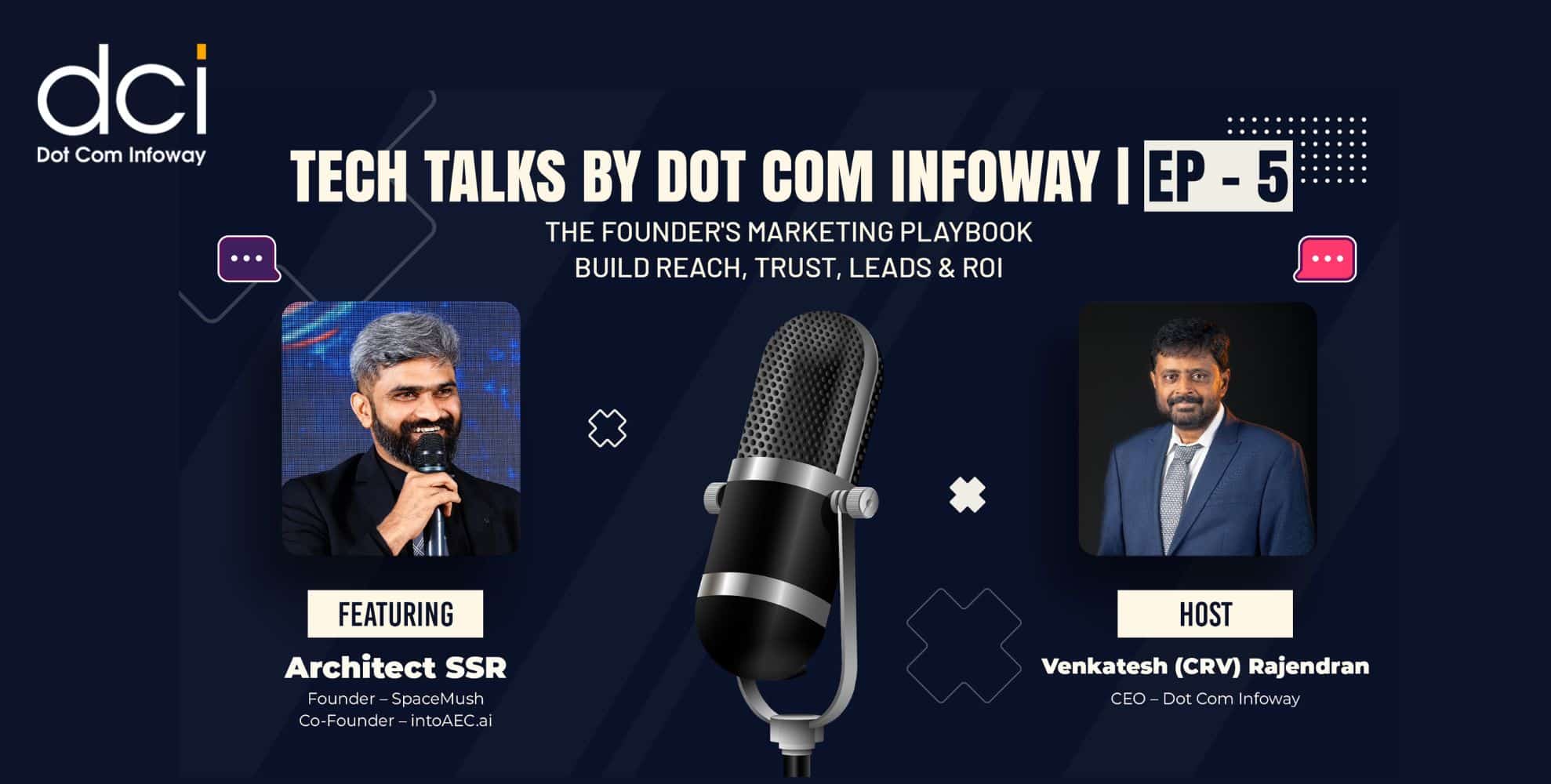
How Founder-Led Marketing Drives Business Growth: Insights from Dot Com Infoway’s Webinar
In today's highly competitive digital environment, businesses are finding it harder than ever to earn customer trust. Consumers are exposed to countless ads, social media promotions, and AI-generated content every day. As a result, authentic communication has become a...
 June 15, 2026
SEO vs AEO vs GEO: What Businesses Need to Win AI Search in 2026
The way people discover information online is changing rapidly. Instead of relying solely on Google search results, users are increasingly turning to AI-powered platforms such as ChatGPT, Gemini, Perplexity, and Google AI Overviews to find answers, compare solutions, and...
 June 12, 2026
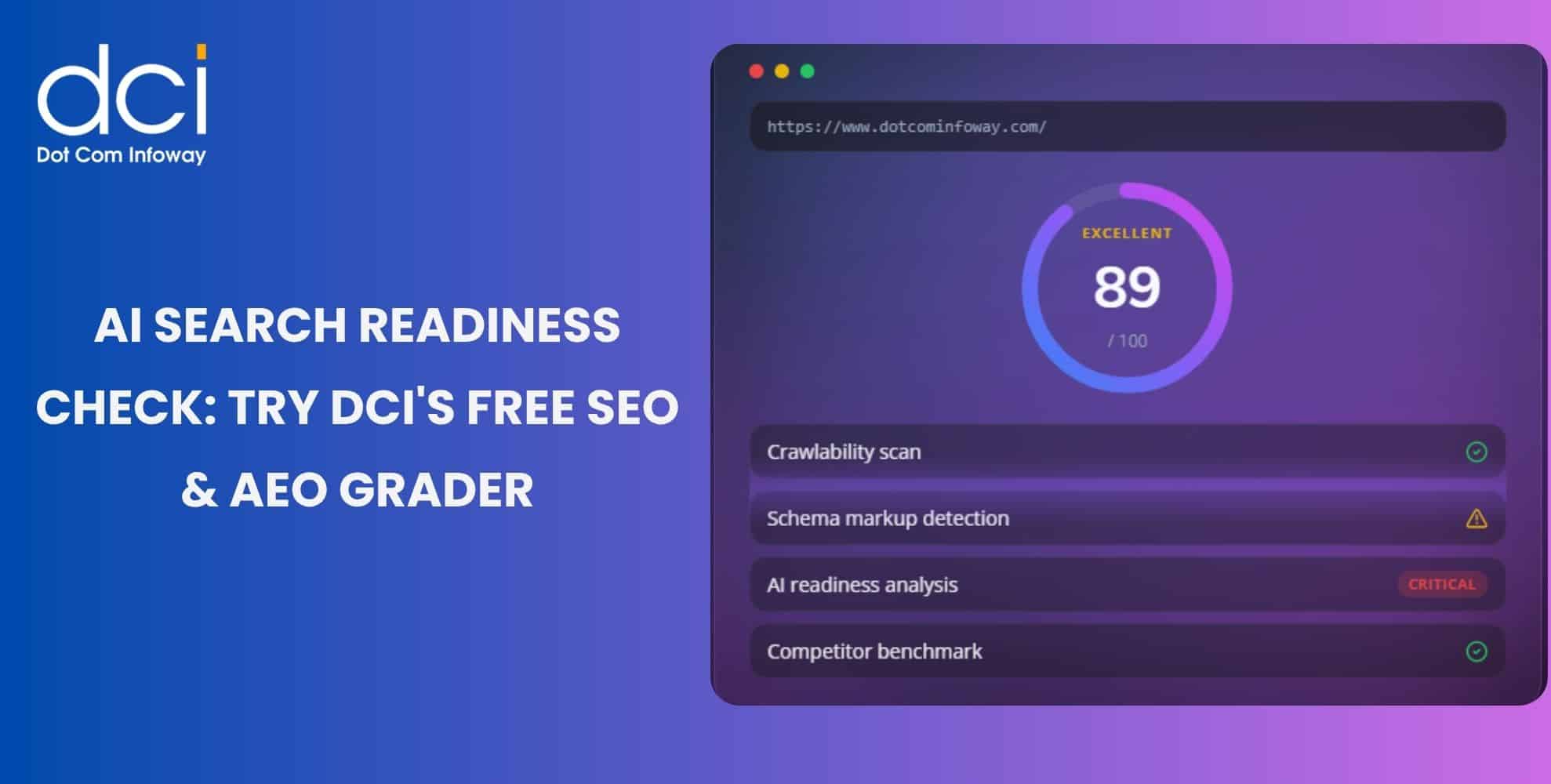
AI Search Is Reshaping Discovery: Use DCI’s Free SEO & AEO Grader Tool to Measure Your Website’s Readiness
Search is changing fast. Users now ask ChatGPT for recommendations, compare options on Perplexity, read Gemini summaries, and check Google AI Overviews before visiting websites. This shift makes the SEO & AEO Grader Tool important for brands that want...
 June 11, 2026
AI Video Generation: Script to Screen with Advanced AI Tools
AI video generation is reshaping how brands, creators, and studios produce visual content. With advanced AI tools, teams can turn scripts, prompts, blogs, images, or product ideas into ready-to-publish videos for ads, reels, trailers, explainers, and campaigns. How can a...
Get the latest insights from Dot Com Infoway straight to your inbox.