The Growing Role of AI in Google Shopping Ads
Artificial intelligence has already transformed many aspects of digital advertising. Google now relies heavily on machine learning to optimize bidding strategies, targeting, and ad placements across its advertising ecosystem.
Industry reports suggest that more than 60% of Google Shopping campaign budgets are now managed using automated campaign types such as Performance Max. These campaigns use AI to analyze signals like user behavior, device type, and location to determine the most effective ad placements.
At the same time, the way consumers search for products online is changing. AI-powered search results and recommendations are influencing how shoppers discover products and brands. This shift is a clear example of How AI Is Transforming Digital Marketing across multiple industries.
As automation expands across advertising platforms, marketers are realizing that optimizing the ad itself is not enough. The landing page experience must also evolve to match modern customer expectations.
What Are AI Landing Pages?
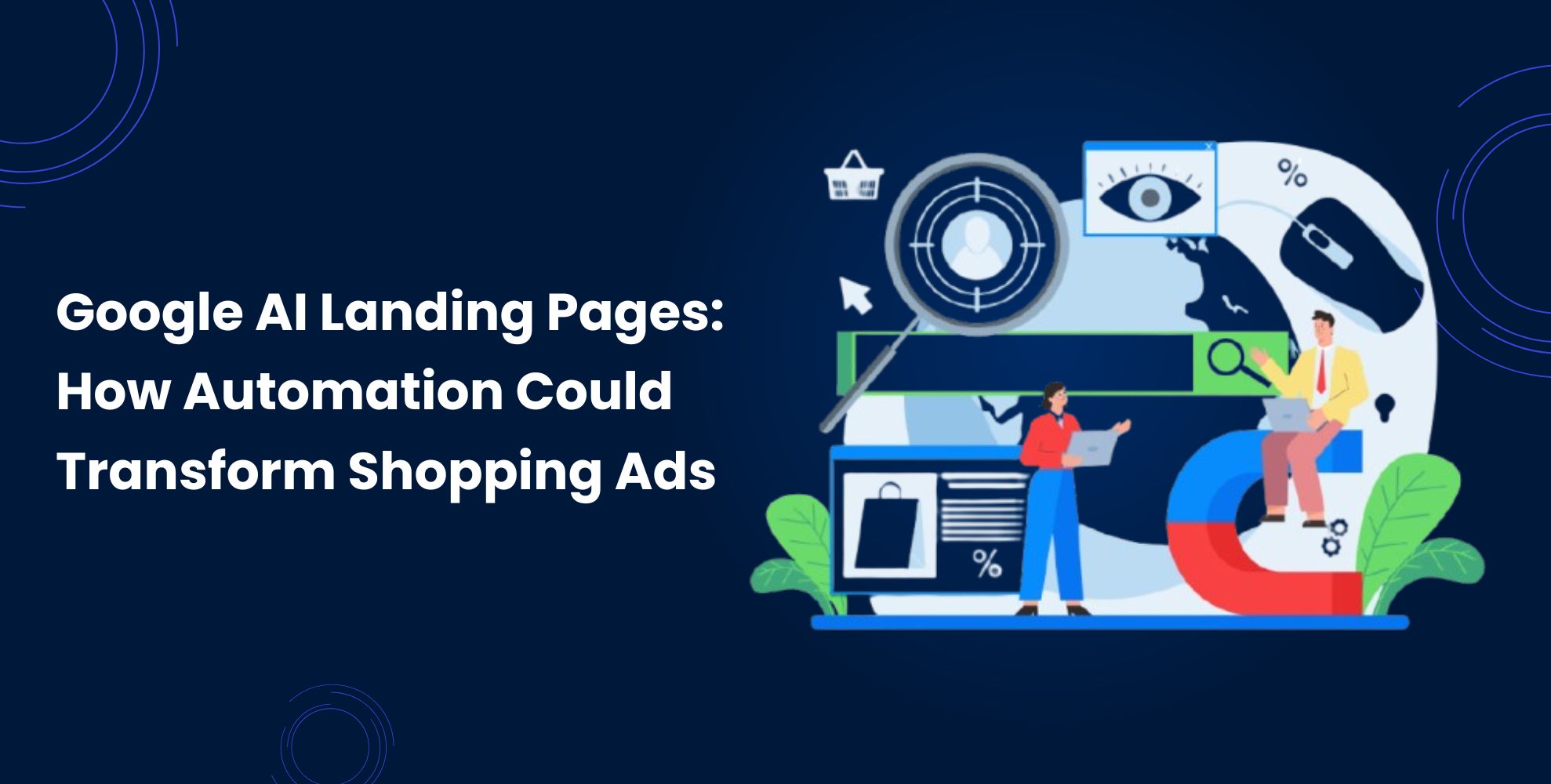
AI Landing Pages are dynamically generated webpages that adapt content based on user intent and campaign data. Instead of sending every visitor to the same page, AI can personalize the landing experience depending on the search query that triggered the ad.
These landing pages can automatically adjust elements such as:
- Product recommendations
- Headlines and promotional messaging
- Page layout and featured products
- Calls to action and offers
For example, a user searching for “affordable running shoes” might land on a page highlighting discounted products and budget-friendly options. Meanwhile, someone searching for “premium marathon running shoes” may see high-performance products with detailed feature comparisons.
For ecommerce businesses with large product catalogs, this automation eliminates the need to manually create hundreds of landing pages for different campaigns. It also ensures that each visitor encounters a highly relevant shopping experience.
When combined with AI-Powered Performance Marketing, these personalized landing pages can significantly increase engagement and conversion rates.
Why Traditional Shopping Ad Landing Pages Fail
Despite advancements in advertising technology, many ecommerce campaigns still rely on traditional landing pages. These static pages often fail to convert visitors because they cannot adapt to different user intents.
One major issue is intent mismatch. A customer searching for a specific product feature may land on a general category page instead of a curated product selection.
Another challenge is slow optimization. Traditional landing pages rely on manual A/B testing, which can take weeks to produce meaningful results.
Finally, most landing pages lack personalization. Every visitor sees the same layout, messaging, and product recommendations, even though their needs and motivations differ.
These limitations reduce the effectiveness of Google Shopping campaigns and increase advertising costs.
How AI Landing Pages Improve Advertising Performance
Personalized Shopping Experiences
AI analyzes signals such as search queries, location, browsing behavior, and device type to personalize landing page content. This ensures that users see the most relevant products and offers immediately after clicking an ad.
For example, a shopper looking for affordable products may see discount-focused messaging, while someone searching for premium items may see feature highlights and detailed comparisons.
Automated Product Recommendations
AI-powered landing pages can automatically recommend related or trending products based on user behavior and campaign data. These recommendations help shoppers discover alternative products or complementary items.
Recommendation engines similar to those used by large ecommerce platforms contribute significantly to online sales growth.
Continuous Optimization
Instead of relying on traditional A/B testing, AI systems can analyze multiple variations of landing page elements simultaneously. The system automatically identifies the best-performing combinations and prioritizes them.
This continuous optimization allows marketers to improve campaign performance without constant manual intervention.







![The Game Marketing Guide: Pre and Post-Launch Strategies [Infographic]](https://www.dotcominfoway.com/wp-content/uploads/2023/09/DCI-Game-Marketing-blog-1.jpg)