



You’ve got a brilliant app idea, the wireframes are ready, and your team is geared up but then comes the question that has derailed more projects than budget cuts ever could: which framework should you build on? What keeps CTOs and founders awake at night isn’t the build itself, but the risk of investing six months and $200,000 into a framework that becomes obsolete, poorly supported, or painfully expensive to maintain within a couple of years. This isn’t paranoia; it’s happened before, as seen when Airbnb famously moved away from React Native in 2018. In 2026, choosing an app framework is no longer just a technical call; it’s a business-critical decision that directly impacts development speed, long-term maintenance costs, hiring and talent availability, scalability, and ultimately whether your product can survive and compete in a crowded market.
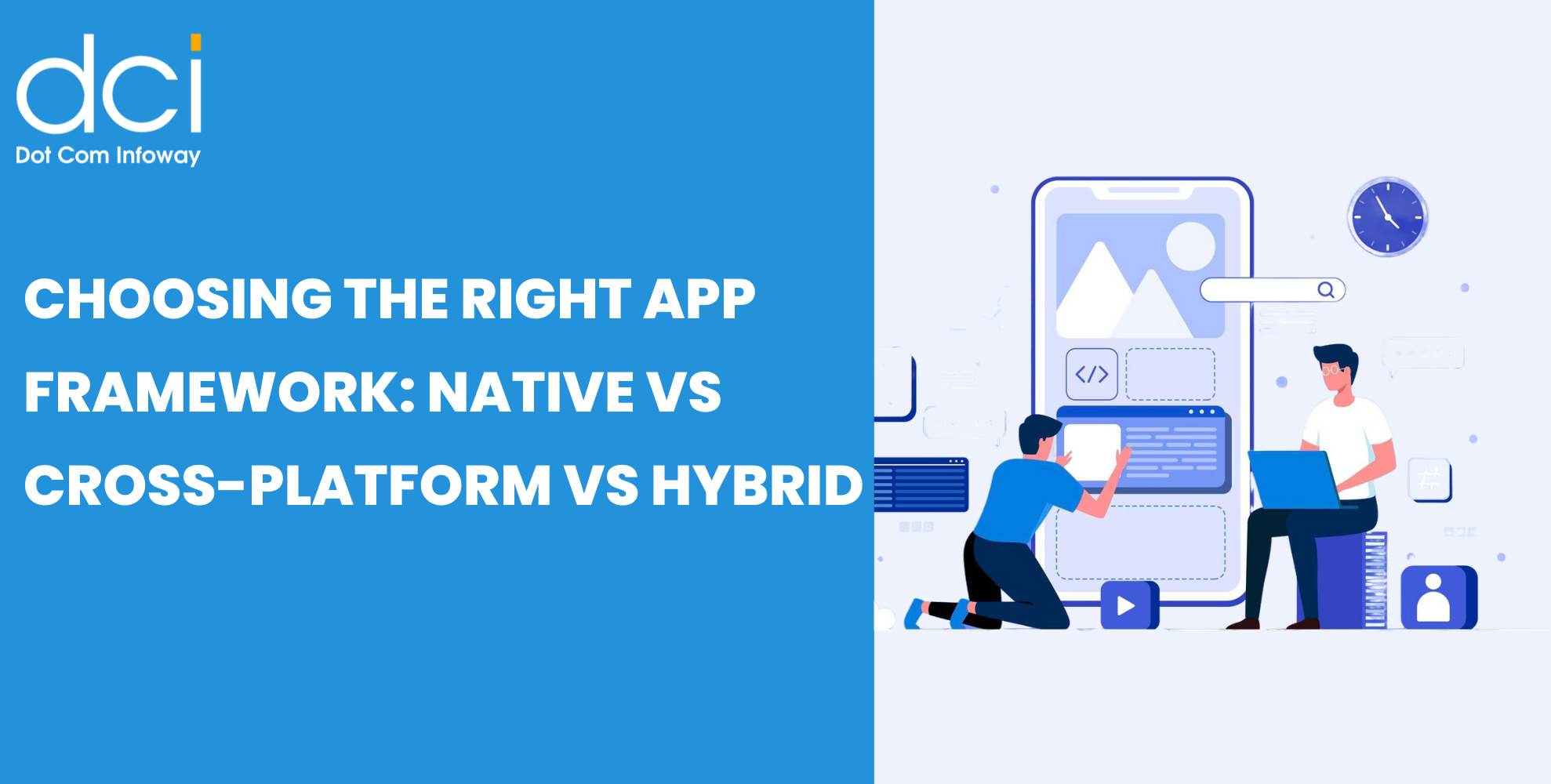
Choosing the Right App Framework: Native vs Cross-Platform vs Hybrid
8 mins read
The Three Paths: A Quick Reality Check
Before diving deep, let’s establish what we’re comparing. Native development means building separate apps for iOS (using Swift/SwiftUI) and Android (using Kotlin). Cross-platform frameworks like Flutter and React Native let you write once and deploy everywhere. Hybrid frameworks such as Ionic wrap web technologies in a native shell.
Each approach has evolved dramatically. The “native or nothing” mentality of 2018 has given way to a more nuanced understanding: one where cross-platform development can reduce costs by up to 40% and accelerate development cycles by 70%, according to recent industry benchmarks.
Native Frameworks: When Performance Is Non-Negotiable
AR experiences, complex animations, real-time gaming, or applications requiring deep hardware integration like medical devices.
“Native frameworks like SwiftUI and Kotlin offer superior performance, security, and user experience. They provide full hardware access and platform-specific polish.”- IPH Technologies
SwiftUI has matured beautifully for Apple’s ecosystem, while Kotlin with Jetpack Compose delivers that same declarative elegance on Android. The user experience feels right: buttons respond exactly as users expect, animations flow naturally, and the app behaves like a true citizen of its platform.
But here’s the catch. Choosing the right app framework means being honest about trade-offs. Native development requires maintaining two separate codebases, hiring specialists for each platform, and accepting that feature parity between iOS and Android will always lag slightly. For enterprise apps at companies like major banks or healthcare providers, that investment makes sense. For a startup racing to validate product-market fit? That’s a harder sell.
Cross-Platform Frameworks: The 2026 Sweet Spot
This is where the landscape has shifted most dramatically. Cross-platform frameworks have matured from “good enough” compromises into genuinely powerful tools that even performance-conscious teams embrace.
Flutter currently leads with approximately 46% adoption among cross-platform developers, while React Native holds steady at 38%. Both have earned their positions through very different strengths.
Flutter: The UI Perfectionist’s Choice
Flutter 3.22+ introduced WebAssembly (WASM) support that’s genuinely impressive: teams are reporting a 42% increase in rendering speed for web deployments. The framework’s widget-based architecture means pixel-perfect consistency across platforms without fighting platform-specific quirks.
BMW uses Flutter for their connected car experiences. The framework excels when visual identity matters as much as functionality, making it ideal for e-commerce apps, MVPs needing polish, and any product where brand consistency across devices is paramount.
React Native: The Enterprise Workhorse
Facebook and Uber continue betting heavily on React Native, and their reasoning is practical: most web teams already know React. The learning curve flattens significantly when your existing JavaScript developers can contribute to mobile development within weeks rather than months.
“React Native’s component-driven structure helps teams build complex UIs quickly without duplicating logic for each platform.”- Neontri
For SaaS platforms and fintech applications, React Native’s mature ecosystem and extensive third-party library support often tip the scales. Choosing the right app framework frequently comes down to your existing team’s expertise, and React Native respects that reality.
Kotlin Multiplatform: The Enterprise Dark Horse
Airbnb’s 2018 React Native departure taught them valuable lessons. Today, they’ve embraced Kotlin Multiplatform (KMP): sharing business logic across platforms while keeping native UI layers. Netflix has followed similar patterns for their internal tooling.
KMP represents a pragmatic middle ground: native performance and UI fidelity where users notice it, shared code where they don’t. For enterprise applications handling sensitive data or complex business rules, this approach increasingly makes sense.

Ready to boost your website’s rankings and online visibility?
Discover how our expert SEO services can resolve ranking issues, drive traffic, and elevate your website’s performance to the next level!
Hybrid Frameworks: Faster Isn’t Always Better
Ionic and Cordova remain viable for specific use cases: internal business tools, content-driven apps, and rapid prototypes where time-to-market trumps everything else. Web developers can build functional mobile apps without learning entirely new paradigms.
But let’s talk about what the industry calls the “Year 3 maintenance trap.” Hybrid apps often show their age around the three-year mark. Initial development savings of 30-50% can evaporate when you’re fighting WebView performance limitations, dealing with plugin compatibility issues after OS updates, or trying to implement features that hybrid frameworks simply weren’t designed to handle.
For educational apps, simple utilities, or internal tools with limited lifespans, hybrid remains a smart choice. For products you’re building to scale and maintain long-term? The calculus changes.
The Decision Framework That Actually Works
Forget theoretical comparisons. Here’s how successful teams in 2026 approach choosing the right app framework:
Start with your constraints, not your preferences. Budget under $100K with a six-month runway? Cross-platform (likely Flutter for UI-heavy apps, React Native if your team knows JavaScript). Need AR features or complex sensor integration? Native is your only realistic path. Building an MVP to test market demand? Hybrid might actually be the smartest play.
Consider your talent pipeline. The best framework is one your team can actually use effectively. Flutter developers command premium salaries in 2026, while React Native talent remains more accessible due to JavaScript’s ubiquity. Native iOS developers are scarce and expensive almost everywhere.
Think about Year 3, not Day 1. The cheapest framework to build isn’t always the cheapest to maintain. Cross-platform frameworks have reached a maturity level where long-term maintenance costs rival native development, but hybrid apps still struggle with the maintenance trap.
Making Your Choice Count
Choosing the right app framework in 2026 comes down to honest self-assessment. What does your team know? What does your product actually need? What happens when you need to scale, pivot, or hand off the codebase to new developers?
The frameworks themselves have never been more capable. Flutter’s rendering performance approaches native speeds. React Native’s architecture continues evolving. Even hybrid solutions have carved out legitimate niches. The technology isn’t the bottleneck anymore: strategic clarity is.
Whether you’re building a consumer-facing product, an enterprise solution, or a startup MVP, the framework decision deserves serious analysis beyond blog posts and Twitter debates. It deserves partnership with teams who’ve navigated these choices across dozens of successful launches.
If you’re weighing these options for an upcoming project, the mobile development specialists at Dot Com Infoway bring exactly that experience: helping businesses match their unique requirements with frameworks that deliver both immediate results and long-term maintainability.
The right framework exists for your project. The question is whether you’ll find it before you’ve already committed to the wrong one.



![The Game Marketing Guide: Pre and Post-Launch Strategies [Infographic]](https://www.dotcominfoway.com/wp-content/uploads/2023/09/DCI-Game-Marketing-blog-1.jpg)
Latest Posts
 October 08, 2026
Why eCommerce Customers Abandon Checkout and How to Fix It
Let’s imagine that there is a customer who shops online. He browses the online store’s catalog, finds the item that he wants to purchase, and adds it to his cart. However, he does not complete the order, resulting in...
 October 06, 2026
From App Idea to Profitable Product: A Business Guide to Validation, Development, and Monetization
Every business wants to turn its ideas into successful applications. However, many organizations invest in development and distribution without knowing whether their products will attract customers or generate revenue. As a result, they waste resources creating applications that may...
 October 05, 2026
Is Your Mobile App Outdated? 7 Signs It’s Time for an Upgrade
Your app launched to great reviews, but a few years on, downloads have flattened and complaints are creeping in. If your business needs a mobile app upgrade, it may be time to consider modernizing it. Devices, operating systems, and...
 September 28, 2026
From Apps to AI Agents: How Agentic AI Is Redefining the Mobile Experience in 2027
For years, the mobile experience has followed a familiar pattern: users open an app, navigate through menus, enter information, select an action, and wait for a result. Agentic AI is beginning to change that model. Instead of requiring users to manually...
 September 24, 2026
SEO AEO Grader ToolAre Search Engines Hiding Your Content? Find Out with Our Free SEO & AEO Audit Tool
You publish high-quality content, optimize your website, and follow SEO best practices, but your pages still struggle to appear on search engines. You are not alone. Many businesses face the same challenge where their content exists online but fails...
 September 23, 2026
Your Website Works Today but Cannot Scale Tomorrow: Signs of an Outdated Architecture
A website can appear successful on the surface while quietly developing problems underneath. It may load correctly, handle current visitors, and support existing business operations, but that does not always mean it has a scalable website architecture prepared for...
 September 21, 2026
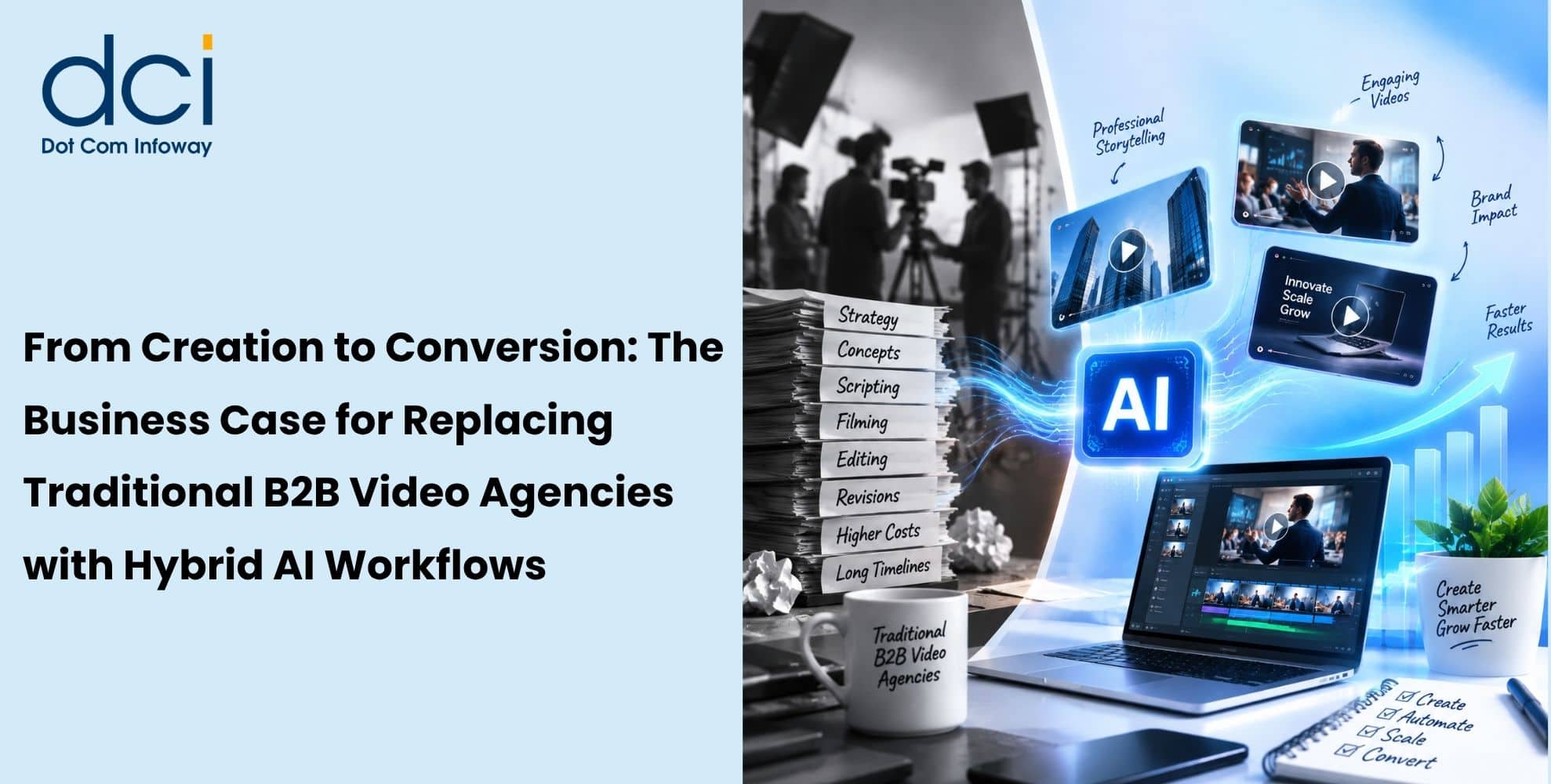
From Creation to Conversion: The Business Case for Replacing Traditional B2B Video Agencies with Hybrid AI Workflows
Video has become one of the most important communication tools for modern B2B businesses. Companies use videos to explain complex products, showcase solutions, educate customers, support sales teams, and build stronger brand connections. However, as businesses demand more content...
 September 18, 2026
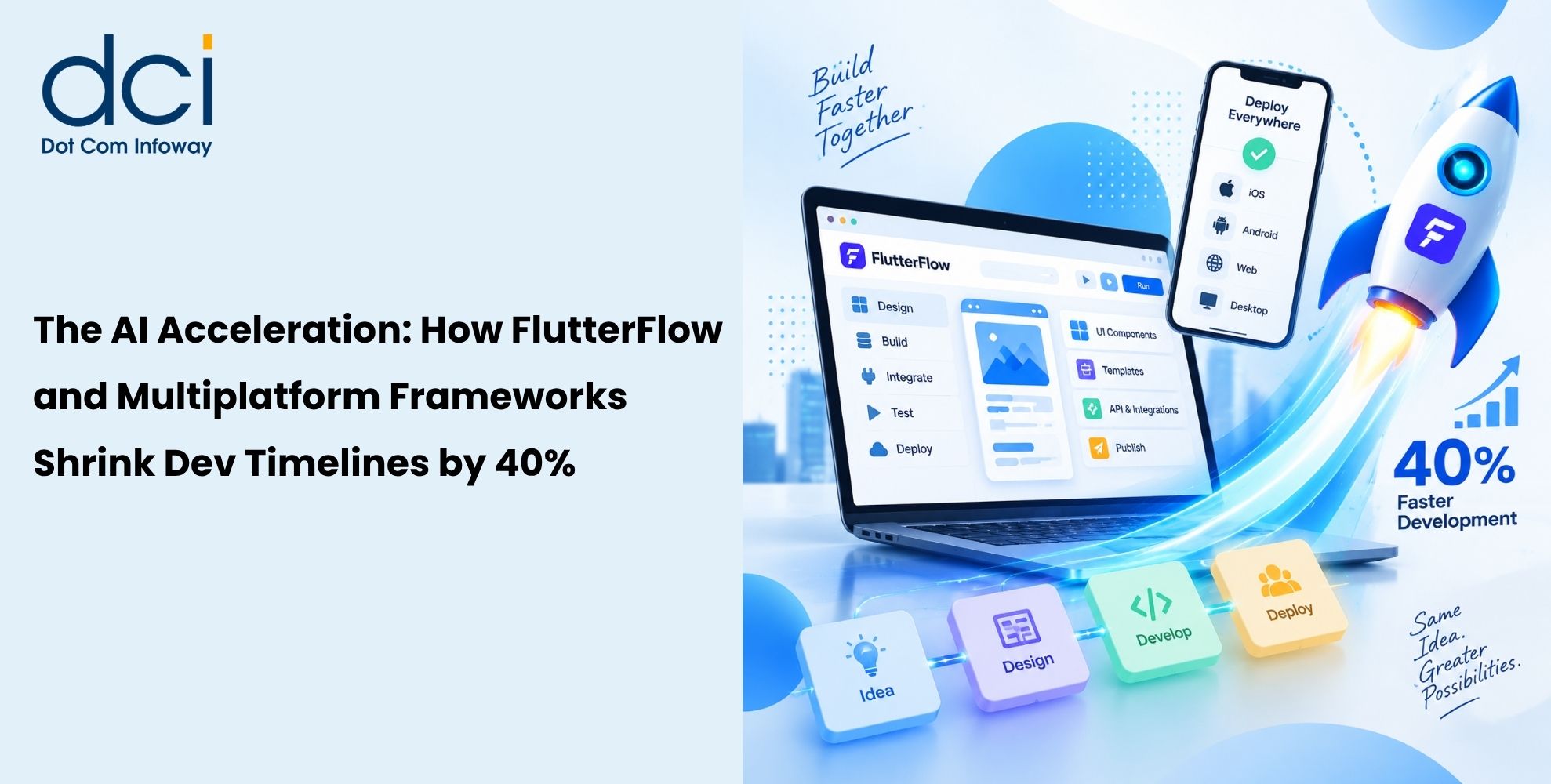
The AI Acceleration: How FlutterFlow and Multiplatform Frameworks Shrink Dev Timelines by 40%
The mobile app development landscape is changing faster than ever. Businesses today need powerful digital products delivered quickly, but traditional development processes often involve long coding cycles, separate teams for different platforms, and higher development costs. The rise of AI-powered...
 September 16, 2026
Is Your Mobile App Ready for Apple Intelligence and Android Gemini Advanced Integration?
The mobile industry is moving from traditional application experiences toward intelligent, adaptive platforms. Businesses today need AI-ready mobile apps that can support emerging technologies like Apple Intelligence and Android Gemini Advanced to deliver faster, smarter, and more personalized user...
 September 14, 2026
Low App Downloads Despite Good Reviews: Development and ASO Issues to Fix
An application can receive excellent ratings, positive customer feedback, and strong user satisfaction but still struggle to attract new users. Low app downloads despite good reviews is a challenge many businesses face after launching their mobile applications. While reviews...
Get the latest insights from Dot Com Infoway straight to your inbox.