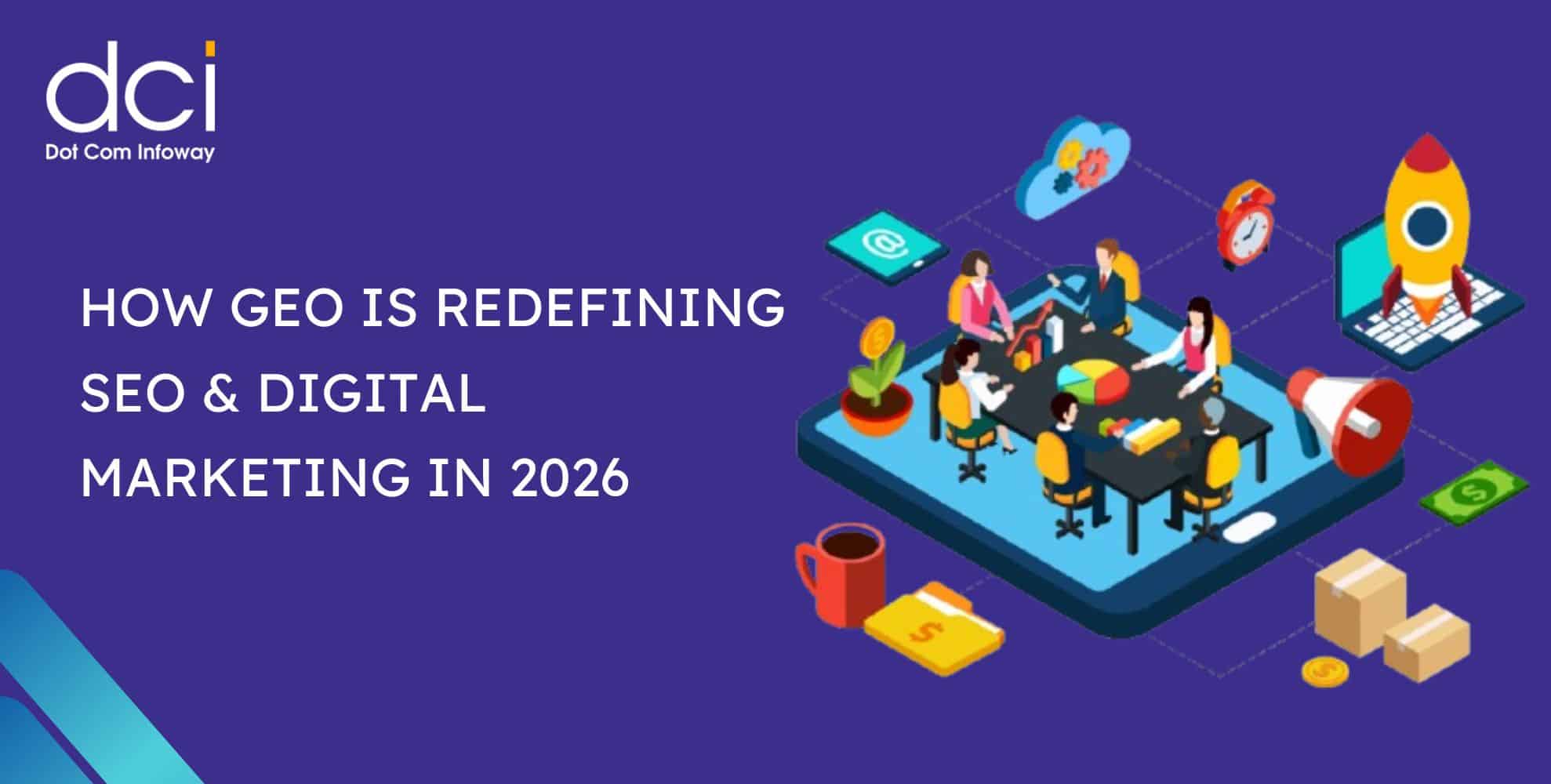
How GEO Is Redefining SEO & Digital Marketing in 2026

By

7 mins read

Digital Marketing in 2026 is undergoing a major transformation as search behavior shifts from traditional keyword-based results to AI-generated answers. Today, users increasingly rely on intelligent search platforms powered by technologies developed by OpenAI, Google, DeepSeek, and Perplexity AI. These platforms no longer just display links-they generate responses by analyzing and combining content from multiple trusted sources. This shift has introduced a new concept called Generative Engine Optimization (GEO), which is redefining how brands approach content strategy and online visibility.

Unlike traditional SEO, which focused heavily on keyword rankings, GEO emphasizes structured, authoritative, and context-rich content that AI systems can easily interpret and reference. As a result, Digital Marketing in 2026 is moving toward entity-driven optimization, semantic clarity, and conversational content formats that align with how users naturally search.

How GEO Is Redefining SEO & Digital Marketing in 2026

Understanding Generative Engine Optimization (GEO)

Generative Engine Optimization is the process of optimizing digital content so that it appears within AI-generated answers rather than only in traditional search listings. AI engines evaluate topical depth, trust signals, and structured formatting to decide which sources to cite.

In this evolving ecosystem, content must answer questions clearly while demonstrating real expertise. Businesses are now creating content clusters instead of isolated blog posts, ensuring that each topic is supported by meaningful context. This transition is becoming a core element of modern digital marketing services, where strategy focuses not only on ranking but also on discoverability within AI systems.

According to insights from Gartner:
“By 2026, traditional search engine volume will drop by 25% as users shift to AI chatbots and virtual agents for search.”

This prediction highlights why businesses are rapidly aligning their strategies with Digital Marketing in 2026 trends.

Why AI Search Is Reshaping Digital Marketing Strategy

    Search engines are becoming answer engines. Instead of clicking multiple results, users expect direct and conversational responses. This behavioral shift is forcing marketers to rethink how content is written and structured.

    Research from HubSpot shows that AI adoption is already influencing marketing workflows and content personalization. As AI tools analyze user intent more accurately, brands must produce content that addresses real problems rather than simply targeting keywords.

    In Digital Marketing in 2026, content must be easy to summarize, fact-driven, and structured with clear headings so AI models can extract relevant insights. This approach improves both traditional rankings and AI citations.

    The Shift From SEO to GEO in Modern Content Strategy

    The transition from traditional SEO to Generative Engine Optimization represents a strategic evolution rather than a complete replacement. While backlinks and technical optimization still matter, AI systems now prioritize topical authority and contextual accuracy.

    Large-scale platforms such as Amazon and Netflix already rely on AI-driven recommendation systems that analyze behavioral signals instead of static keyword patterns. This same principle is now influencing search visibility, making structured content ecosystems more important than single-page optimization.

    Because of this shift, Digital Marketing in 2026 requires businesses to build strong knowledge frameworks that demonstrate expertise across entire topic clusters.

    The Future of Performance Marketing in an AI-Driven Ecosystem

    Automation is becoming the foundation of the Future of Performance Marketing, where campaigns are continuously optimized using machine learning. Advertising platforms developed by Meta Platforms now use predictive models to improve targeting and conversion performance.

    Instead of manually adjusting campaigns, marketers increasingly rely on AI to analyze engagement signals and optimize results in real time. This transformation allows businesses to focus more on creative strategy and audience experience.

    In Digital Marketing in 2026, performance marketing is no longer just about clicks-it is about measurable outcomes such as conversions, retention, and customer lifetime value. AI-driven insights are helping brands make faster and more accurate marketing decisions.


    mobile-design-300x300

    What should businesses focus on to succeed in Digital Marketing in 2026?

    Businesses should focus on Generative Engine Optimization, AI-driven search visibility, structured content, and strong digital marketing services while avoiding common Local SEO mistakes.


    Local SEO Mistakes Businesses Must Avoid

    While AI-driven discovery is expanding globally, local search continues to play a critical role for regional businesses. However, many companies still make common Local SEO Mistakes that reduce their visibility.

    One of the most frequent issues is inconsistent business information across directories. AI systems rely on structured data for trust signals, so mismatched details can weaken rankings. Another major mistake is ignoring customer reviews, which now influence both search algorithms and AI-generated recommendations. Businesses also often create location pages with minimal content, reducing their authority in local searches.

    As Digital Marketing in 2026 evolves, local optimization must include structured schema, updated listings, and meaningful local content that reflects real expertise.

    Building AI-Indexable Content That Gets Cited

    To succeed in the era of AI-driven discovery, businesses must create content that is clear, structured, and authoritative. AI engines prioritize content that directly answers user queries while maintaining factual reliability.

    This means brands should focus on topic depth, semantic clarity, and real-world examples rather than surface-level keyword targeting. Conversational formatting also plays a major role, as AI systems increasingly interpret natural language queries.

    As a result, Digital Marketing in 2026 is becoming more content-architecture driven than ever before.

    Conclusion: GEO Is Defining the Future of Digital Visibility

    Generative Engine Optimization is reshaping how businesses approach search, content, and performance marketing. The shift toward AI-generated answers means brands must prioritize structured knowledge, contextual relevance, and authoritative insights.

    Organizations that adapt early will gain a significant advantage as AI search continues to grow. By combining advanced content frameworks with strategic digital marketing services, businesses can strengthen their visibility across both traditional and AI-driven platforms.

    As companies prepare for Digital Marketing in 2026, focusing on Generative Engine Optimization, avoiding critical Local SEO Mistakes, and aligning with the Future of Performance Marketing will be essential for long-term growth. Forward-thinking agencies such as Dot Com Infoway are already helping brands transition into AI-first marketing ecosystems designed for the next generation of search.

    Latest Posts

    Get the latest insights from Dot Com Infoway straight to your inbox.

    Please enable JavaScript in your browser to complete this form.