Why Boosted Posts Were Not Enough
Boosted posts usually work at the top of the funnel. They can create awareness, but they do not always move users toward purchase. In this case, new visitors, product viewers, cart abandoners, and past buyers were all seeing similar messages.
The main problems were:
- Wasted ad spend: The same creatives were shown to users with different buying intent.
- Weak retargeting: Cart abandoners were not separated from casual visitors.
- Poor conversion flow: Product pages lacked reviews, delivery clarity, return information, and checkout reassurance.
Instead of increasing budget, the brand needed a structured digital marketing strategy focused on customer intent and revenue.
What the Funnel Audit Revealed
The first step was to review campaigns, landing pages, analytics, email flows, and customer behavior. The audit showed that the issue was not only with ads. The real problem was a disconnected buyer journey.
Awareness campaigns created interest but did not guide users to the next step. Retargeting was too broad. Product pages looked good but did not answer key purchase questions. Email reminders and remarketing campaigns were not working together. Reporting focused too much on platform-level ROAS and not enough on assisted conversions, repeat purchases, and customer value.
This helped shift the focus from post boosting to funnel optimization.
Rebuilding the Funnel in 90 Days
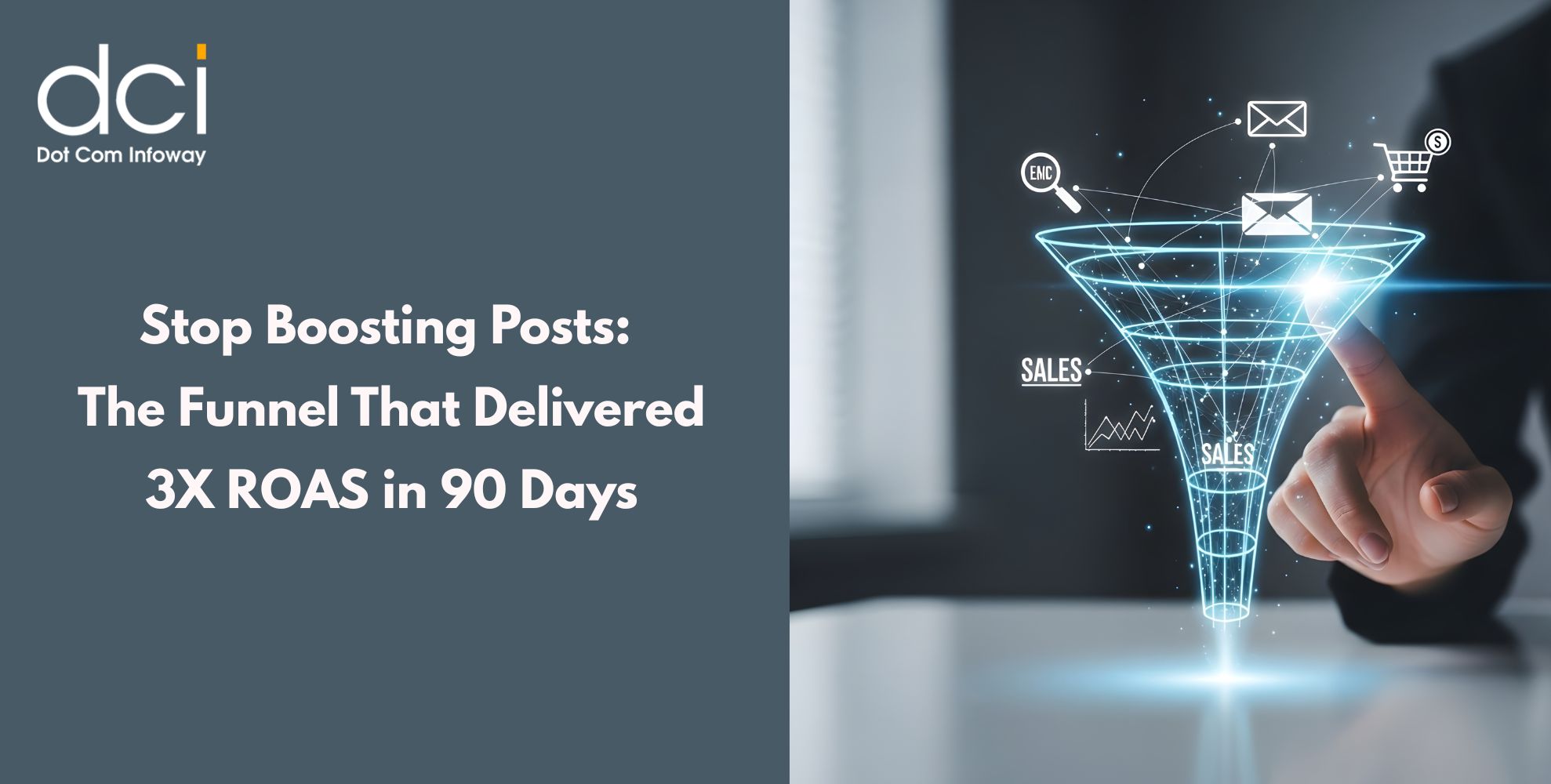
The digital marketing funnel for D2C brand performance was rebuilt across three stages: attracting qualified users, converting high-intent shoppers, and retaining profitable customers.
Days 1–30: Move From Engagement to Intent
Campaigns were separated by funnel stage. Cold audiences received educational content such as product benefits, problem-led videos, comparison creatives, and use-case ads. The goal was to attract users who matched the brand’s ideal buyer profile.
Warm audiences, including website visitors and video viewers, saw trust-building content such as testimonials, reviews, product demos, and FAQs. High-intent users, including cart abandoners and checkout visitors, saw direct conversion messages such as free shipping reminders, limited-time offers, return policy highlights, and delivery reassurance.
This improved ad relevance and reduced spend on low-intent users.
Content That Supported Each Funnel Stage
Every creative was mapped to a buyer question. Top-funnel content explained the problem. Middle-funnel content built trust. Bottom-funnel content removed hesitation.
For example, a first-time visitor might see a short product benefit video. A product page visitor might later see a customer review or comparison ad. A cart abandoner might receive a reminder with free shipping and a clear return policy.
This made Paid Media Marketing more than ad placement. It became a system where audience, message, landing page, and conversion data worked together.
Fixing the Website Before Scaling Ads
The brand also improved product pages before increasing media spend. Even high-quality traffic will not convert if the landing page does not build trust.
The website updates included:
- Clearer product benefits above the fold.
- Visible trust signals such as reviews, FAQs, return policy, and delivery details.
- Bundle offers to improve average order value.
- Faster page experience to reduce drop-offs.
This helped the brand convert more users from the same traffic. For example, improving conversion rate from 1% to 2% can double orders without doubling ad spend.
The team also reviewed organic and paid growth using insights similar to SEO vs Paid Advertising so the brand was not relying only on ads.




![The Game Marketing Guide: Pre and Post-Launch Strategies [Infographic]](https://www.dotcominfoway.com/wp-content/uploads/2023/09/DCI-Game-Marketing-blog-1.jpg)