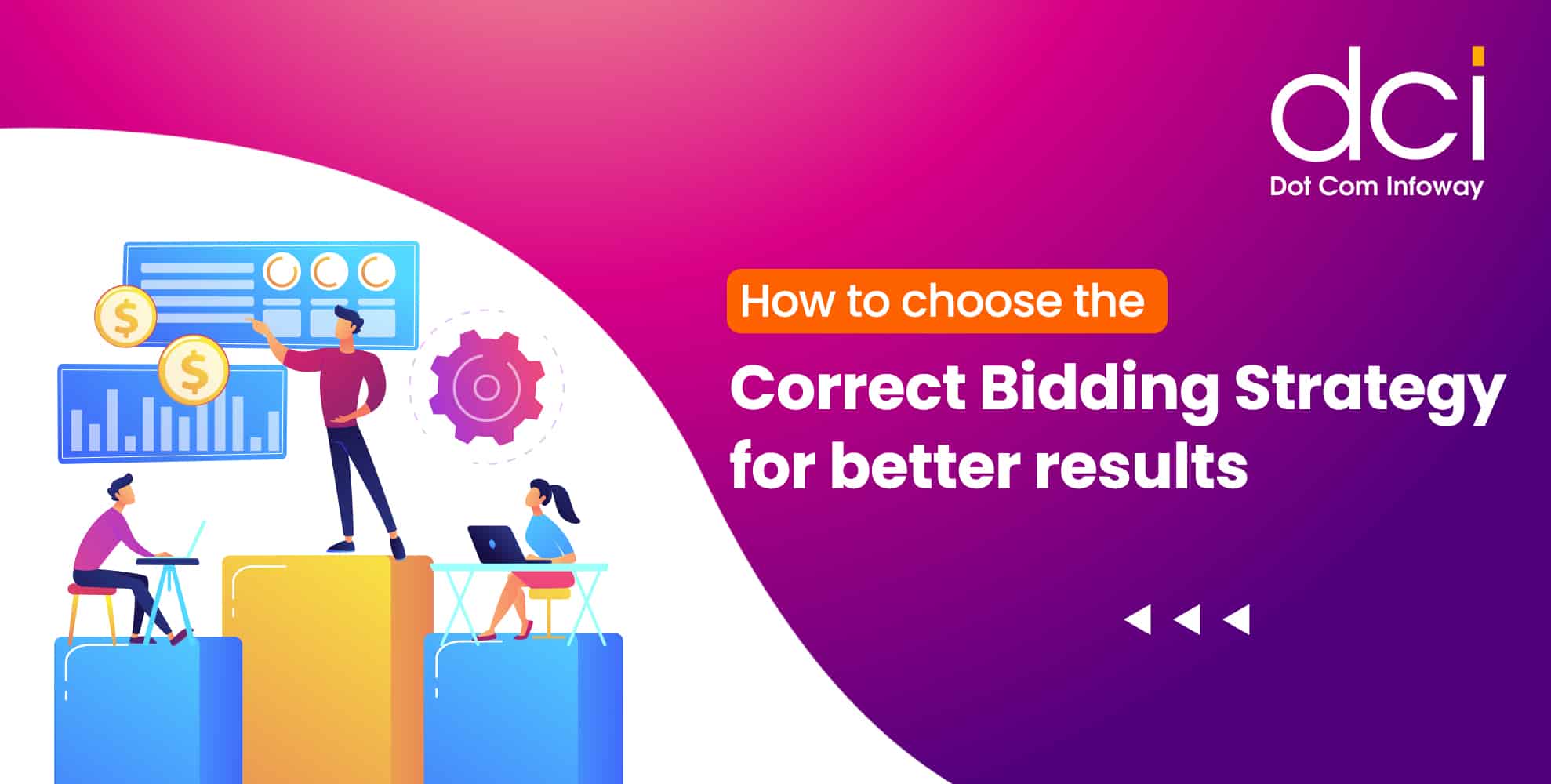
In digital advertising, getting your bidding strategy right is crucial. It determines how efficiently you use your ad budget and directly impacts your campaign performance. Whether you’re running Google Ads, Facebook Ads, or programmatic advertising, choosing the correct bidding strategy can make the difference between profit and loss. But with so many options available manual bidding, automated bidding, target ROAS, maximize conversions how do you determine what’s best for your specific goals?
Understanding bidding strategies is key to optimizing ad spend and ensuring a strong return on investment (ROI). Without the right strategy, businesses can either overspend with little to show for it or underbid and miss valuable opportunities.
Understanding Bidding Strategies in Digital Advertising
Bidding strategies in online advertising dictate how much you’re willing to pay for a specific action whether it’s a click, impression, or conversion. The strategy you choose should align with your business objectives. For instance, an e-commerce store focused on driving sales may benefit from Target ROAS (Return on Ad Spend), while a brand awareness campaign may lean towards CPM (Cost Per Thousand Impressions).
When selecting a bidding strategy, factors such as competition, ad relevance, quality score, and audience targeting play a crucial role. Automated bidding strategies, powered by machine learning, take these variables into account and optimize bids in real time. However, manual bidding gives advertisers more control, which can be beneficial in certain situations.
Manual vs. Automated Bidding: Which One Should You Choose?
Manual bidding allows advertisers to set their maximum bid for each keyword or ad placement manually. While this gives full control, it requires constant monitoring and adjustments to ensure cost efficiency. For businesses with experienced ad managers who can analyze data and optimize accordingly, manual bidding can be a viable choice.
On the other hand, automated bidding leverages AI to adjust bids dynamically. Google Ads, for example, uses historical data and real-time signals to set bids that maximize results. Strategies like Maximize Clicks, Target CPA (Cost Per Acquisition), and Target ROAS are examples of automated bidding options. The main advantage of automation is efficiency it saves time and continuously optimizes bids without manual intervention. However, it requires sufficient conversion data for the algorithm to work effectively.
How to Align Your Bidding Strategy with Campaign Goals
Selecting the right bidding strategy depends largely on the goal of your campaign. Here’s how different strategies align with various objectives:
Brand Awareness: If your goal is to maximize visibility, strategies like Target Impression Share or CPM bidding (cost per thousand impressions) can help place your ads in front of as many people as possible.
Website Traffic: Maximize Clicks bidding ensures you get the highest number of clicks within your budget.
Lead Generation: Target CPA bidding can optimize bids to generate leads at a predetermined cost.
Sales & Revenue Growth: For businesses focused on ROI, Target ROAS bidding adjusts bids based on the likelihood of generating revenue.
App Promotion: Cost-per-install (CPI) bidding works well for mobile app advertising, ensuring you get installs at the best possible price.
Choosing the correct strategy means evaluating your primary objective and matching it with the appropriate bidding method.

Ready to boost your website’s rankings and online visibility?
Discover how our expert SEO services can resolve ranking issues, drive traffic, and elevate your website’s performance to the next level!
Quality Score is a critical factor in how bidding strategies perform in Google Ads. It is determined by three components:
Expected Click-Through Rate (CTR): The likelihood of your ad being clicked when shown.
Ad Relevance: How closely your ad matches the intent of the user’s search query.
Landing Page Experience: The quality and relevance of the page users land on after clicking your ad.
A higher Quality Score means lower cost-per-click (CPC) and better ad placements, allowing you to achieve better results without increasing your bid.
When to Use Smart Bidding Strategies
Smart Bidding is a subset of automated bidding that uses machine learning to optimize conversions or conversion value in every auction. It includes strategies such as:
Target CPA: Focuses on acquiring conversions at a specific cost.
Target ROAS: Adjust bids to maximize revenue based on your target return on ad spend.
Maximize Conversions: Use your budget to generate as many conversions as possible.
Enhanced CPC (ECPC): Adjusts manual bids based on the likelihood of conversion.
Smart Bidding is particularly effective for businesses with established conversion data, as it allows the algorithm to make precise bid adjustments.
Avoiding Common Bidding Mistakes
One of the biggest mistakes advertisers make is choosing the wrong bidding strategy for their goals. Other common pitfalls include:
Setting bids too high without enough data: This can quickly drain your budget.
Ignoring seasonal trends: Consumer behavior changes, and so should your bidding strategy.
Not optimizing for mobile users: With mobile traffic dominating, ensuring bids are competitive for mobile placements is essential.
Lack of proper tracking: Without conversion tracking, it’s impossible to measure success accurately.
Avoiding these mistakes can ensure your bidding strategy delivers the best results.
Conclusion
Choosing the right bidding strategy requires a balance of automation, data analysis, and strategic decision-making. While automated bidding can optimize campaigns efficiently, manual bidding offers control for those willing to invest time in optimization. Understanding your campaign objectives, monitoring performance, and making data-driven adjustments will help you achieve better results in digital advertising.
By leveraging the right bidding strategies, businesses can maximize their ad spend, increase conversions, and drive higher ROI ultimately leading to sustained growth and success.
AI video generation is reshaping how brands, creators, and studios produce visual content. With advanced AI tools, teams can turn scripts, prompts, blogs, images, or product ideas into ready-to-publish videos for ads, reels, trailers, explainers, and campaigns.
How can a...
A lot of businesses are starting to notice the same trend. Their competitors consistently appear in ChatGPT, Perplexity, Gemini, and AI-generated search summaries, while their own websites rarely get mentioned. Even companies investing heavily in SEO are realizing that...
For years, SEO strategies revolved around backlinks. Businesses focused heavily on outreach campaigns, guest posting, and link-building activities to improve rankings and increase visibility. But today, AI-powered on-page optimization is becoming one of the biggest drivers of organic growth,...
Businesses today are investing heavily in paid advertising expecting fast traffic, qualified leads, and predictable growth. Yet many companies spending thousands every month are seeing a worrying trend: rising ad costs, lower conversions, and weaker returns. This has led...
Many businesses celebrate download milestones, but installs alone do not guarantee app success. Thousands of apps experience serious app retention issues where users install the app but rarely return after the first interaction. An app with 50,000 downloads and...
Website traffic alone does not guarantee conversions. Many businesses invest in SEO and digital marketing but still lose potential customers before they take action. This is where AI chatbots for lead generation help businesses engage visitors instantly, answer questions...
Expanding a mobile app into global markets requires more than translation—it demands cultural adaptation, localized user experiences, and market-specific engagement strategies. This is where app localization as a growth strategy becomes essential for sustainable app growth.
Research by CSA shows...
In today’s mobile-driven ecosystem, installing an app is easy, but keeping users engaged is difficult. A well-structured push notification strategy plays a critical role in bringing inactive users back, improving engagement, and reducing churn over time.
Industry research indicates that...
An app update should improve performance, security, and user experience. But when an app crashing after updates becomes a recurring issue, it can lead to login failures, freezing screens, slow loading times, and negative user reviews.
These crashes impact more...
Most apps lose users before they experience real value, and the biggest reason is often the app onboarding flow. Users decide within minutes whether an app deserves space on their phone. If onboarding feels confusing or slow, uninstall rates...