Why High Download Numbers Can Be Misleading
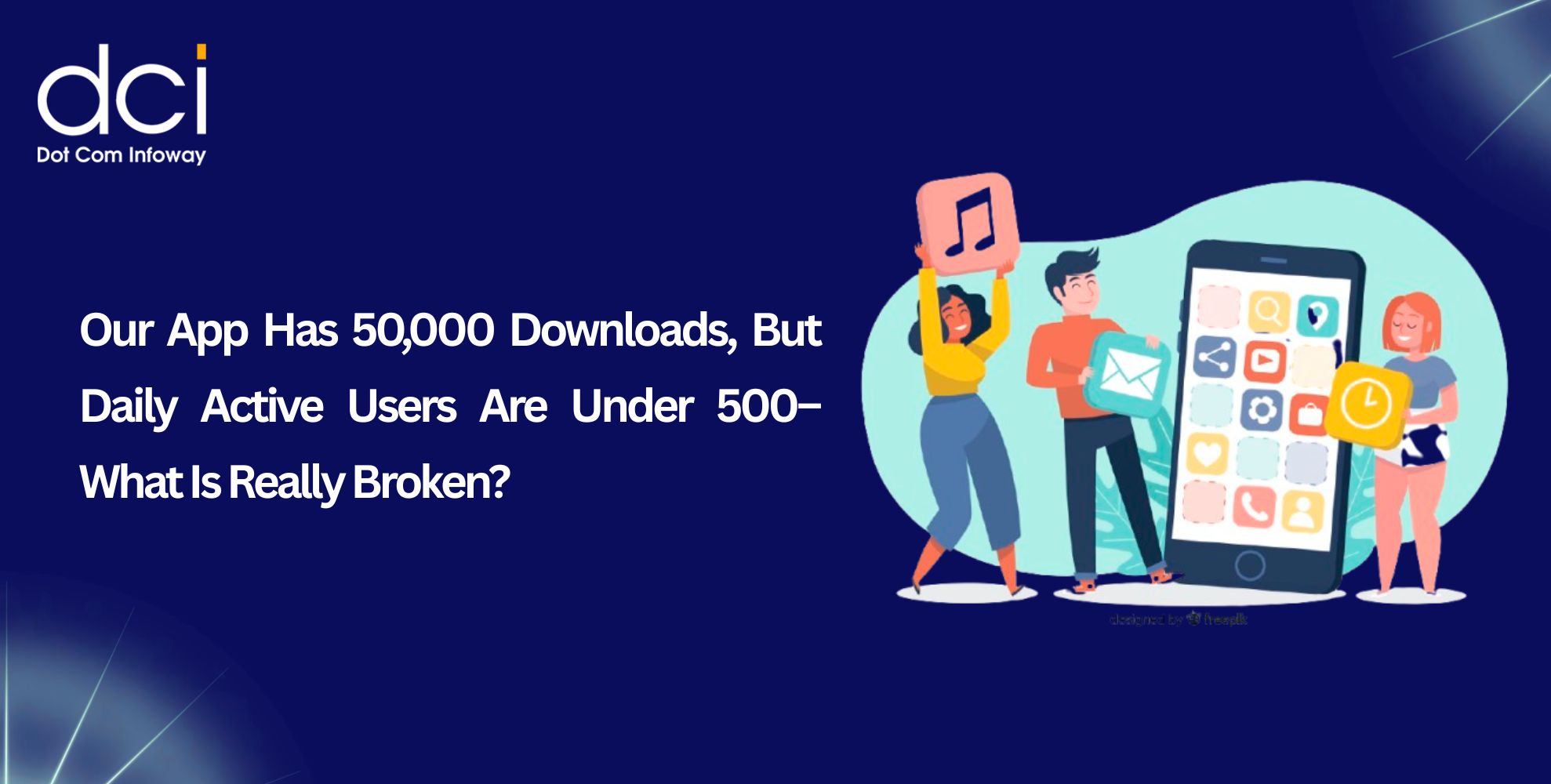
Downloads create visibility, but they do not reflect user satisfaction or long-term engagement. Many businesses invest heavily in paid ads, influencer campaigns, and App Store Optimization (ASO) to increase installs. While these strategies can generate rapid growth, they often fail to address what happens after the install.
A user downloading an app does not automatically mean:
- They completed onboarding
- They found the app useful
- They returned after the first session
- They became paying customers
This disconnect creates one of the biggest challenges in the mobile app industry today.
For example, many eCommerce apps gain huge install numbers during festive sales campaigns. However, if the checkout process feels slow or the app lacks personalized recommendations, users often stop using the app after the first purchase.
Similarly, fitness apps usually experience a spike in downloads at the beginning of the year but struggle to maintain active users because the engagement experience becomes repetitive.
Why Daily Active Users Matter More Than Downloads
Daily Active Users (DAU) reveal whether users consistently find value in the app. An app with highly engaged users can generate:
- More subscription revenue
- Better in-app purchases
- Higher app store rankings
- Increased customer loyalty
- Stronger referral growth
This is why investors and app marketplaces increasingly prioritize retention metrics such as DAU, Monthly Active Users (MAU), churn rate, and session duration over total installs alone.
AppsFlyer reports that improving retention by just 5% can increase profitability by up to 95% for subscription-based apps. This demonstrates how retention directly influences long-term business sustainability.
Modern app store algorithms also prioritize apps with strong engagement signals. Apps with poor retention frequently lose organic visibility even when their download numbers remain high.
What Usually Breaks Inside Low-Engagement Apps?
Most apps with low daily active users face multiple connected issues instead of one isolated problem. These issues often exist across onboarding, user experience, personalization, performance, and communication strategies.
Weak Onboarding Experience
The first few minutes inside an app are critical. If users face complicated signups, excessive permissions, or confusing navigation, they are more likely to abandon the app quickly.
Successful apps simplify onboarding and help users experience the core value immediately. Platforms like Spotify and Duolingo are strong examples because users can instantly understand how the app benefits them.
A poor onboarding experience remains one of the leading reasons behind declining app retention rates.
Lack of Personalized Experiences
Modern users expect apps to adapt to their preferences and behaviors. Generic experiences reduce engagement because users no longer feel connected to the platform.
Apps with strong retention often use:
- Personalized recommendations
- Behavioral targeting
- AI-driven content suggestions
- Customized notifications
Platforms like Netflix and Amazon have built massive engagement systems through personalization. Without similar relevance-driven experiences, users quickly lose interest.
No Long-Term Engagement Strategy
Many apps succeed in acquiring users but fail to create reasons for them to return consistently.
Apps that maintain high engagement often include:
- Loyalty rewards
- Gamification systems
- Daily streaks
- Progress tracking
- Community features
These strategies help build usage habits over time.
For instance, language-learning apps improve retention through achievement tracking and daily learning reminders. Fitness apps encourage repeat engagement through challenges and milestone rewards.
Without continuous engagement loops, users naturally stop returning.
Technical Performance Issues
App Retention Issues often begin with performance. Users expect fast-loading, stable, and responsive app experiences across devices.
Even minor issues such as:
- App crashes
- Slow loading speeds
- Lagging interfaces
- Excessive battery usage
can significantly increase uninstall rates.
Google research consistently shows that poor app performance reduces user trust and engagement. Technical optimization is now essential for long-term mobile app growth.
Poor Push Notification Strategy
Push notifications can improve engagement when used correctly. However, many apps misuse notifications by sending excessive promotional alerts without personalization.
Users often disable notifications or uninstall apps entirely when messages feel irrelevant.
Effective notification strategies focus on:
- User behavior
- Timing optimization
- Personalized messaging
- Contextual relevance
For example, an abandoned cart reminder in a shopping app is far more effective than repetitive promotional alerts.








![The Game Marketing Guide: Pre and Post-Launch Strategies [Infographic]](https://www.dotcominfoway.com/wp-content/uploads/2023/09/DCI-Game-Marketing-blog-1.jpg)