Why Businesses Are Moving to AI Support
Customer support teams often face the same challenges: high ticket volumes, repeated questions, slow response times, and limited staff availability. Customers, on the other hand, expect fast and clear answers.
Salesforce’s 2025 State of Service report says AI is expected to handle nearly half of all customer service cases by 2027. This shows how quickly businesses are moving toward AI-assisted support.
The most common problems before implementation were:
- Repeated tickets for basic questions
- Long first-response times during peak hours
- Scattered support information across teams
- Agents spending too much time on low-value queries
- Customers dropping off before getting answers
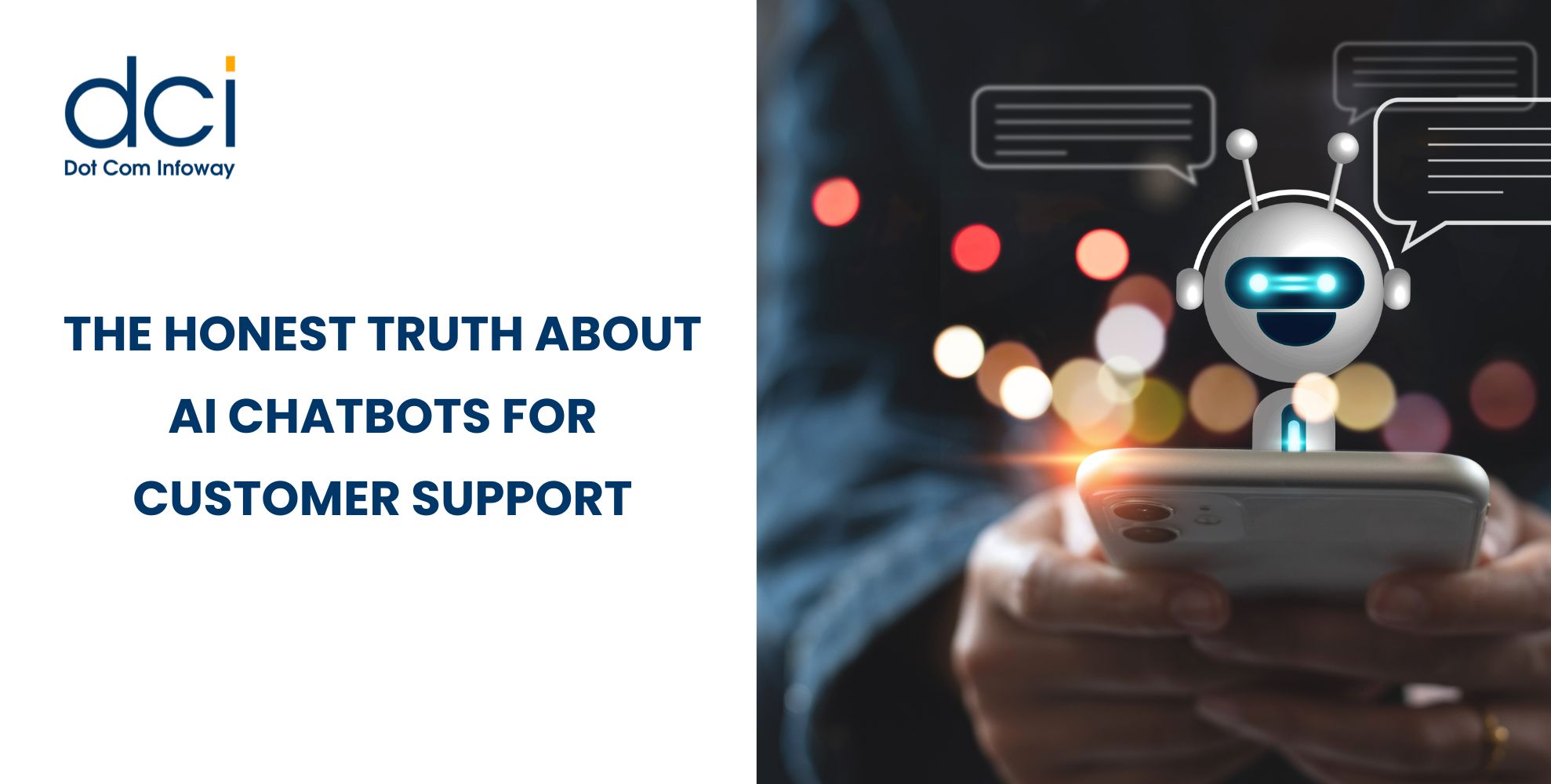
This is where a smart AI chatbot can help. The goal is not to replace support agents. The goal is to create a faster first layer of support while allowing human agents to handle complex and sensitive conversations.
What Worked Well
The chatbot performed best with simple, repetitive, and clearly documented questions. These included order tracking, account setup, pricing queries, appointment booking, subscription support, product comparisons, and basic troubleshooting.
For example, in a SaaS onboarding flow, users often asked questions like “Where do I start?”, “How do I invite my team?”, and “Can I change my plan later?” After adding chatbot prompts to the onboarding pages, repetitive support tickets reduced and users received faster guidance.
Another strong use case was lead qualification. When visitors asked about pricing, timelines, or service fit, the chatbot gave basic answers and routed them to the right team. This connects well with the role of AI chatbots for lead generation, where chat systems help qualify visitors before they leave the website.
The strongest outcomes were:
- Faster first response for common questions
- Reduced workload for support agents
- Better visibility into missing FAQs and unclear website content
Zendesk’s 2025 CX Trends Report also notes that companies using human-centered AI are more likely to see stronger returns from AI. This matches the practical result: automation works best when it improves customer clarity, not just internal efficiency.
What Didn’t Work
The biggest mistake was expecting the chatbot to handle every support issue. It could not manage complex complaints, refund disputes, emotional conversations, technical edge cases, or account-specific problems without human support.
Another issue was over-automation. If customers could not reach a human agent quickly, frustration increased. A chatbot should not become a wall between the customer and the support team. It should act as a helpful first step.
Content quality was another major challenge. If the knowledge base was outdated, the chatbot gave outdated answers. If policies were unclear, the chatbot struggled to explain them correctly. If different pages had different versions of the same answer, consistency became a problem.
User experience also mattered. Poor chatbot placement, early popups, irrelevant prompts, or blocking mobile screens reduced trust. This is why proper Integrating Chatbot into Website planning is important.
The weakest areas were:
- Open-ended technical troubleshooting
- Policy-sensitive questions
- Emotional complaints
- Outdated or duplicate knowledge base content
- Chat flows with poor human escalation





![The Game Marketing Guide: Pre and Post-Launch Strategies [Infographic]](https://www.dotcominfoway.com/wp-content/uploads/2023/09/DCI-Game-Marketing-blog-1.jpg)