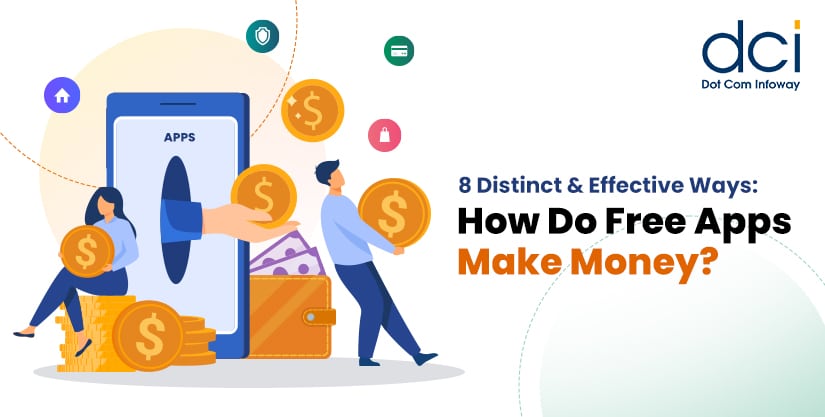
Free apps make money. Any Mobile App Marketing agency that’s been around since the boom of mobile would say as much. After all, it capitalizes on the inimitable and profound attraction of offering something free, while using it as leverage to make money.
That’s precisely why in the free app vs paid app battle, the former almost always comes out on top, especially in terms of revenue. How do free apps generate revenue that often exceeds expectations? Let’s investigate.
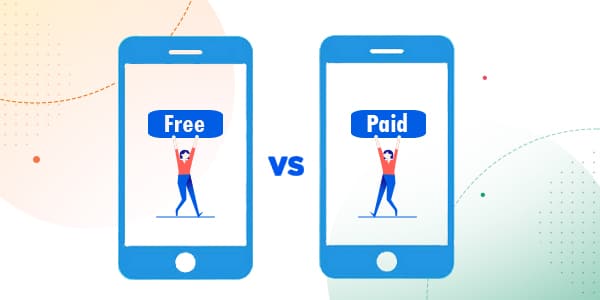
Why Free Apps VS Paid Apps Is (Almost) Always a One-Sided Battle?
Here’s a comparison of the two:
Paid Apps
Free Apps
Fewer downloads
Higher volume of downloads
Generally costs more since you need to deliver full features from the get-go
Less expensive to develop
Tends to attract a limited audience only, usually those who are willing to pay upfront
Tends to attract more users, usually more targeted, highly converting ones
Fewer monetization options
Numerous monetization strategies
Even positive reviews have minimal impact in attracting new users
Actively aids in boosting brand awareness
Most Noteworthy Stats for Free Apps VS Paid Apps
These stats only back up the claim that free apps make money:
As of 2021, free apps make up 98% of app revenue globally.
As of June 2022, 97% of apps in the Play Store are free – only a bit higher than the 94% in the App Store.
TikTok, the most downloaded app, is completely free.
The majority of free apps with over 10 billion downloads were developed by Google, namely Google Play Services, YouTube, Google Maps, Google Chrome, and Gmail.
Alright, it’s now a given that people tend to flock like bees to a hive to these types of apps. But the question remains, “How do free apps make money?” Well, you don’t need to look further than the next section to get the complete list of strategies that work excellently in 2022.
Monetization Strategies Every Free App Owner Should Be Doing
If you want to monetize your app, assuming it’s free, you don’t need to look further than these methods, which most companies, large and small alike, in 2022 are doing with their own creations. We’ve accompanied each one with the most recent stats for your better reference.
It’s wise to take note of all your options before you even begin to dive into your app marketing KPI’s.
Good, Old Advertising
In-app advertising is pretty much the bread and butter of most free apps. So much so that even the most popular app, TikTok, developed its own TikTok Ads. These can come in numerous forms nowadays, like rewarded videos, playable ads, banner ads, etc.
Take note that the CTR in in-app ads typically hovers at a high 0.56%, which is twice that of web ads which only have a CTR of 0.23%. Rewarded video ads engage the most users with a 43% engagement rate and playable ads come second at 28%.
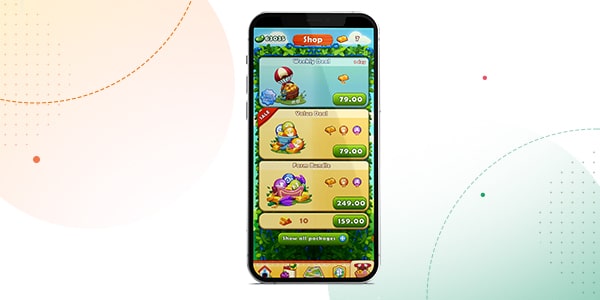
Free apps make money from in-app purchases, and sometimes, they even manage to beat the typical advertising model. This rings truer in apps that know how to offer the premium items that their users would pay for in a heartbeat. Most offer virtual currency that they can then use to purchase those said items.
Total in-app purchases are expected to reach $420 billion in 2022 alone, which is almost twice as high as the total advertising revenue in the app market.
Affiliate Programs for More Awareness and Earning Opportunities
You can use affiliate marketing to either boost your app’s income or increase awareness through advertising. Once you join mobile affiliate programs, you can start doing both.
For example, you can enter into a revenue sharing setup (assuming it’s being offered), where you get a set percentage of the total revenue profits you were able to impart to the advertiser. The opposite is you have affiliates promote your app for you.
83% of marketers, and app owners included use affiliate marketing to increase brand awareness.
Get Higher User Acquisition & Retention Rate
Do you know that effective mobile advertising can lower your average cost per install and considerably enhance your ad response rate? Obtain our effective campaign management services for mobile app ads.
This is highly similar to affiliate marketing in that publishers earn based on different models. The most popular include CPC, CPI, CPA, and CPV. With CPI, app owners may be able to earn based on the ad impressions they’re able to drive, while with CPC, it’s more dependent on the number of ad clicks. Did you know that leads from referrals have a 30% higher conversion rate?
Ever-Reliable Subscriptions
Mobile game marketing services will recommend subscriptions, assuming it fits your app’s features and category. Usually, these are the apps that are cut from the same cloth as apps like YouTube, Twitch, HBO Max, and Pandora, which are overwhelmingly streaming applications. Basically, you offer the app for free, but most of the prime content can only be accessed once users subscribe.
Over 50% of apps rely on a subscription model, with over 78% of iOS deriving revenue from it alone.
Selling Merchandise, Another Classic
Take note that total e-commerce revenue in the US alone is expected to reach $875 billion in 2022.
Who says you can’t sell products using apps? Of course, we’re not referring to retail apps when we say this. You can also create a free app that essentially functions like an e-commerce store where you can offer exclusive products and items to your audience.
Trust-Founded Sponsorships
You can work with a company that will function as your sponsor, first, by building an app that will be able to help them engage their specific audience. Of course, you need to discover the ones with whom you share your niche. It’s largely reliant on advertising, particularly the strategic placement of ads related to the services of the company that’s sponsoring you.
Influencer marketing is one other type of promotion you can do. Influencers who believe in your app’s earning and functional potential will most likely sell it directly to their dedicated audience.
Close to 73% of marketers are relying on influencer marketing in 2022, which is a big jump from the 55% in 2019.
People-Powered Crowdfunding
Crowdfunding relies mostly on donations. It’s simple. You pitch your app idea on platforms like Patreon and Kickstarter, and anyone interested will be able to freely choose to fund or promote its development.
Kickstarter alone has helped to launch over 500,000 projects up to July 2022. The total pledged has reached $6 billion.
Conclusion
We hope that the facts we laid out above have proven to you, once and for all, that free apps make money. And what’s even more wonderful is that we’re referring to fat-cat profitmaking when we say this, and not just your app being able to drive revenue here and there.
Is it any wonder then that mobile app developers tend to produce more of this type of app? The cherry on top is there’s close to an infinite number of categories and genres that fit well with the free model. Be sure you work with the best app store optimization agency to complement your monetization efforts.
For years, the mobile experience has followed a familiar pattern: users open an app, navigate through menus, enter information, select an action, and wait for a result.
Agentic AI is beginning to change that model.
Instead of requiring users to manually...
You publish high-quality content, optimize your website, and follow SEO best practices, but your pages still struggle to appear on search engines. You are not alone. Many businesses face the same challenge where their content exists online but fails...
A website can appear successful on the surface while quietly developing problems underneath. It may load correctly, handle current visitors, and support existing business operations, but that does not always mean it has a scalable website architecture prepared for...
Video has become one of the most important communication tools for modern B2B businesses. Companies use videos to explain complex products, showcase solutions, educate customers, support sales teams, and build stronger brand connections. However, as businesses demand more content...
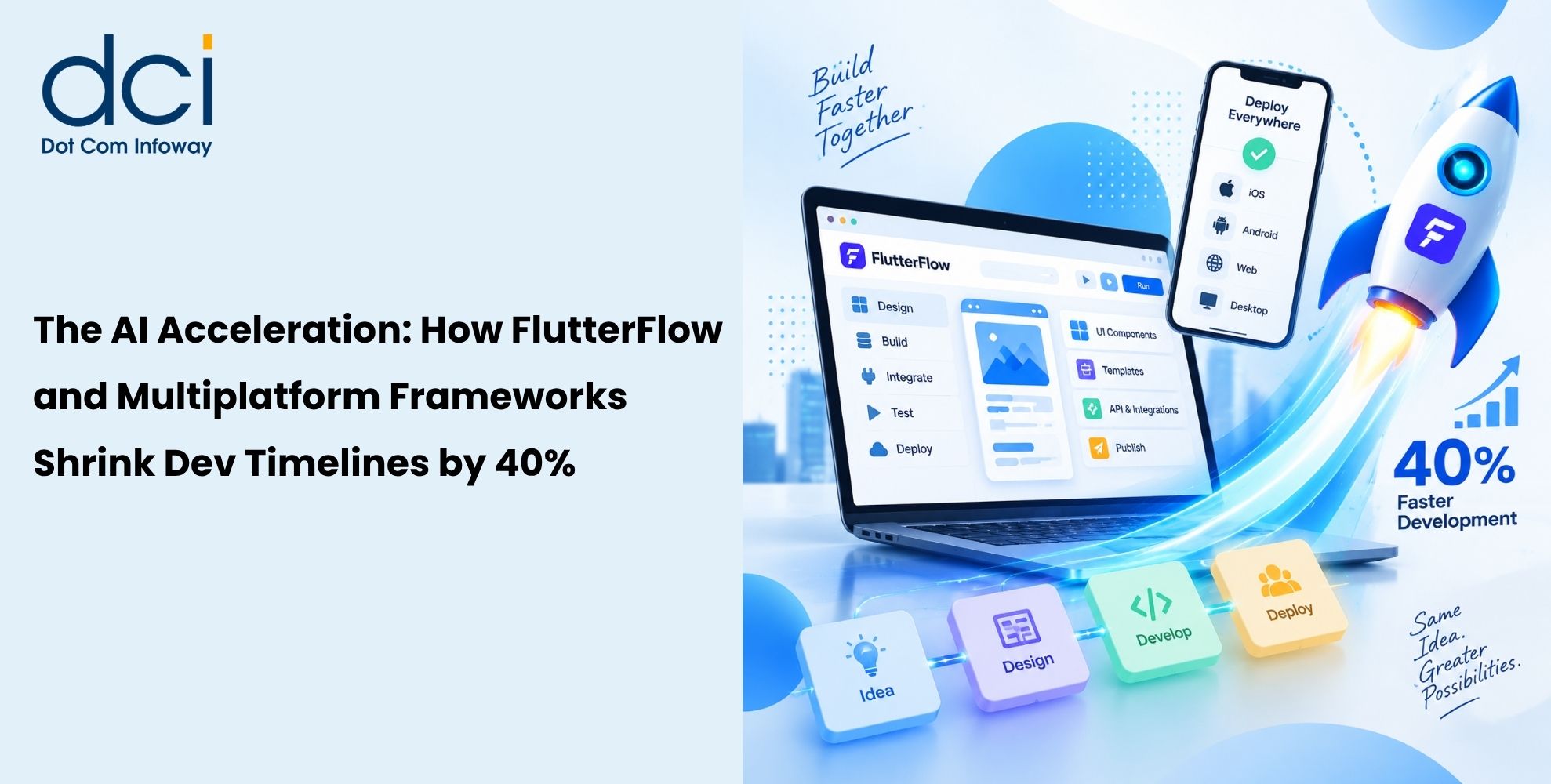
The mobile app development landscape is changing faster than ever. Businesses today need powerful digital products delivered quickly, but traditional development processes often involve long coding cycles, separate teams for different platforms, and higher development costs.
The rise of AI-powered...
The mobile industry is moving from traditional application experiences toward intelligent, adaptive platforms. Businesses today need AI-ready mobile apps that can support emerging technologies like Apple Intelligence and Android Gemini Advanced to deliver faster, smarter, and more personalized user...
An application can receive excellent ratings, positive customer feedback, and strong user satisfaction but still struggle to attract new users. Low app downloads despite good reviews is a challenge many businesses face after launching their mobile applications. While reviews...
The Apple A20 Pro chip changes what product teams can reasonably ask an iPhone app to do in real time. Built on a 2-nanometer process, the processor combines a six-core CPU, seven-core GPU, integrated Neural Accelerators, a dual 16-core...
SEO has changed significantly over the years. Search engines no longer evaluate content only based on keywords, backlinks, or publishing frequency. Today, factors such as content quality, expertise, originality, and user satisfaction play a major role in determining search...
When organic sessions decline after a broad Google update, an E-E-A-T audit checklist gives businesses a structured way to separate correlation from cause. Traffic is rarely restored by inserting more keywords, increasing word count, or changing publication dates. Sustainable...







![The Game Marketing Guide: Pre and Post-Launch Strategies [Infographic]](https://www.dotcominfoway.com/wp-content/uploads/2023/09/DCI-Game-Marketing-blog-1.jpg)