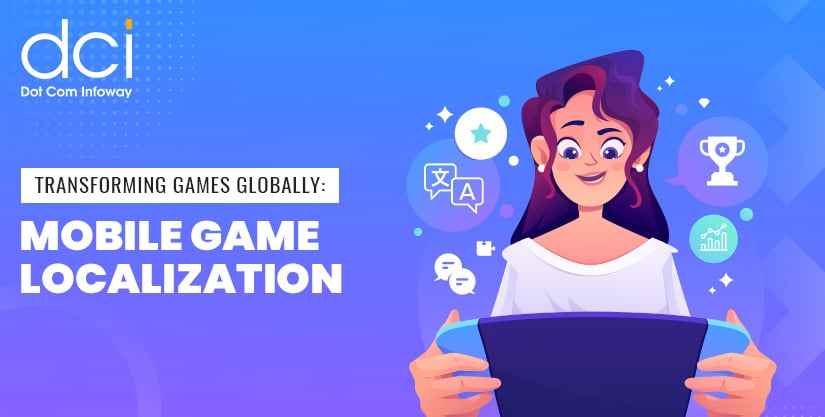
Mobile game localization is a crucial aspect of game marketing services that can help game developers reach a wider audience and increase their revenue. According to reports, the global mobile gaming market is expected to generate $2,943.55 million by 2027.
With such a vast market, it’s essential to localize your mobile game to cater to different languages, cultures, and regions. Let’s take a look at what game localization is, its benefits, effective examples of localization, strategies for localizing a mobile game, and more.
Key Concepts in Game Localization Explained
A subfield of global mobile game marketing, game localization refers to the process of adapting a video game to suit different international markets based on language, culture, and regional preferences.
It involves translating game text and assets, adapting to local culture and preferences, optimizing for different languages and regions, and more. The goal of game localization is to make the game accessible and enjoyable for players around the world.
Effective game localization strategies can help tap into international markets and significantly boost revenue. Game localization is essential for mobile games that aim to conquer international markets. By removing language and cultural barriers, game developers can make their games more accessible and enjoyable for players around the world.
Exploring Effective Game Localization Strategies
In the ever-expanding global mobile gaming arena, effective game localization is a linchpin for success. Beyond the mere translation of in-game text and assets, this intricate process encompasses a deeper cultural adaptation for games.
It involves harmonizing with local cultures and preferences, and fine-tuning the gaming experience for various languages and regions.
Navigating the Translation of Game Text and Assets
The cornerstone of game localization rests upon the precise game translation of text and assets. A well-executed translation enables players to effortlessly immerse themselves in the game’s storyline, dialogues, instructions, and in-game text.
But it doesn’t end with words alone. Game assets, including images, animations, and icons, must be transformed to seamlessly blend with diverse cultural contexts. Elements that evoke humor and connection in one region may inadvertently offend in another.
The integration of culturally tailored visuals fosters a deeper player connection by evoking a sense of familiarity.
Harmonizing with Local Culture and Preferences
Cultural adaptation is another vital dimension of game localization. Every culture boasts its own unique set of values, symbols, and references that significantly influence the player’s experience.
For instance, a dragon that symbolizes danger in the Western world represents good fortune in Chinese culture. To sidestep unintended misunderstandings or negative reactions, game developers must demonstrate a keen awareness of these cultural nuances.
Furthermore, character customization options should embrace diversity, inclusivity, and alignment with specific holidays and festivals. This inclusivity is pivotal in ensuring that players from all walks of life feel not only represented but also valued in the gaming experience.
Enhancing Mobile Game Localization Through Winning Strategies
Localizing a mobile game is a multifaceted undertaking that demands meticulous planning and flawless execution. Here, we outline essential strategies to guarantee a triumphant localization project.
1. Grasp Your Target Market’s Essencee
Embarking on an effective localization strategy commences with a profound understanding of your target market. Dive into comprehensive research encompassing local culture, player preferences, prevailing game genres, and gaming habits within the target region.
This groundwork ensures that your game harmonizes with the distinct tastes and inclinations of the local player base.
2. Collaborate with Indigenous Translators
The translation of a game’s text goes beyond mere linguistic conversion; it involves encapsulating the in-depth context of localized game content.
To maintain the authenticity of your game while rendering it accessible to players in the target region, it’s imperative to collaborate with native translators who possess an innate understanding of the local culture and gaming jargon.
3. Navigate Cultural Sensitivities
Diverse cultures harbor distinct norms, values, and sensitivities. What may be considered acceptable in one cultural context could be profoundly offensive in another. Game developers must navigate these subtle intricacies during the localization process, exhibiting a profound awareness of local customs, traditions, etc.
From Local to Global: Turn Your Players into Fans Worldwide
Expand your game’s reach from local to global markets. Learn how mobile game localization can help you bridge cultures and boost your bottom line.
Prior to unleashing your game in a new market, subject it to rigorous testing by local players. This practice serves a dual purpose: it uncovers any latent issues or misunderstandings that may have eluded the localization process and affords an opportunity to glean invaluable feedback.
This feedback loop can facilitate the necessary adjustments to seamlessly cater to the local market.
5. Embrace Continuous Localization
Localization isn’t a one-and-done endeavor. As you roll out updates and integrate new content into your game, it’s paramount to maintain a state of perpetual localization for your target markets.
By conscientiously following these strategic guidelines, game developers can navigate the complex terrain of mobile game localization, ensuring not only a successful launch but also a lasting connection with players across diverse global landscapes. While you’re learning localization techniques, take the time to learn a nifty game launch strategy or two in this article as well.
Unlocking the Advantages of Mobile Game Localization
Why should game developers prioritize localizing their mobile games? This article delves into the myriad benefits that this strategic move offers to propel your game’s success on the global stage.
1. Capitalizing on the “Initial Hype”
One of the most potent advantages of game localization is the opportunity it provides to harness the “initial hype” that swirls around a game’s impending release. The initial hype encompasses the fevered anticipation and excitement among gamers in the lead-up to a game’s launch.
By localizing your game prior to its release, you can seamlessly ride this initial wave of enthusiasm, effectively elevating your game’s popularity and visibility across multiple markets simultaneously.
2. Cost-Effective Access to New Audiences
Localization opens the gateway to new audiences in various regions in a cost-effective manner. By translating your game into the languages native to your target markets, you can substantially broaden your potential player base.
This becomes particularly pivotal for online games, where the size and activity level of your player base can either make or break your game’s triumph.
3. Amplifying Revenue Potential
Different countries exhibit varying spending habits in the realm of gaming. For instance, countries like China, the United States, and Japan boast substantial game revenues owing to their extensive player communities.
Consequently, localizing your game into languages such as Chinese, Japanese, or English holds the potential to usher in a notable upsurge in profits. However, it’s essential to remain attuned to issues like game piracy, which may be more prevalent in certain countries due to lenient privacy laws and relatively lower purchasing power.
If you’re interested in other proven ways to monetize your game, read our tips on boosting mobile game revenue.
4. Elevating the Player Experience
Last but not least, localization enriches the player experience by furnishing them with a game that resonates with their culture and language. This augmentation contributes to heightened player satisfaction and engagement, effectively prompting players to spend more time within the game and potentially indulge in in-app purchases.
The benefits of localizing mobile games are far-reaching, rendering it an indispensable strategy for game developers aspiring to flourish in the global gaming arena. So, are you ready to embark on this journey toward mobile game globalization success?
Conclusion
Mobile game localization is an essential aspect of game marketing services that can help you reach a wider audience and increase your revenue. By following game localization best practices such as the ones revealed above, you’ll be setting yourself up for success.
Contact a professional game marketing agency today to get started on the right path. Your players are ready and waiting!
For years, the mobile experience has followed a familiar pattern: users open an app, navigate through menus, enter information, select an action, and wait for a result.
Agentic AI is beginning to change that model.
Instead of requiring users to manually...
You publish high-quality content, optimize your website, and follow SEO best practices, but your pages still struggle to appear on search engines. You are not alone. Many businesses face the same challenge where their content exists online but fails...
A website can appear successful on the surface while quietly developing problems underneath. It may load correctly, handle current visitors, and support existing business operations, but that does not always mean it has a scalable website architecture prepared for...
Video has become one of the most important communication tools for modern B2B businesses. Companies use videos to explain complex products, showcase solutions, educate customers, support sales teams, and build stronger brand connections. However, as businesses demand more content...
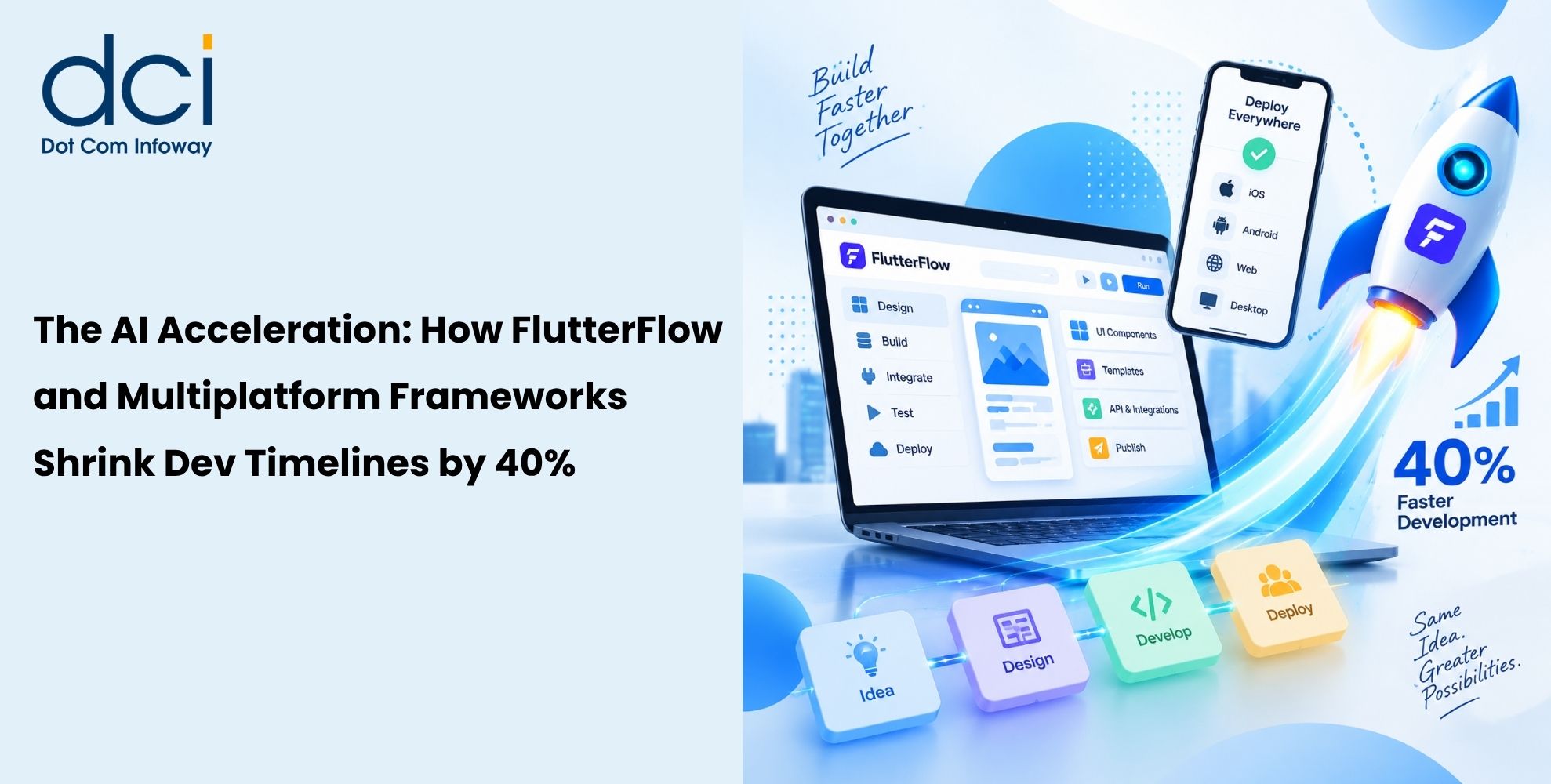
The mobile app development landscape is changing faster than ever. Businesses today need powerful digital products delivered quickly, but traditional development processes often involve long coding cycles, separate teams for different platforms, and higher development costs.
The rise of AI-powered...
The mobile industry is moving from traditional application experiences toward intelligent, adaptive platforms. Businesses today need AI-ready mobile apps that can support emerging technologies like Apple Intelligence and Android Gemini Advanced to deliver faster, smarter, and more personalized user...
An application can receive excellent ratings, positive customer feedback, and strong user satisfaction but still struggle to attract new users. Low app downloads despite good reviews is a challenge many businesses face after launching their mobile applications. While reviews...
The Apple A20 Pro chip changes what product teams can reasonably ask an iPhone app to do in real time. Built on a 2-nanometer process, the processor combines a six-core CPU, seven-core GPU, integrated Neural Accelerators, a dual 16-core...
SEO has changed significantly over the years. Search engines no longer evaluate content only based on keywords, backlinks, or publishing frequency. Today, factors such as content quality, expertise, originality, and user satisfaction play a major role in determining search...
When organic sessions decline after a broad Google update, an E-E-A-T audit checklist gives businesses a structured way to separate correlation from cause. Traffic is rarely restored by inserting more keywords, increasing word count, or changing publication dates. Sustainable...











![The Game Marketing Guide: Pre and Post-Launch Strategies [Infographic]](https://www.dotcominfoway.com/wp-content/uploads/2023/09/DCI-Game-Marketing-blog-1.jpg)