The Covid-19 outbreak has confined a big part of the population indoors. This has had a direct impact on mobile app usage trends, especially among on-demand mobile apps.
People are using mobile apps for various purposes. People who work from home use mobile apps for video conferencing and communicating. Students use mobile apps to attend online classes. People watch more entertainment through streaming services and play games. On-demand mobile apps are used to order food, groceries, vegetables, medicines, and an array of other items that can be safely left at the doorstep. If before the pandemic the use of mobile apps was an option for many, now it has become a necessity.
In the infographic below, we have compiled revealing trends on how the use of mobile apps has not just increased in numbers, but also in terms of the influence that they wield in people’s day-to-day lives, across devices and mobile operating systems like iOS and Android.
Are You Looking for a Mobile App Developing Expertise?
Dot Com Infoway is a leading mobile app development company, which creates scalable and interactive mobile applications that can amplify the level of user experience to meet any specific business requirements.
Coronavirus, a global pandemic, is rising every day and causing a global economic downfall. The demand for goods and services has increased and there is a skyrocketing growth seen in on-demand apps.
Mobile apps are a part of our daily lives. 2020 will continue to be a big year for the mobile app industry. In pandemic time 90% of mobile time is spent on apps
49% of people open an app 11+ times each day.
57% of all digital media usage comes from mobile apps.
48% of daily internet access happens via mobile devices
65% of smartphone users have at least one gaming app on their devices.
Mobile devices generate nearly 50% of global website traffic.
App users spend 77% of their time on their top 3 apps.
During the last week of March, there was a 132% increase in the number of installs compared to last year.
Largest Categories by Consumer Spend:
iOS – Games, Entertainment, Photo, and Video
Android – Games, Social, and Entertainment
Gaming Apps:
Gaming apps saw a 47% increase in sessions and 75% increase in installs
Non-gaming apps were 35% of the spend on iOS
Non-gaming apps were 15% of the spend on Google Play.
Aarogya Setu is the best example of an on-demand app during the coronavirus outbreak. 100 million downloads in 40 days. This mobile application was developed by the Government of India to connect essential health services with the people of India to fight against COVID-19. It was the 7th most downloaded app globally on both iOS App Store and Google Play.
For years, the mobile experience has followed a familiar pattern: users open an app, navigate through menus, enter information, select an action, and wait for a result.
Agentic AI is beginning to change that model.
Instead of requiring users to manually...
You publish high-quality content, optimize your website, and follow SEO best practices, but your pages still struggle to appear on search engines. You are not alone. Many businesses face the same challenge where their content exists online but fails...
A website can appear successful on the surface while quietly developing problems underneath. It may load correctly, handle current visitors, and support existing business operations, but that does not always mean it has a scalable website architecture prepared for...
Video has become one of the most important communication tools for modern B2B businesses. Companies use videos to explain complex products, showcase solutions, educate customers, support sales teams, and build stronger brand connections. However, as businesses demand more content...
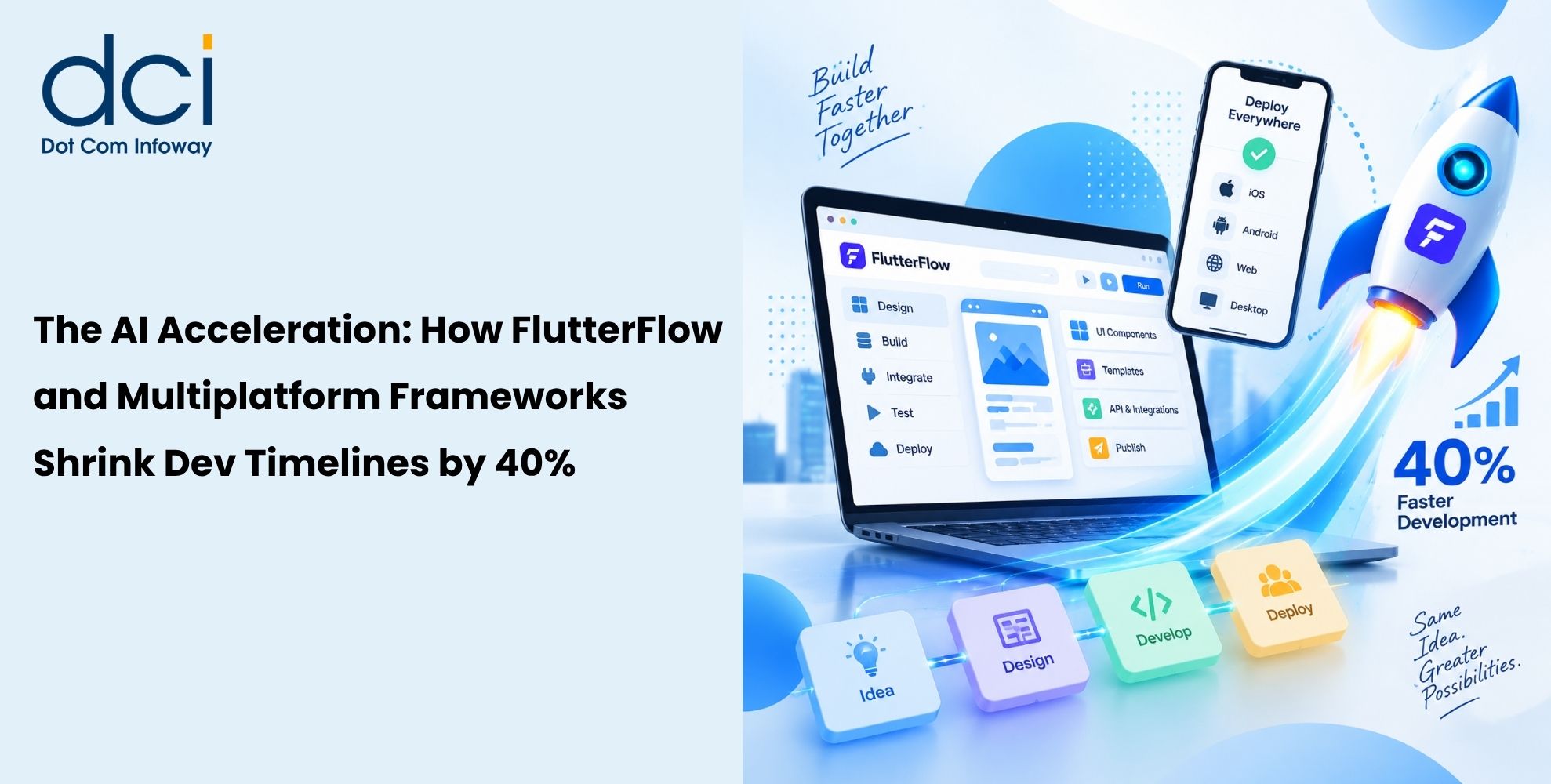
The mobile app development landscape is changing faster than ever. Businesses today need powerful digital products delivered quickly, but traditional development processes often involve long coding cycles, separate teams for different platforms, and higher development costs.
The rise of AI-powered...
The mobile industry is moving from traditional application experiences toward intelligent, adaptive platforms. Businesses today need AI-ready mobile apps that can support emerging technologies like Apple Intelligence and Android Gemini Advanced to deliver faster, smarter, and more personalized user...
An application can receive excellent ratings, positive customer feedback, and strong user satisfaction but still struggle to attract new users. Low app downloads despite good reviews is a challenge many businesses face after launching their mobile applications. While reviews...
The Apple A20 Pro chip changes what product teams can reasonably ask an iPhone app to do in real time. Built on a 2-nanometer process, the processor combines a six-core CPU, seven-core GPU, integrated Neural Accelerators, a dual 16-core...
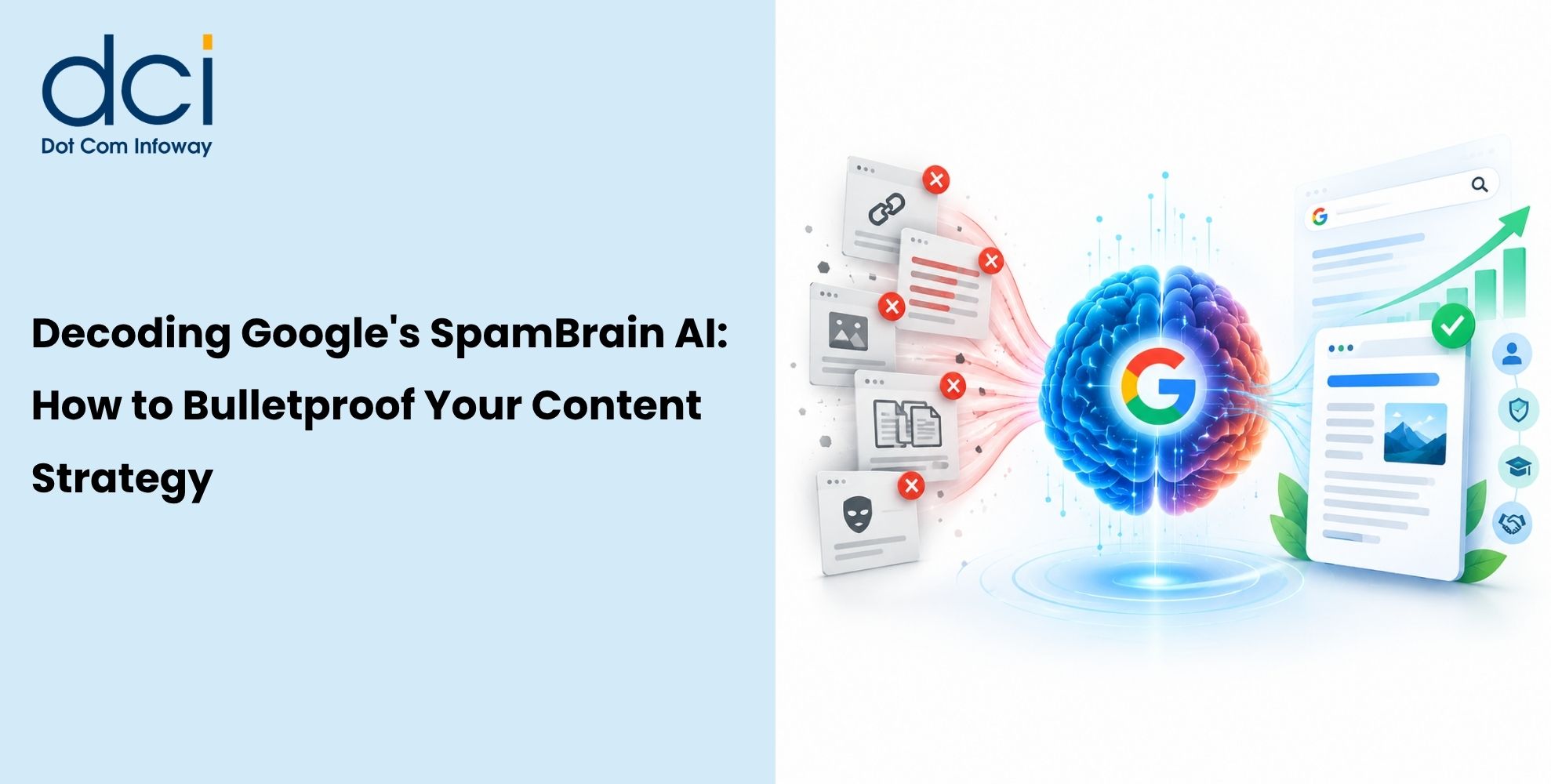
SEO has changed significantly over the years. Search engines no longer evaluate content only based on keywords, backlinks, or publishing frequency. Today, factors such as content quality, expertise, originality, and user satisfaction play a major role in determining search...
When organic sessions decline after a broad Google update, an E-E-A-T audit checklist gives businesses a structured way to separate correlation from cause. Traffic is rarely restored by inserting more keywords, increasing word count, or changing publication dates. Sustainable...









![The Game Marketing Guide: Pre and Post-Launch Strategies [Infographic]](https://www.dotcominfoway.com/wp-content/uploads/2023/09/DCI-Game-Marketing-blog-1.jpg)