We’re well aware that blockchain is one of the hottest, rising technologies at present. Industry experts extol the amazing benefits we can derive from it by highlighting terms like “decentralization”, “transparency”, and “indestructible” as seemingly fail-proof, to the point that people don’t even bother to get a clear picture of blockchain app development cost before contacting a Mobile App Development Agency to start getting in on the action.
Obviously, never a wise move. We should just be just as protrusive in anticipating unforeseen costs in building blockchain apps as people who eagerly dive into details once the question, “How much does it cost to create a cryptocurrency?” pops into their minds.
There’s no better way to do this than with this post’s help.
Does Blockchain Suit Your Business?
Even before you consider blockchain app development cost, you should already have a clear answer to this. Do you, for instance, see immense potential in NFTs and the development of the metaverse? Are you more interested in cryptocurrency application development or crypto wallet app development?
Or do you mean to capitalize more on Blockchain-as-a-Service (BaaS)? Or, perhaps, you want to gain more benefits from its more generalized capability to address issues pertaining to security, data control, supply chains (especially if you’re in healthcare), and process optimization?
Pretty much all of these questions mention the most notable blockchain trends at present. Be sure to weigh how each one will benefit your business before you develop a blockchain application.
What’s sure is that it can provide major perks for businesses as proven by these stats:
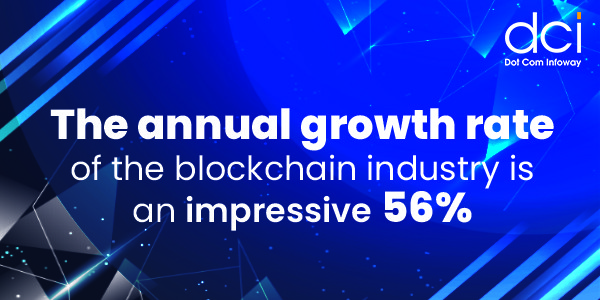
The annual growth rate of the blockchain industry is an impressive 56%.
Financial organizations may save $12 billion annually with the aid of blockchain solutions.
The banking sector has close to 30% of the blockchain market share worldwide.
Blockchain solutions spending is expected to reach $19 billion by 2024.
Various Facets of Blockchain Development
dApps
Short for decentralized applications, dApps are apps that enjoy the benefits of having such a label. After all, since they’re decentralized, there’s minimal to no censorship, the utilization of smart contracts that allow both parties to remain anonymous, better user privacy, and more flexible development. Examples include Brave, TRACEDonate, and Circulor.
Cryptocurrency
Every blockchain has its native asset. That’s what a cryptocurrency is, and it’s almost always decentralized and protected by cryptography – hence, its name. The way they remove the limits of conventional transactions while making the process as easy and quick as possible is why they’re highly preferred. BTC and ETH from Bitcoin and Ethereum are stock examples.
Tokens
Tokens are different from cryptocurrencies, although bouth are digital assets. Tokens rely on smart contracts and usually arise from an already existing blockchain. Both impart the same perks and functionality, though. NFT Token development is a notable subdiscipline.
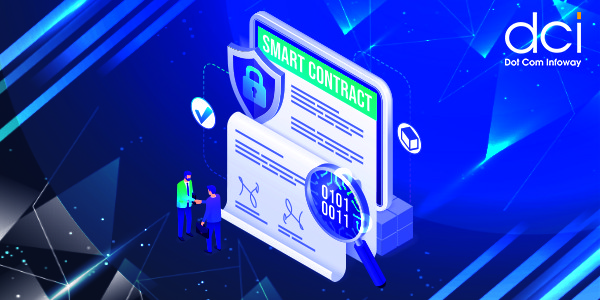
These are basically computer programs that self-execute automatically once conditions are met with the help of blockchain-based code. Almost always, they’re transactional in nature, which is why they’ve been seeing wide applications in major fields like investing, lending, and trading.
Supply Chain Solutions
This is an incredible benefit imparted to companies that require transactional solutions. Since blockchain eliminates every middleman, it’s able to remove plenty of the usual steps in a conventional transaction. It also optimizes supply chains as a whole and aid in keeping records and vital information related to them.
Customized Blockchains
Blockchain app developers have all the freedom, skill, and knowledge to adapt their solutions based on companies’ needs. These solutions can be easily tailored, for example, to meet the requirements for retail, healthcare, tech, logistics, and education, or for those who are looking for better ways to conduct mobile app development for startups with blockchains at the forefront.
Build Secure Blockchain Apps For Your Business
As the best blockchain solution provider, we provide businesses with the most dependable and cutting-edge Blockchain solutions to provide our clients a decisive advantage as the future develops.
Every Factor that May Mitigate or Balloon Blockchain App Development Cost
Blockchain app development cost, much like the cost to develop a mobile app, is subject to numerous external and internal factors. Your prospective blockchain development agency should more or less be aware of all the following considerations and advise you about each one.
The Industry You’re In
A healthcare app will likely cost more than an on-demand app but may be on par with a finance app. The industry will likely dictate how sophisticated the decentralized app development needs to be. Moreover, you also have to keep in mind that industries have different compliance requirements.
Project’s Scope and Complexity
Blockchain apps can be categorized as either low-, medium-, or high-complexity, which are almost always directly proportional to cost.
Platform
Blockchain application development often doesn’t have to start from scratch. You have ready-to-use platforms available like Ethereum, Corda, and Stellar. Each one has different price tags.
Consensus Algorithm
Your chosen blockchain app development company should underscore the importance of this, since it’s what allows users to decrypt transactions. How it’s applied usually depends on the blockchain system. For instance, Bitcoin relies on Proof of Work while others rely on Delegated Stake Proof or Proof of Elapsed Time.
Stack
Marketplace app development has its own ideal programming languages in the same way that different programming languages work best with blockchain development. Be sure you use the right set of stacks from the get-go.
API
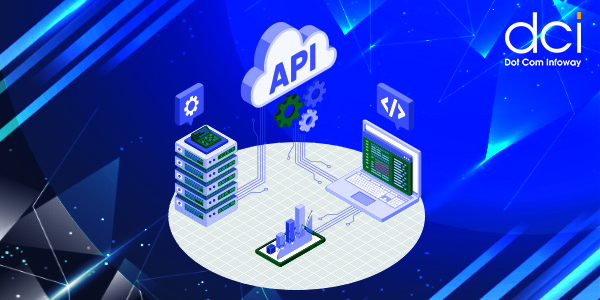
APIs will always be an integral part of mobile application development since it allows apps to perform a specific function centered on information sharing. In the case of blockchain apps, this could be smart contract integration, data collection, address creation, and data monitoring, among others.
UI/UX
What’s mobile app development without front-end development? Blockchain is certainly not exempt from this, so you need to also look at the costs pertaining to the programming language, repositories, and servers concerned with it.
Your Needs and Requirements
You’re obviously building an app to fulfill a particular goal or need. Companies rarely share a 100% similar set of needs or focus in a given time. It could be you need to boost earnings or you simply want to remedy a present issue you’re facing.
Cost of Third-Party Tools
Tools like Amazon Web Services, Uptime Robot, Amazon SNS, Instabug, and Mixpanel all fulfill different, vital roles to ensure smooth blockchain app development.
Developer Resources
Besides having to pay for the developers’ salary, you will also need to account for other tools and resources he or she will need to use.
Continuous Code Integration
Every developer part of the time should be able to work with code that synchronizes with everyone else’s. Preferably, this should be automated with the help of tools like Github, which isn’t exactly cheap.
Regular Maintenance
Every app requires to be maintained, and this is especially true for a blockchain app. In fact, you have to be prepared to allot over 30% of your budget to this.
The Average Cost of Blockchain App Development
Regardless of the industry, the ceiling for blockchain app development cost starts from $500,00 to a million dollars based on the above factors which we discussed.
Conclusion
Overall blockchain app development cost is just as fluid as the cost of developing any mobile application. It’s comparatively cheaper to develop these apps, and we probably have much of its relative infancy to thank for this. If you still wish to acquire additional guidance with regard to this topic, don’t hesitate to avail of mobile app consultation services to get you on the right track.
Search visibility is changing as people increasingly discover information through traditional search results, featured snippets, and AI-generated answers. Businesses can no longer evaluate their digital presence solely by checking keyword rankings and organic traffic. They also need to understand...
Reactivating inactive app users is an effective way to improve engagement without increasing your user acquisition budget. While advertising, influencer marketing, and App Store Optimization can help attract new users, some may stop using your app over time.
Reactivating inactive...
Getting lots of downloads is a great thing, but if you aren’t generating revenue, you could be missing valuable business opportunities. Many businesses invest significant time and money in developing and marketing their apps, yet struggle to turn downloads...
Imagine that a business wants to establish its online presence. It can choose a website builder to launch a website quickly using ready-made templates, or invest in custom web development to create a website tailored to its specific needs....
Let’s imagine that there is a customer who shops online. He browses the online store’s catalog, finds the item that he wants to purchase, and adds it to his cart. However, he does not complete the order, resulting in...
Every business wants to turn its ideas into successful applications. However, many organizations invest in development and distribution without knowing whether their products will attract customers or generate revenue. As a result, they waste resources creating applications that may...
Your app launched to great reviews, but a few years on, downloads have flattened and complaints are creeping in. If your business needs a mobile app upgrade, it may be time to consider modernizing it. Devices, operating systems, and...
For years, the mobile experience has followed a familiar pattern: users open an app, navigate through menus, enter information, select an action, and wait for a result.
Agentic AI is beginning to change that model.
Instead of requiring users to manually...
You publish high-quality content, optimize your website, and follow SEO best practices, but your pages still struggle to appear on search engines. You are not alone. Many businesses face the same challenge where their content exists online but fails...
A website can appear successful on the surface while quietly developing problems underneath. It may load correctly, handle current visitors, and support existing business operations, but that does not always mean it has a scalable website architecture prepared for...








![The Game Marketing Guide: Pre and Post-Launch Strategies [Infographic]](https://www.dotcominfoway.com/wp-content/uploads/2023/09/DCI-Game-Marketing-blog-1.jpg)